Guide: Healthcare referral information privacy — questions to discuss before a remote preliminary consultation — consultation — care coordinators
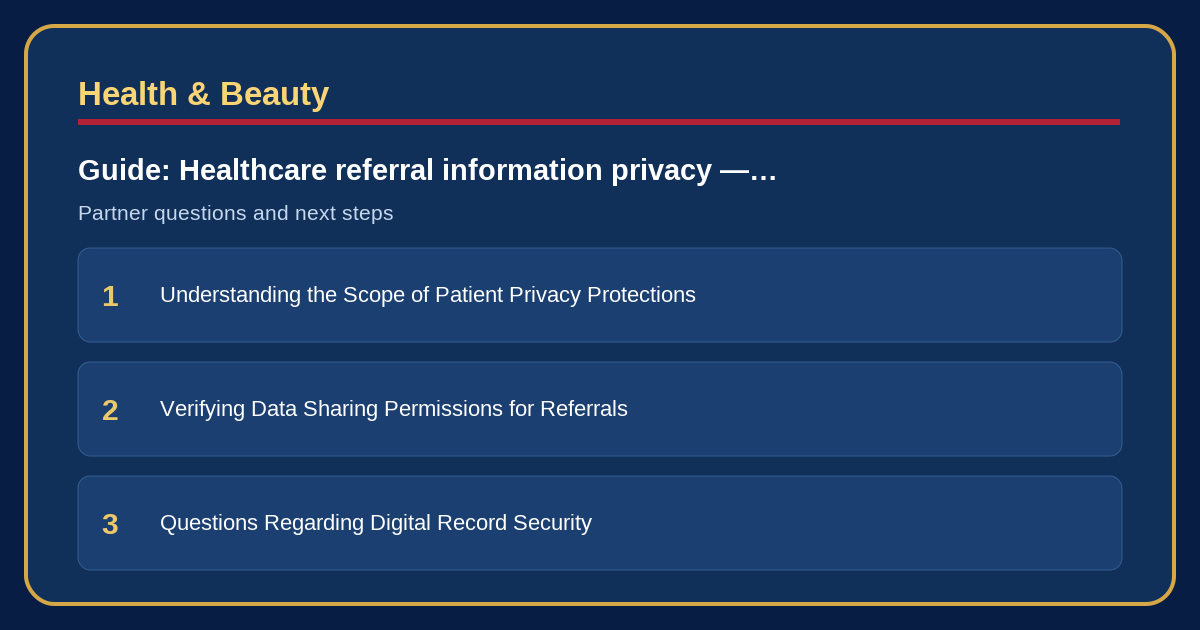
Understanding healthcare referral information privacy and permissions is essential before engaging in a remote preliminary consultation. Health & Beauty coordinates administrative and travel services only; medical decisions are made by licensed clinicians. Health & Beauty does not operate clinics. When preparing for a digital meeting, patients must understand how their sensitive data is handled, who has access to their medical history, and what specific authorizations are required to share records between different providers to ensure seamless care coordination.
Understanding the Scope of Patient Privacy Protections
Before your remote consultation, it is vital to recognize that your health information is protected by strict federal regulations. These laws govern how "covered entities," such as doctors and insurance providers, use and disclose your protected health information (PHI). When discussing healthcare referral information privacy and permissions, you should ask how the specific platform being used for your video call maintains security. Knowing whether the digital interface is compliant with privacy standards ensures that your personal discussions and shared medical documents remain confidential and secure.
Verifying Data Sharing Permissions for Referrals
A referral often requires moving your medical records from a primary physician to a specialist. During your initial discussions, ask exactly which pieces of information will be shared and with whom. You should inquire about the specific authorization forms you need to sign to permit this transfer. It is important to know if the permission is limited to a single consultation or if it allows for ongoing communication between multiple care providers. Clear boundaries on data sharing prevent unauthorized access to your sensitive history.
Questions Regarding Digital Record Security
In a remote consultation setting, the method of transmitting files is just as important as the conversation itself. You should ask your care coordinator or the clinical team about their protocols for receiving and storing digital documents. For instance, are medical images or lab results sent via encrypted email or a secure patient portal? Understanding the technical safeguards in place helps mitigate the risk of data breaches. Always confirm that the digital tools used for your remote consultation meet the highest industry standards for privacy.
Identifying Authorized Personnel and Access Levels
Not everyone involved in your administrative journey needs access to your full medical history. Before your consultation, ask for clarification on who will be viewing your files. This includes administrative staff, care coordinators, and the clinical team. You have the right to know the "minimum necessary" standard, which means providers should only access the specific information required to perform their job functions. Knowing the hierarchy of access helps you feel more in control of your personal information during the referral process.
Managing Consent for Remote Communication Channels
Remote consultations often involve multiple communication channels, including video calls, text messages, and phone calls. It is prudent to ask how consent is obtained for each method. You should discuss whether you can opt out of certain communication types, such as SMS notifications, if you prefer more secure methods like a dedicated portal. Establishing these preferences early ensures that your privacy is respected across all digital touchpoints. Confirming these details helps prevent accidental disclosures through less secure, non-encrypted messaging platforms.
Reviewing Your Rights to Access and Amend Records
Privacy laws grant you significant rights regarding your own medical data. Before proceeding with a remote consultation, familiarize yourself with your ability to request copies of your records and your right to request corrections if you find inaccuracies. Ask the provider how they handle requests for amendments to your digital files. Understanding this process ensures that your medical history remains an accurate reflection of your health, which is critical for any clinician making decisions based on your referred documentation.
If you have questions regarding the administrative steps of your upcoming journey, the team at Health & Beauty is available to assist with your coordination needs. Please reach out to us to discuss how we can support your logistical preparations.
Frequently Asked Questions
**How do I know if my remote consultation is private?**
You should ask the provider if their video conferencing software is HIPAA-compliant. A compliant platform uses end-to-end encryption to ensure that your visual and auditory information cannot be intercepted by unauthorized third parties during the session.
**Can I limit what information is sent to a specialist?**
Yes, you can specify which parts of your medical record you authorize for release. When signing referral permissions, look for sections that allow you to restrict certain sensitive data points to only the necessary clinical details.
**What should I do if I suspect a privacy breach?**
If you believe your information has been mishandled, you should contact the provider's privacy officer immediately. You also have the right to file a formal complaint with the Department of Health and Human Services regarding any suspected privacy violations.
Sources and references
https://www.hhs.gov/hipaa/for-professionals/privacy/index.html
Partner with Health & Beauty
Discuss a potential collaboration and practical requirements directly with our team.