International language coordination: Translation review — practical questions for US partners
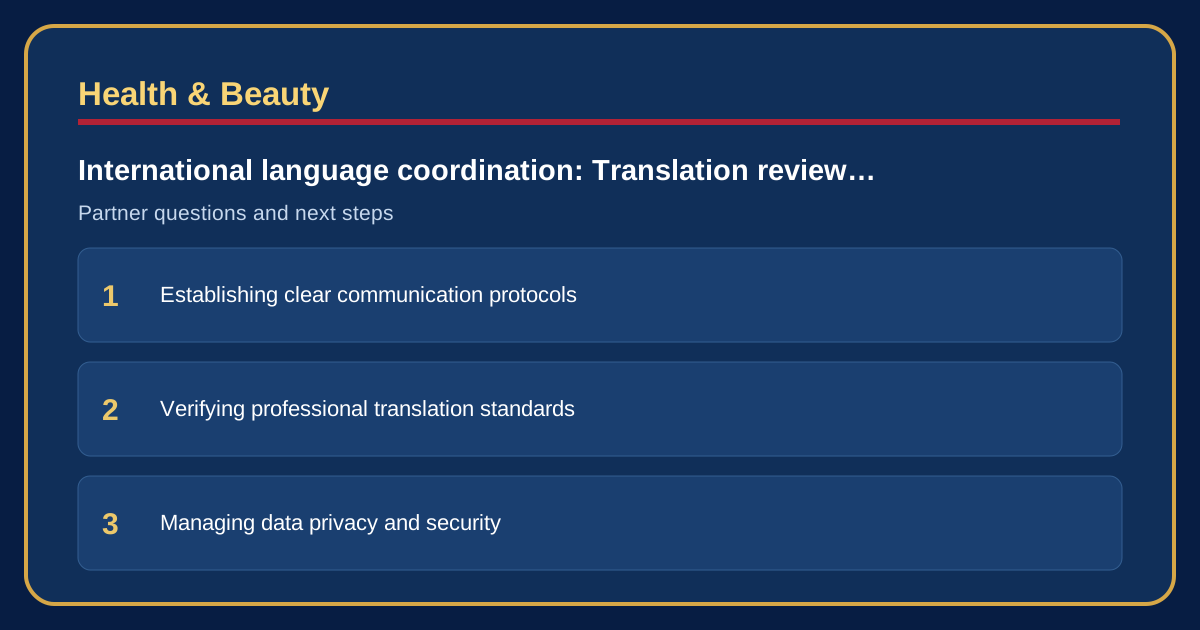
Effective US international language coordination — translation review requires a structured approach to ensure clarity and accuracy when managing cross-border administrative workflows. Organizations must prioritize precise communication to bridge linguistic gaps between international providers and domestic partners. It is essential to note that Health & Beauty coordinates administrative and travel services only; medical decisions are made by licensed clinicians. Health & Beauty does not operate clinics. By focusing on professional translation standards and clear documentation, partners can facilitate smoother interactions while maintaining the integrity of essential information.
Establishing clear communication protocols
When engaging in international language coordination, the first step is establishing a standardized protocol for document translation. Partners should identify whether the translation process involves simple administrative forms or complex clinical documentation. It is vital to ensure that all translated materials remain faithful to the original intent without introducing ambiguity. Establishing a clear chain of custody for documents helps prevent errors during the transfer of information. Always verify that the translation service provider understands the specific terminology required for your administrative and operational needs.
Verifying professional translation standards
Quality assurance in translation is paramount when dealing with international partners. US partners should ask whether the translation service utilizes certified professionals who are familiar with the specific regulatory environment of the target region. Relying on automated tools for sensitive administrative data can lead to significant misunderstandings. Instead, prioritize human-led reviews that account for cultural nuances and regional terminology. By vetting the qualifications of your translation partners, you ensure that the information exchanged remains accurate, professional, and useful for all parties involved in the coordination process.
Managing data privacy and security
Data security is a critical component of international language coordination. When documents are translated, they often contain sensitive information that must be protected according to established privacy standards. Partners should inquire about the encryption methods used during the transmission of files and the storage policies of the translation agency. It is important to confirm that the service provider adheres to strict confidentiality agreements. Understanding how data is handled during the translation lifecycle helps mitigate risks and ensures that all parties remain compliant with necessary privacy regulations.
Addressing terminology and regional context
Language is rarely a direct one-to-one mapping, especially in professional or administrative contexts. US partners must ensure that translation reviews account for regional variations in terminology. A term that is standard in one country might carry a different connotation elsewhere. During the review process, ask your translation team to provide context for specific choices, particularly when dealing with complex administrative requirements. This proactive approach helps avoid confusion and ensures that the final translated documents are practical and effective for their intended audience in the international market.
Coordinating with licensed clinical teams
While administrative coordination is essential, it must remain distinct from clinical decision-making. When translation involves documents that touch upon medical information, the review process must involve licensed clinicians who can verify the accuracy of the translated content. Never assume that a translation is medically accurate simply because it is linguistically correct. Always route clinical documentation through the appropriate medical channels for final approval. This separation of duties ensures that administrative staff focus on logistics while clinicians maintain responsibility for all medical decisions and patient-related guidance.
Implementing feedback loops for accuracy
Continuous improvement is necessary for effective language coordination. Partners should implement a feedback loop where translation errors or ambiguities are documented and addressed promptly. By maintaining a log of common issues, you can refine your translation guidelines and improve the quality of future documents. Encourage open communication between administrative staff and translation providers to resolve questions before they escalate. This iterative process fosters a more reliable workflow and helps build long-term trust between US partners and their international counterparts, ensuring that all administrative services remain efficient.
Streamlining administrative workflows
Efficiency in international language coordination relies on clear, accessible processes. If you are seeking assistance with administrative or travel coordination, please reach out to our team at Health & Beauty. We are here to help you navigate the complexities of international logistics through professional support and clear communication. Our team focuses on the administrative aspects of your coordination needs, leaving clinical decisions to the experts. Contact us today to discuss how we can support your organizational goals through reliable, professional, and low-pressure administrative coordination services.
Frequently Asked Questions
What is the primary role of Health & Beauty in international coordination?
Health & Beauty focuses exclusively on administrative and travel coordination. We do not provide medical advice, perform clinical procedures, or operate medical facilities. All medical decisions, treatment plans, and clinical assessments must be handled by licensed clinicians who are qualified to manage patient care and health-related outcomes.
How should US partners handle sensitive documents during the translation process?
Partners should ensure that all translation providers adhere to strict data privacy and security protocols. It is essential to verify that the translation agency uses secure, encrypted channels for file transfers and maintains robust confidentiality policies. Always consult with your legal or compliance team to ensure that your data handling practices meet all necessary regulatory requirements.
Who is responsible for verifying the accuracy of translated medical documentation?
The responsibility for verifying the accuracy of translated medical content lies with licensed clinicians. While administrative staff can coordinate the translation process, only qualified medical professionals have the expertise to confirm that the translated information accurately reflects the original clinical intent. Never rely on administrative translations for medical decision-making without a formal clinical review.
Source: https://www.hhs.gov/hipaa/for-professionals/privacy/index.html
Sources and references
https://www.hhs.gov/hipaa/for-professionals/privacy/index.html
Partner with Health & Beauty
Discuss a potential collaboration and practical requirements directly with our team.