Guide: Health referral data protection and — how patients can ask about secure transfer of personal records — consent review — referring clinicians
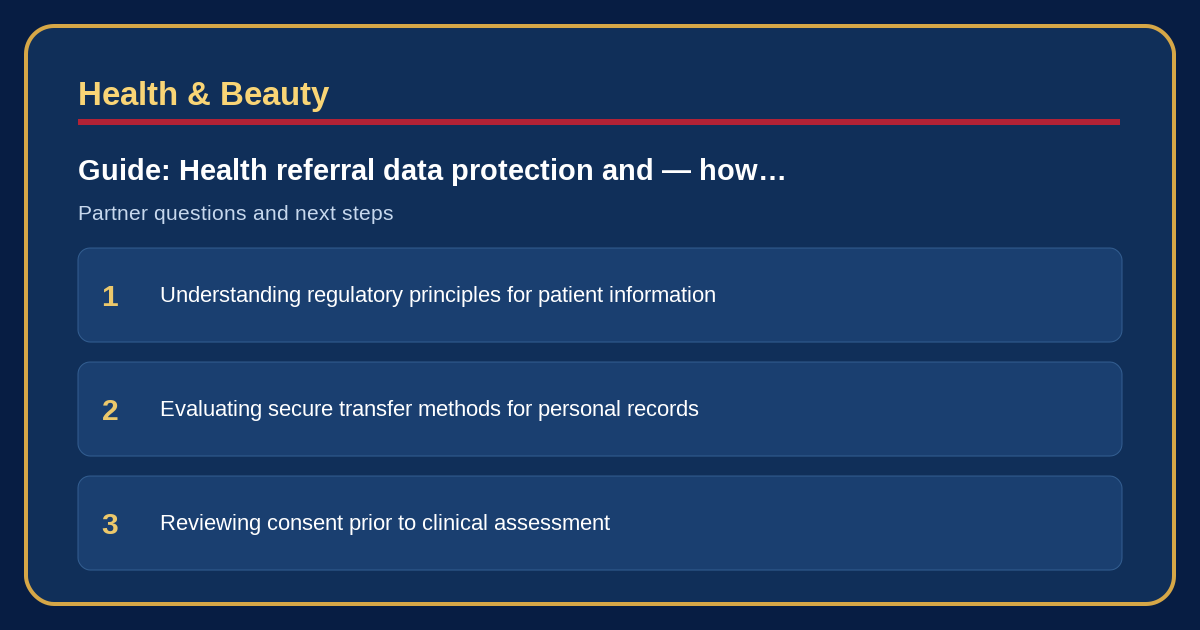
Navigating clinical pathways requires careful attention to confidentiality, particularly when coordinating administrative logistics. Health & Beauty coordinates administrative and travel services only; medical decisions are made by licensed clinicians. Health & Beauty does not operate clinics. When considering a specialized care pathway, understanding health referral data protection and partner responsibilities is essential for safeguarding personal information. Individuals frequently wonder how patients can ask about secure transfer of personal records before signing consent documents. This guide examines data protection principles, secure communication methods, and patient rights under established United Kingdom regulatory frameworks.
Understanding regulatory principles for patient information
Regulatory frameworks govern how personal data is processed across healthcare administrative pathways. Organizations handling confidential patient information must adhere strictly to statutory principles regarding lawfulness, fairness, and transparency. Administrative coordinators ensure that every piece of documentation remains protected throughout its lifecycle. When information moves between primary care practitioners and specialized facilities, robust organizational security measures must be maintained continuously. Reviewing these foundational standards helps individuals feel confident that their sensitive health records are managed with appropriate technical safeguards and strict operational oversight.
Evaluating secure transfer methods for personal records
Examining how patients can ask about secure transfer of personal records involves looking at encrypted digital channels and authorized communication pathways. Traditional postal systems or unencrypted email platforms often fail to meet modern security standards required for sensitive medical documentation. Secure portals and encrypted messaging services protect clinical histories from unauthorized interception during transit. Individuals have every right to inquire about the specific technical mechanisms an administrative provider uses. Asking clear questions about encryption standards ensures complete transparency regarding how personal files are handled and stored digitally.
Reviewing consent prior to clinical assessment
Informed consent forms the bedrock of any ethical healthcare journey. Before signing documentation authorizing the transmission of clinical notes, individuals should thoroughly review what data is being shared and with whom. Consent must always be freely given, specific, and fully informed. Administrative coordinators facilitate the paperwork, but clinical practitioners retain sole responsibility for discussing treatment implications. Patients should verify that consent documents clearly outline the scope of data sharing. Taking time to read every clause prevents misunderstandings and ensures full agreement regarding administrative facilitation.
Responsibilities of administrative partners in healthcare
Administrative facilitators support the logistical aspects of patient journeys, bridging the gap between home environments and specialized clinical destinations. These entities must operate under strict data processing agreements that mirror statutory compliance standards. While clinical decisions remain strictly within the purview of licensed medical professionals, administrative partners manage travel, scheduling, and documentation transfer. Understanding these distinct boundaries helps individuals appreciate the division of labor. Administrative staff focus entirely on operational support, leaving all diagnostic assessments and treatment planning directly in the hands of qualified clinicians.
Communicating effectively with referring clinicians
Clear dialogue between individuals and their primary healthcare providers establishes a solid foundation for secure record transfer. When a referral is initiated, patients should actively discuss data sharing preferences with their referring doctor. Clinicians can provide insight into which specific records are necessary for the specialist review. Asking direct questions about the intended destination of the files empowers individuals to take an active role in their privacy management. Open communication ensures that sensitive details are only transmitted through verified, secure medical channels.
Assessing organizational security and compliance measures
Data protection compliance relies heavily on proactive organizational policies and ongoing staff training. Administrative coordinators handling sensitive healthcare information must implement robust technical and organizational security measures to prevent unauthorized access. Individuals can request details regarding staff vetting procedures and data retention policies. Knowing how long personal records are stored and when they are securely deleted provides additional peace of mind. Transparent organizations welcome inquiries about their compliance posture, viewing data security as a core component of professional administrative support.
Navigating inquiries and maintaining privacy standards
Maintaining personal privacy requires continuous vigilance from both administrative coordinators and the individuals utilizing their services. If uncertainties arise regarding data handling practices, individuals should reach out directly for clarification. Health & Beauty remains available to discuss administrative coordination procedures and data security protocols through low-pressure, supportive communication channels. For comprehensive inquiries about administrative support services or record transfer logistics, you are welcome to contact Health & Beauty directly. Please note that urgent medical symptoms require immediate clinical assessment rather than a generic administrative contact.
Frequently Asked Questions
H3: What specific security measures protect personal records during transfer?
Personal records should be transmitted using encrypted digital portals or secure professional networks rather than standard unencrypted email. Administrative coordinators implement technical safeguards and strict access controls to ensure files remain confidential while moving between healthcare providers and specialists.
H3: Can administrative coordinators make medical decisions about my treatment?
No. Health & Beauty coordinates administrative and travel services only; medical decisions are made by licensed clinicians. Health & Beauty does not operate clinics or provide clinical advice, ensuring all medical judgment remains exclusively with qualified healthcare professionals.
H3: What should I ask my clinician before signing consent forms?
You should ask which specific records are being transferred, who will receive them, what security channel is being used, and how long the data will be retained. Clinicians can clarify the clinical necessity of the shared information before you authorize the transfer.
Sources and references
https://ico.org.uk/for-organisations/uk-gdpr-guidance-and-resources/
Partner with Health & Beauty
Discuss a potential collaboration and practical requirements directly with our team.