Guide: Healthcare referral information privacy — which consent forms and written explanations patients can — provider choice — international patients
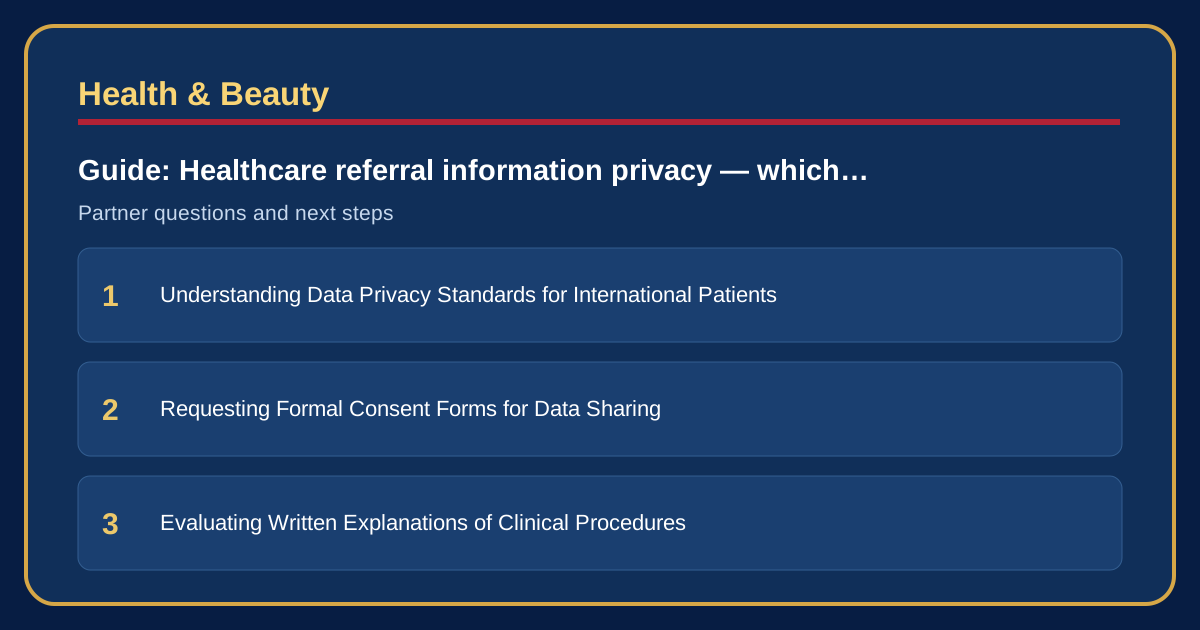
When considering medical treatment abroad, understanding healthcare referral information privacy is essential for protecting your personal data. Patients often navigate complex systems where administrative coordination is necessary to bridge the gap between home and international care. Health & Beauty coordinates administrative and travel services only; medical decisions are made by licensed clinicians. Health & Beauty does not operate clinics. By requesting clear documentation and consent forms, you ensure that your sensitive health records remain secure while you evaluate qualified providers for your specific medical needs.
Understanding Data Privacy Standards for International Patients
When you seek care across borders, the regulatory landscape regarding your medical records may differ significantly from your home country. While international facilities operate under local laws, patients should prioritize providers who maintain high standards of data security. You have the right to ask how your information is stored, who has access to it, and how it is transmitted between administrative coordinators and clinical staff. Transparency regarding these protocols is a hallmark of a professional medical environment, ensuring your privacy remains protected throughout the entire referral process.
Requesting Formal Consent Forms for Data Sharing
Before any medical information is shared with a facility, you should request formal consent forms that explicitly outline the scope of data disclosure. These documents should detail exactly what information is being sent, the purpose of the transfer, and the parties involved in the process. Never sign a blanket authorization form without reviewing the specific limitations. By insisting on clear, written explanations of these consent documents, you maintain control over your personal health history and ensure that your data is only used for your intended medical evaluation.
Evaluating Written Explanations of Clinical Procedures
Beyond privacy, you should request written explanations regarding the clinical procedures you are considering. These documents serve as a bridge between your expectations and the clinician’s professional assessment. A reputable provider will offer detailed information about the nature of the treatment, potential risks, and the expected recovery process. Having this information in writing allows you to review the details with your primary care physician at home. Remember that medical decisions belong to licensed clinicians, and these documents should be viewed as educational tools rather than binding medical guarantees.
Navigating Healthcare Referral Information Privacy Protocols
Effective healthcare referral information privacy requires a proactive approach from the patient. When you engage with a coordinator, ask for a written policy regarding how your medical history is handled during the referral phase. You should feel comfortable asking how the facility protects digital records and whether they comply with recognized international data protection standards. If a provider is unable or unwilling to explain their privacy practices, it is reasonable to seek alternative options. Protecting your sensitive information is a fundamental right that should never be compromised.
The Role of Administrative Coordination in Your Care
Health & Beauty acts as a facilitator to streamline your travel and administrative requirements, ensuring that your journey is organized and efficient. We focus on the logistics of your medical travel, allowing you to concentrate on your health goals. Because we do not provide medical advice, we encourage you to maintain open communication with your chosen clinical team regarding your specific health status. If you have questions about our administrative services or need assistance with the coordination process, please reach out to our team at hb34partners.com for support.
Assessing Provider Qualifications and Clinical Transparency
When comparing qualified providers, look for transparency in their communication and their willingness to provide detailed documentation. A high-quality clinic will be forthcoming about their credentials and the specific privacy measures they employ to protect patient records. You should feel empowered to ask for written explanations of their referral processes and how they coordinate with international patients. By vetting providers based on their commitment to privacy and clear communication, you can make an informed decision that aligns with your personal health objectives and comfort level.
Communicating with Clinicians Regarding Your Medical History
Your relationship with the treating clinician is the most critical aspect of your medical journey. When you arrive at a facility, ensure that the medical team has a comprehensive understanding of your history, including any previous treatments or allergies. You should request that all clinical recommendations be provided in writing so you can review them thoroughly. If you experience any urgent symptoms or have concerns about your recovery, contact the clinical staff immediately for a professional medical assessment. Relying on clinical expertise is essential for your safety.
Frequently Asked Questions
What specific documents should I request from a clinic regarding my privacy?
You should request a formal privacy policy and a signed data protection agreement. These documents should clearly state how your records are stored, who has access to them, and the specific measures taken to ensure your information is not shared with unauthorized third parties without your explicit, written consent.
Can I request that my medical records be deleted after my treatment is complete?
Policies regarding the retention of medical records vary by jurisdiction and facility. You should ask the clinic for their specific record retention policy before you begin treatment. While some records must be kept for legal and clinical safety reasons, you can inquire about the process for restricting access to your data.
What should I do if I feel my privacy has been compromised during the referral process?
If you believe your privacy has been compromised, contact the administrative office of the facility or the coordination service immediately to request a formal explanation. If the issue remains unresolved, consult with a legal professional who specializes in medical privacy laws to understand your rights and the appropriate steps for recourse.
Sources and references
https://www.hhs.gov/hipaa/for-professionals/privacy/index.html
Partner with Health & Beauty
Discuss a potential collaboration and practical requirements directly with our team.