Partner CRM processes: Status synchronization — questions for UK partners
Effective UK partner CRM processes regarding status synchronization are essential for maintaining data integrity and regulatory compliance when managing lead information. When coordinating complex service pathways, it is vital to remember that Health & Beauty coordinates administrative and travel services only; medical decisions are made by licensed clinicians. Health & Beauty does not operate clinics. By ensuring that administrative status updates remain distinct from clinical assessments, partners can maintain clear operational boundaries. This guide explores how to align your internal systems with professional standards while ensuring that all data handling remains transparent and secure for every stakeholder involved.
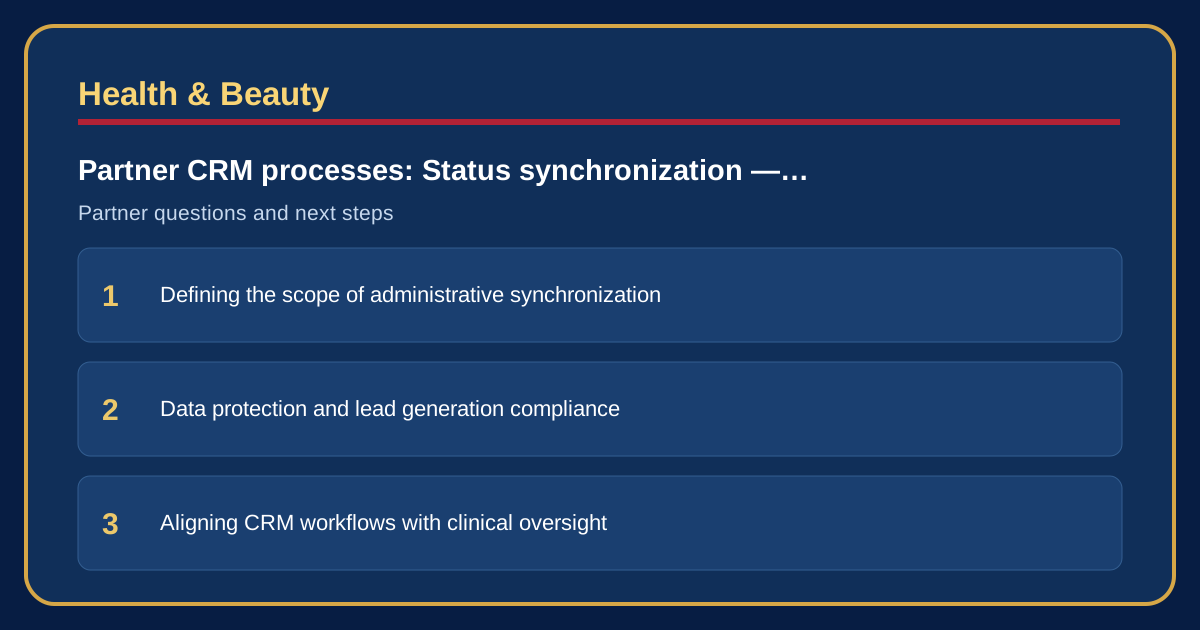
Defining the scope of administrative synchronization
Synchronization between partner systems requires a clear distinction between administrative milestones and clinical progress. Administrative teams often track logistical data, such as travel arrangements or documentation completion, which must be kept separate from sensitive health information. When syncing statuses, ensure that your CRM reflects only the operational progress of the service coordination. If a status update involves a change in a patient’s health condition, this must be handled exclusively by the treating clinician. Maintaining this boundary prevents data overlap and ensures that administrative staff do not inadvertently influence clinical workflows.
Data protection and lead generation compliance
When managing lead information, UK partners must adhere to strict data protection standards. The Information Commissioner’s Office provides clear guidance on how to collect information and generate leads while respecting privacy rights. When synchronizing status updates, ensure that your CRM processes do not store unnecessary personal data that could breach GDPR or PECR regulations. Every piece of information captured must have a lawful basis for processing. Regularly audit your CRM to confirm that status tags are limited to necessary administrative markers, avoiding the storage of detailed health records within general sales platforms.
Aligning CRM workflows with clinical oversight
A primary challenge in UK partner CRM processes is ensuring that status synchronization does not bypass clinical oversight. Because Health & Beauty coordinates administrative and travel services only, your CRM should be configured to trigger a clinical review whenever a status change implies a shift in the service pathway. Never allow automated CRM workflows to make assumptions about a patient’s readiness for treatment. Instead, design your system to pause and prompt for a clinician’s sign-off. This ensures that all medical decisions remain firmly in the hands of qualified professionals.
Managing status updates for cross-border services
When coordinating services that involve international travel, status synchronization becomes increasingly complex. Partners must track logistical milestones like visa approvals, flight bookings, and accommodation confirmations. These administrative statuses should be clearly labelled within your CRM to distinguish them from the medical journey. If a delay occurs in the administrative process, it is important to communicate this to the clinical team, but the CRM must not suggest that this delay is due to a medical change unless confirmed by a licensed clinician. Clear labelling prevents confusion across different operational departments.
Implementing secure communication channels
Security is paramount when synchronizing status updates across multiple partner platforms. Use encrypted communication channels to share administrative updates, ensuring that no sensitive data is transmitted via insecure email or unverified CRM integrations. When syncing statuses, use unique identifiers rather than names or health-related data where possible. This minimises the risk of data exposure during the synchronization process. If you are unsure whether a specific data point is appropriate for your CRM, consult your data protection officer to ensure your practices align with current UK regulatory expectations.
Handling discrepancies in status reporting
Discrepancies between partner systems are common, particularly when different organisations use varying CRM architectures. If a status update in your system does not match the clinical record, do not attempt to resolve this through administrative guesswork. Instead, implement a formal query process where the administrative team requests clarification from the treating clinician. This ensures that the CRM remains an accurate reflection of the service journey. By establishing a standard protocol for resolving these discrepancies, you maintain the integrity of your data and ensure that all stakeholders are informed.
Operational next steps for partner coordination
To refine your current CRM processes, start by mapping your administrative workflow against the clinical journey. Identify where status synchronization is essential and where it creates unnecessary risk. If you require assistance with the administrative or travel coordination aspects of your service, please reach out to the Health & Beauty team to discuss how we can support your operational needs. We are available to help streamline your logistical processes, ensuring that your administrative team remains focused on service delivery while clinicians manage all medical decisions and patient care.
Frequently Asked Questions
What should I do if my CRM status conflicts with a clinician’s report?
Always prioritise the clinician’s report over your CRM status. If a conflict arises, pause the administrative workflow and contact the treating clinician directly to verify the current status. Never update your CRM based on assumptions or outdated information, as this could lead to significant errors in service coordination.
How can I ensure my CRM processes remain compliant with UK data laws?
Regularly review your data collection and storage practices against the latest guidance from the Information Commissioner’s Office. Ensure that you only collect information necessary for the specific administrative task at hand and that you have a clear, documented lawful basis for processing all personal data within your CRM.
Who is responsible for updating medical statuses in the CRM?
Medical statuses must only be updated by licensed clinicians or authorised clinical staff. Administrative teams should focus exclusively on logistical and travel-related statuses. If an administrative team member receives information regarding a medical change, they must immediately pass this to the relevant clinician for verification and formal entry into the clinical record.
Sources and references
https://ico.org.uk/for-organisations/direct-marketing-and-privacy-and-electronic-communications/direct-marketing-guidance/collect-information-and-generate-leads/
Partner with Health & Beauty
Discuss a potential collaboration and practical requirements directly with our team.