Partner communications: Meeting follow-up — practical questions for UK partners
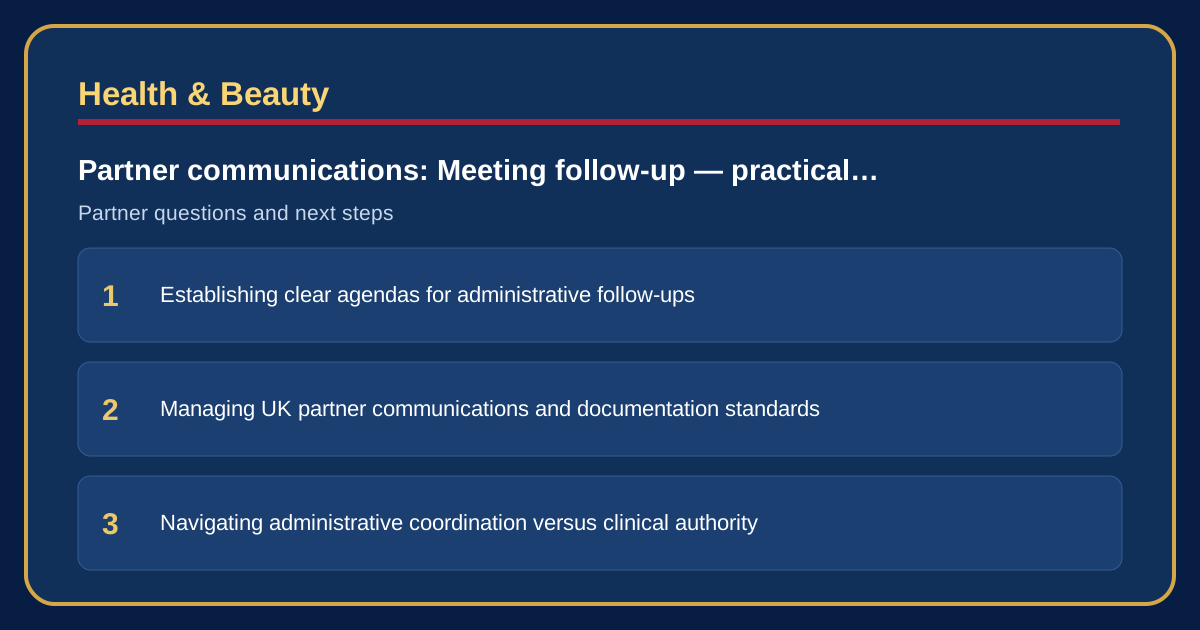
Effective UK partner communications — meeting follow-up requires structured coordination, clear documentation, and transparent professional boundaries. Following recent discussions, this guide addresses practical questions regarding operational support and administrative workflows. Health & Beauty coordinates administrative and travel services only; medical decisions are made by licensed clinicians. Health & Beauty does not operate clinics. When managing professional inquiries, stakeholders must distinguish between logistical facilitation and clinical judgment. Relying on verified regulatory frameworks ensures that information sharing remains compliant, accurate, and aligned with industry standards for all participating UK organizations.
Establishing clear agendas for administrative follow-ups
Following initial introductory meetings, setting a structured agenda for subsequent communications helps maintain momentum and ensures all logistical points are addressed systematically. Partners should outline specific administrative topics prior to any scheduled call, focusing on timeline coordination, documentation requirements, and service boundaries. Establishing these clear parameters prevents confusion between administrative facilitation and clinical responsibilities. A well-defined agenda also respects participants' time, allowing representatives to focus on operational efficiencies, communication channels, and the necessary next steps for supporting upcoming collaborative schedules across regional networks.
Managing UK partner communications and documentation standards
Maintaining consistent communication channels is vital for successful ongoing collaboration within the United Kingdom. Partners should document key discussion points immediately following meetings to create an accurate audit trail of operational decisions. This practice ensures that all administrative arrangements, such as travel coordination and schedule management, are recorded transparently. In accordance with data governance principles, written summaries should be securely stored and shared only with authorized personnel. Proper documentation protects organizational interests, clarifies mutual expectations, and provides a reliable reference point for future administrative planning sessions.
Navigating administrative coordination versus clinical authority
It is essential to maintain a strict separation between administrative coordination and clinical decision-making during all partnership interactions. While operational teams arrange schedules, travel logistics, and general communications, medical choices remain exclusively within the purview of qualified healthcare professionals. Administrative staff must never provide medical opinions, interpret clinical guidelines, or discuss treatment outcomes. Partners should direct any clinical queries directly to treating clinicians at accredited medical facilities. Respecting these professional boundaries ensures patient safety, maintains regulatory compliance, and upholds the integrity of both administrative and clinical roles.
Handling data protection requirements during professional exchanges
Data protection is a paramount consideration when managing professional records and partner correspondence. Organizations operating within the United Kingdom must adhere strictly to established data privacy laws when handling personal and administrative information. Meeting follow-ups should only involve necessary details, avoiding any unnecessary sharing of sensitive or patient-identifying data. Secure communication platforms and encrypted channels should be utilized for transmitting operational documents. By prioritizing data minimization and secure storage practices, partners demonstrate a commitment to confidentiality and regulatory compliance in every administrative interaction.
Addressing scheduling workflows and logistical support protocols
Streamlining scheduling workflows requires a clear understanding of logistical support protocols and regional service availability. Administrative teams facilitate the practical aspects of partner visits and itinerary planning without guaranteeing specific timelines or treatment results. When questions arise regarding facility access or appointment coordination, partners should consult official operational guidelines rather than relying on informal estimates. Establishing predictable, transparent workflows minimizes delays and ensures that all logistical arrangements align seamlessly with the professional requirements of the participating UK clinics and organizations.
Reviewing feedback mechanisms for ongoing collaboration quality
Continuous improvement relies on constructive feedback loops established between coordinating partners and administrative teams. Regular review sessions allow stakeholders to discuss logistical challenges, evaluate communication effectiveness, and identify areas where administrative support can be enhanced. Partners are encouraged to submit practical observations regarding scheduling efficiency and document clarity. These reviews should focus exclusively on operational processes rather than clinical methodologies. Implementing structured feedback mechanisms fosters a transparent working environment, strengthens professional relationships, and ensures that administrative support continually meets the practical needs of all involved parties.
Fostering transparent partnerships and next-step actions
Building lasting professional relationships depends on transparency, reliability, and clear accountability during every phase of collaboration. Action items agreed upon during meetings should be assigned specific owners and realistic timeframes for completion. If you wish to discuss administrative coordination, logistics support, or general partnership workflows further, please feel free to reach out to the Health & Beauty team using our standard communication channels to arrange a follow-up conversation. We welcome the opportunity to support your administrative needs while maintaining strict adherence to professional and regulatory standards.
Frequently Asked Questions
### What is the primary purpose of a meeting follow-up in UK partnerships?
A meeting follow-up solidifies action items, clarifies administrative responsibilities, and ensures all participating parties share a mutual understanding of logistical next steps and documentation requirements following initial discussions.
### Can administrative coordinators answer clinical or treatment-related questions?
No. Administrative coordinators handle travel, scheduling, and logistics only. All medical decisions, clinical queries, and treatment assessments are strictly the responsibility of licensed clinicians within accredited medical facilities.
### How should professional partners share and store meeting documentation?
Partners must use secure, encrypted communication channels and adhere to UK data protection standards. Documentation should avoid sensitive patient data and be accessible only to authorized administrative personnel.
Source: https://ico.org.uk/for-organisations/uk-gdpr-guidance-and-resources/
Sources and references
https://ico.org.uk/for-organisations/uk-gdpr-guidance-and-resources/
Partner with Health & Beauty
Discuss a potential collaboration and practical requirements directly with our team.