Guide: Patient record access in a provider — a decision checklist for patients and referring professionals — record handover — international patients
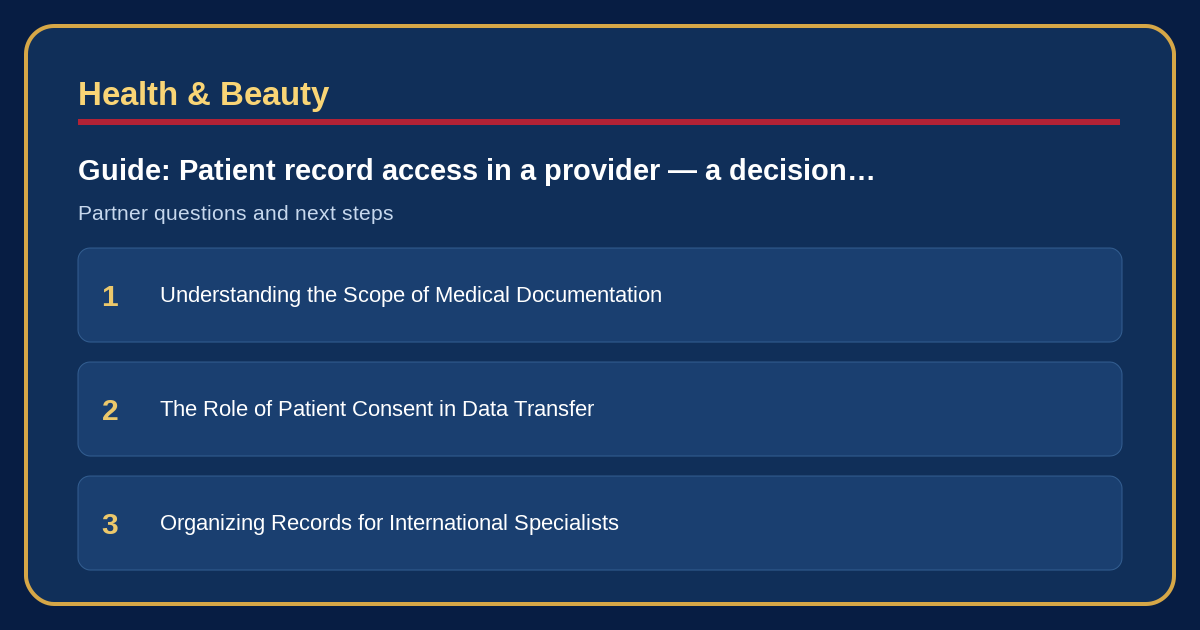
Navigating patient record access in a provider referral workflow requires careful coordination when seeking care across borders. Patients must ensure their medical history is accurately transferred to maintain continuity of care. Health & Beauty coordinates administrative and travel services only; medical decisions are made by licensed clinicians. Health & Beauty does not operate clinics. By following a structured approach, you can bridge the gap between your home physician and your international specialist, ensuring that all relevant diagnostic data is shared securely and effectively.
Understanding the Scope of Medical Documentation
When preparing for international treatment, the first step involves identifying which records are essential for your new clinical team. Not every document in your file is necessary, but diagnostic imaging, surgical history, and current medication lists are typically vital. You should request a comprehensive summary from your primary care provider that highlights your current health status and any ongoing conditions. This documentation serves as the foundation for your new provider to make informed decisions regarding your care plan and potential treatment pathways.
The Role of Patient Consent in Data Transfer
Privacy regulations are a critical component of any medical transition. In the United States, the Health Insurance Portability and Accountability Act (HIPAA) provides a framework for how protected health information is handled. When moving records internationally, you must provide explicit, written consent to your current provider to release your files. Ensure that the authorization form specifies exactly which records are being sent and to whom. Understanding these privacy boundaries helps protect your sensitive information while ensuring that your international clinical team receives the necessary data.
Organizing Records for International Specialists
Efficiency is key when handing over medical files to a foreign provider. Organize your documents chronologically, starting with the most recent diagnostic tests and surgical reports. Digital copies are often preferred, as they can be transmitted securely and accessed quickly by international teams. If you have physical copies, such as original X-rays or pathology slides, consult with your current provider about the safest way to transport them. Clear, well-organized records reduce the risk of administrative delays and help your new clinicians focus on your health.
Communication Between Referring and Treating Clinicians
Direct communication between your home physician and your international specialist can significantly improve the quality of your care. Ask your local provider if they are willing to participate in a brief consultation or provide a direct contact point for the international team. This professional dialogue ensures that nuances in your medical history are not lost in translation. If direct contact is not possible, ensure that your records include a clear summary written by your primary physician, which acts as a bridge between the two clinical environments.
Managing Language and Translation Requirements
When transferring records across borders, language barriers can pose a significant challenge. Ensure that all critical medical reports are translated by a certified medical translator who understands clinical terminology. Relying on automated translation tools can lead to dangerous inaccuracies in dosage instructions or diagnostic findings. Your international clinic may have preferred translation services or specific requirements for how documents should be formatted. Confirm these details early in the process to avoid last-minute complications that could interfere with your scheduled treatment or consultation timeline.
Security Protocols for Digital Health Records
In the modern era, most medical records are stored electronically. When transmitting these files, prioritize security by using encrypted email services or secure patient portals provided by your healthcare institutions. Avoid sending sensitive medical information through standard, unencrypted email, as this may expose your data to unauthorized access. If you are using a third-party service to facilitate the transfer, verify their privacy policies and ensure they comply with international data protection standards. Protecting your digital footprint is just as important as the medical care itself.
Coordination and Professional Support Services
Managing the logistics of medical record transfers can be overwhelming while you are also preparing for travel and treatment. Health & Beauty coordinates administrative and travel services only; medical decisions are made by licensed clinicians. If you need assistance with the administrative side of your journey, please feel free to reach out to our team at hb34partners.com. We can help you organize your travel itinerary and provide guidance on how to facilitate communication with your chosen clinic, ensuring your focus remains on your health and recovery.
Frequently Asked Questions
What should I do if my home provider refuses to release my medical records?
Under many privacy frameworks, you have a legal right to access your own medical records. If your provider is hesitant, request a formal copy of your file in writing. If they continue to deny access, ask for the specific policy or legal reason for the refusal and consult with a patient advocate or legal professional to understand your rights regarding your personal health information.
How far in advance should I start the record handover process?
It is advisable to begin gathering and organizing your medical records at least four to six weeks before your scheduled travel. This allows ample time for your current provider to compile the files, for any necessary translations to be completed, and for the international clinic to review the documentation. Starting early prevents last-minute stress and ensures that your new clinical team has sufficient time to prepare for your arrival.
Are there specific formats required for international medical records?
Requirements vary by clinic and country. Some international providers prefer digital files in PDF format, while others may require original physical copies of imaging studies like MRIs or CT scans. Always contact your international clinic directly to ask about their specific submission protocols. Following their preferred format ensures that your records are compatible with their internal systems and can be reviewed without technical delays or compatibility issues.
Sources and references
https://www.hhs.gov/hipaa/for-professionals/privacy/index.html
Partner with Health & Beauty
Discuss a potential collaboration and practical requirements directly with our team.