Guide: Health referral data protection and — which medical records to discuss before treatment — decision records — records staff
When a person responsible for patient documents manages healthcare information, understanding health referral data protection and partner responsibilities is essential for safeguarding sensitive personal data. Health & Beauty coordinates administrative and travel services only; medical decisions are made by licensed clinicians. Health & Beauty does not operate clinics. When preparing for upcoming procedures, staff must carefully evaluate which medical records to discuss before treatment to ensure safe clinical handovers while remaining fully compliant with UK data protection regulations and information governance frameworks.
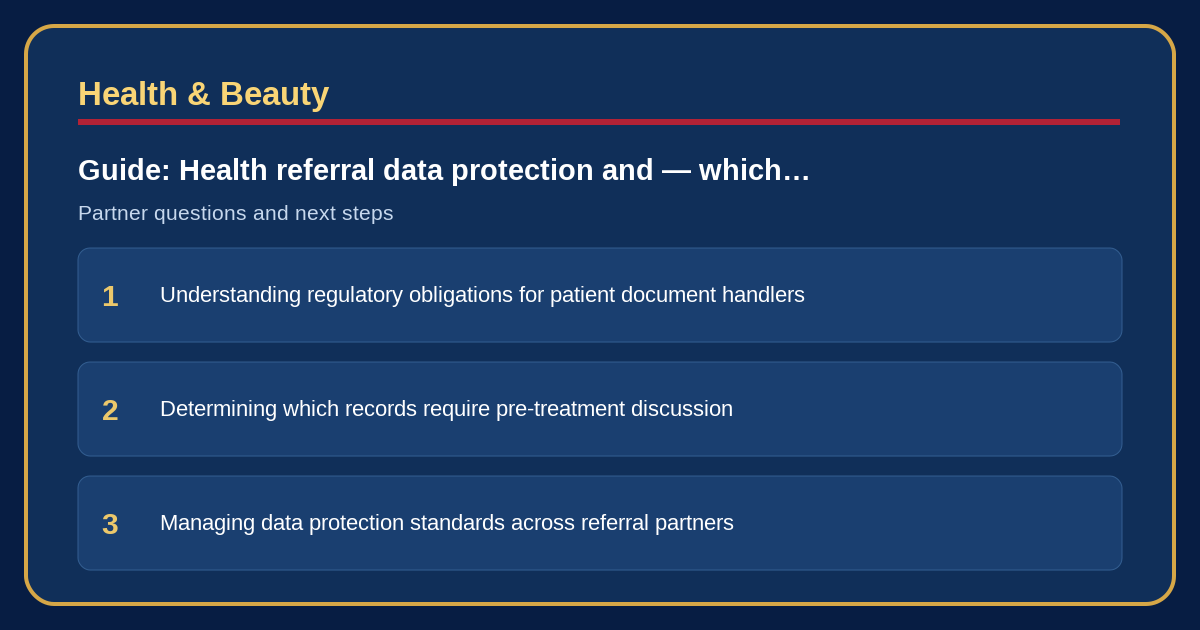
Understanding regulatory obligations for patient document handlers
Information handlers working within healthcare administration must understand statutory data protection principles. Regulatory frameworks require strict confidentiality when processing personal data, particularly special category health records. Staff managing referrals must ensure that every piece of information transferred between parties has a lawful basis. Administrative teams should implement robust access controls, ensuring only authorised personnel view sensitive documentation. Compliance involves regular audits of document handling procedures, secure storage solutions, and proper staff training on identifying potential data breaches. Organisations must maintain clear accountability structures to protect patient privacy throughout the entire referral pathway.
Determining which records require pre-treatment discussion
Deciding which medical records to discuss before treatment requires close collaboration with qualified medical professionals. Generally, clinicians need to review recent diagnostic imaging, relevant laboratory test results, historical surgical notes, and known allergy lists. Document coordinators should never guess which files are clinically necessary; instead, they must ask the treating clinician to specify required documentation. Gathering this information safely prevents administrative delays and ensures the clinical team possesses a comprehensive medical history. Prioritising accurate records supports patient safety, mitigates risks during consultations, and allows practitioners to make fully informed, independent medical decisions based on verified clinical facts.
Managing data protection standards across referral partners
Data protection compliance becomes more complex when multiple independent partners are involved in a single referral pathway. Every organisation handling patient documents must adhere to stringent data sharing agreements and privacy standards. Administrative staff should verify that all external partners have appropriate technical and organisational measures in place to secure personal data against unauthorised access or accidental loss. Regular reviews of third-party compliance help maintain transparency and trust. When transferring records internationally or between separate corporate entities, staff must apply appropriate safeguards, such as standard contractual clauses, to protect the privacy rights of the individuals whose records are being shared.
Establishing clear protocols for treatment decision records
Documenting treatment decisions accurately is a vital responsibility for administrative personnel supporting healthcare pathways. Every formal decision made by a licensed clinician must be recorded systematically within the secure patient file. Staff responsible for records must ensure these entries are timestamped, unambiguous, and attributable to the appropriate medical professional. Vague notes or unverified summaries should be avoided entirely. Proper decision records protect both the patient and the care provider by creating a reliable audit trail. If uncertainties arise regarding how to log specific clinical outcomes, staff must consult the treating clinician rather than relying on assumptions.
Training records staff on secure handling and data minimisation
Administrative teams handling sensitive health data require targeted training on data minimisation and secure document handling practices. Staff must only collect, process, and share the minimum amount of personal data necessary to achieve the specific administrative purpose. Training programmes should cover secure email practices, encrypted digital storage, and the secure disposal of physical paper records. Employees need to recognise the signs of suspicious data requests and know the exact internal protocol for reporting security incidents. Ongoing education ensures that every member of the records team remains vigilant against evolving cyber threats and maintains continuous compliance with data protection laws.
Handling subject access requests within administrative workflows
Individuals possess legal rights to access the personal data held about them by organisations. Administrative staff managing health referrals must understand how to process subject access requests efficiently and lawfully. When a person requests copies of their referral files or decision records, staff must verify the identity of the requester before disclosing any sensitive information. Organisations generally must respond to these requests without undue delay and within statutory timeframes. If third-party data is included within the records, staff should seek appropriate guidance or consult clinicians to determine whether redaction is necessary to protect confidentiality.
Administrative coordination and contact arrangements
Effective administration relies on transparent communication and well-defined operational boundaries. Because Health & Beauty focuses exclusively on coordinating administrative logistics and travel arrangements, we never participate in clinical evaluations or determine which medical interventions are appropriate. All medical assessments, treatment planning, and clinical decisions remain strictly the responsibility of independent, licensed healthcare practitioners. If you have administrative enquiries regarding our logistical coordination services, you are welcome to reach out to our team for clear, low-pressure guidance on how we support your journey. Urgent symptoms or medical questions must always be directed to a qualified healthcare professional, never through a general administrative contact channel.
Frequently Asked Questions
H3: What records should be shared with a clinic before a consultation?
Staff should consult the treating clinician to determine which specific medical records are required. Typically, relevant files include recent diagnostic test results, historical surgical summaries, and known allergy details. Never guess clinical requirements; always defer to the treating medical specialist for guidance.
H3: How does data protection legislation apply to health referrals?
Data protection laws require organisations handling patient documents to process special category data securely and lawfully. Administrative staff must implement robust access controls, maintain strict confidentiality, establish clear data sharing agreements with partners, and respect individual rights, including subject access requests.
H3: Who is responsible for medical decisions in a referral pathway?
All medical decisions are made exclusively by licensed clinicians operating independently. Health & Beauty provides administrative and travel coordination only and does not operate clinics, employ treating physicians, or participate in any clinical diagnosis, treatment planning, or medical evaluation processes.
Sources and references
https://ico.org.uk/for-organisations/uk-gdpr-guidance-and-resources/
Partner with Health & Beauty
Discuss a potential collaboration and practical requirements directly with our team.