Guide: Health referral data protection and — how to clarify language and translation needs for medical records — follow-up review — records staff
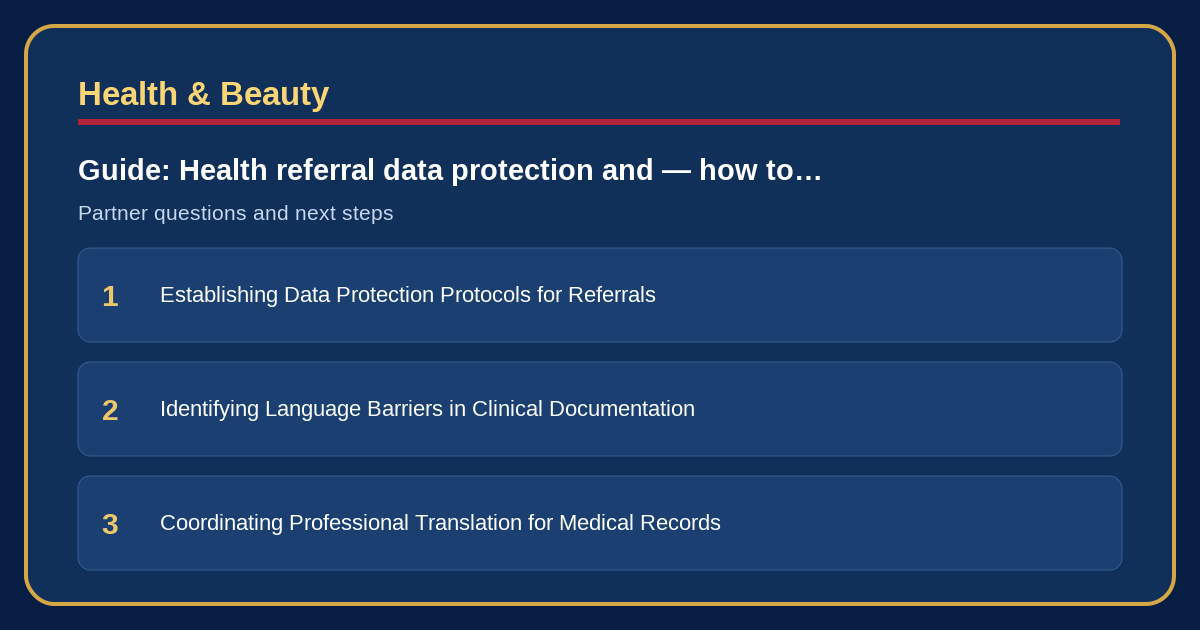
Managing patient information during a clinical follow-up requires strict adherence to privacy standards. Health & Beauty coordinates administrative and travel services only; medical decisions are made by licensed clinicians. Health & Beauty does not operate clinics. When handling health referral data protection and partner responsibilities, staff must ensure that sensitive information remains secure while facilitating necessary communication. Clarifying language and translation needs for medical records is essential to ensure that clinicians receive accurate histories, allowing them to make informed decisions regarding patient care and ongoing treatment plans.
Establishing Data Protection Protocols for Referrals
When handling patient referrals, the primary objective is to maintain confidentiality while ensuring that the clinical team has access to relevant history. Data protection requires that all personal information is processed lawfully, fairly, and transparently. Staff should ensure that any documentation shared between parties is encrypted and restricted to authorised personnel only. By implementing robust access controls, organisations can mitigate the risk of unauthorised disclosure. Always verify that the patient has provided explicit consent for their records to be shared with the relevant clinical specialists involved.
Identifying Language Barriers in Clinical Documentation
Effective communication is the cornerstone of safe medical practice. When a patient’s primary language differs from that of the clinical team, the risk of misunderstanding increases significantly. Records staff must proactively identify these barriers during the initial intake or follow-up review. If a patient cannot fully comprehend their medical records or the instructions provided by a clinician, the quality of care may be compromised. Identifying these needs early allows for the timely arrangement of professional translation services, ensuring that all parties are fully informed throughout the process.
Coordinating Professional Translation for Medical Records
Once a language barrier is identified, the next step is to secure accurate translation services. It is vital to use professional medical translators who understand clinical terminology, rather than relying on informal or automated tools that may misinterpret critical health data. When requesting translations, provide clear instructions regarding the scope of the documents required. Ensure that the translated records are verified for accuracy before they are integrated into the patient’s file. This diligence helps maintain the integrity of the medical history and supports the clinician’s diagnostic process.
Clarifying Language and Translation Needs for Medical Records
To effectively manage health referral data protection and partner responsibilities, staff must establish a clear workflow for translation requests. When preparing for a follow-up review, ask the patient directly about their preferred language for written communication. Document this preference clearly in the administrative file. If translation is necessary, coordinate with the clinical team to determine which specific records require conversion. By standardising this process, you ensure that no critical information is lost or mistranslated, thereby supporting the clinician’s ability to provide high-quality, safe, and effective patient care.
Maintaining Security During Information Exchange
The exchange of medical records between administrative staff and clinical partners must occur through secure, verified channels. Avoid sending unencrypted documents via standard email, as this poses a significant risk to patient privacy. Instead, utilise secure portals or encrypted file-sharing systems that comply with data protection regulations. Regularly audit these exchange processes to ensure that only the minimum necessary information is shared. By maintaining a strict audit trail of who accessed the records and when, organisations can demonstrate accountability and protect the patient’s sensitive health information at all times.
Training Staff on Data Privacy and Compliance
Ongoing training is essential for any team handling sensitive health information. Staff should be well-versed in the principles of data protection, understanding their specific responsibilities regarding the storage, transfer, and disposal of patient records. Regular workshops can help employees recognise potential security threats and understand the importance of maintaining patient confidentiality. When staff are confident in their knowledge of data protection laws, they are better equipped to handle complex situations, such as translation requests, without compromising the security or privacy of the individuals they serve.
Engaging with Health & Beauty for Administrative Support
Health & Beauty provides professional coordination for administrative and travel-related tasks, ensuring that your journey is managed with care. While we focus on the logistical aspects of your referral, we remain committed to supporting the privacy and clarity of your documentation needs. If you have questions regarding the administrative coordination of your records or require assistance with logistical planning, please reach out to our team. We are happy to discuss how we can help facilitate your requirements. Contact Health & Beauty through our official channels to speak with a coordinator today.
Frequently Asked Questions
What should I do if a patient’s medical records are in a language the clinician does not understand?
You must arrange for a professional, medically qualified translator to convert the documents. Do not rely on family members or non-specialised staff, as medical terminology requires precise translation to prevent clinical errors. Ensure the translated documents are formally verified for accuracy before they are added to the patient’s official clinical file.
How can I ensure that patient data remains protected during the translation process?
Only use reputable translation services that have signed data processing agreements. Ensure that all files are transferred via encrypted, secure channels. Before sharing any documents, redact unnecessary personal information that is not essential for the translation task, adhering to the principle of data minimisation to maintain strict privacy standards throughout the entire workflow.
Who is responsible for verifying the accuracy of translated medical records?
The administrative staff coordinating the referral are responsible for ensuring the translation service is professional and qualified. However, the final clinical interpretation of the translated records remains the responsibility of the treating clinician. If a clinician identifies any ambiguity in the translated text, they must request clarification or a secondary review before making any medical decisions based on that specific documentation.
Sources and references
https://ico.org.uk/for-organisations/uk-gdpr-guidance-and-resources/
Partner with Health & Beauty
Discuss a potential collaboration and practical requirements directly with our team.