Guide: Healthcare referral information privacy — organizing communication when a treatment appointment changes — aftercare planning — referring
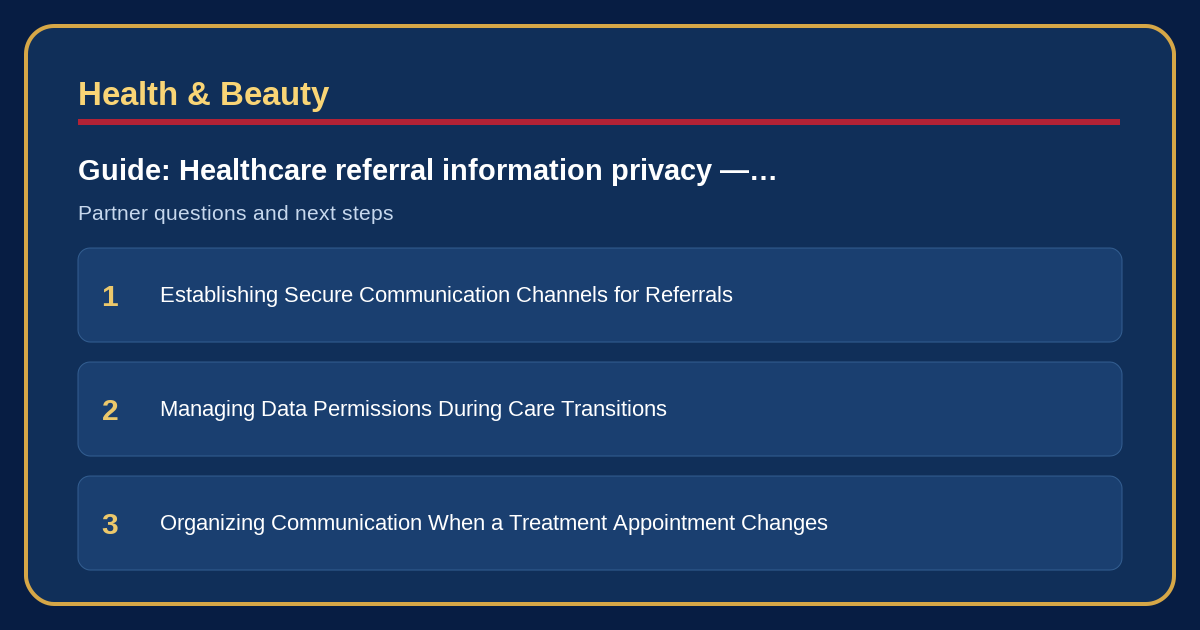
Navigating the complexities of healthcare referral information privacy and permissions requires a clear understanding of how sensitive data flows between providers. When coordinating care, maintaining patient confidentiality is the primary priority for all involved parties. Health & Beauty coordinates administrative and travel services only; medical decisions are made by licensed clinicians. Health & Beauty does not operate clinics. By adhering to established regulatory frameworks, referring specialists can ensure that patient records remain secure while facilitating the necessary communication required for effective, high-quality individual aftercare planning.
Establishing Secure Communication Channels for Referrals
When a referring specialist initiates a transfer of care, the first step is establishing a secure, encrypted channel for information exchange. Privacy regulations mandate that any transmission of protected health information must be guarded against unauthorized access. Clinicians should verify that all digital platforms used for sharing patient histories, diagnostic images, or treatment notes comply with federal standards. By utilizing verified, secure portals rather than standard email, specialists protect the integrity of the patient’s medical journey while ensuring that the receiving team has the context needed for safe treatment.
Managing Data Permissions During Care Transitions
Effective aftercare planning relies on the seamless transfer of permissions. Patients must provide explicit consent for their medical information to be shared between their primary specialist and any secondary providers. Referring clinicians should document these permissions clearly within the patient’s file before any data is transmitted. This process ensures that the patient remains in control of their health information throughout the transition. If a patient chooses to restrict certain details, the referring specialist must respect these boundaries while still providing enough clinical context to ensure safe, ongoing care.
Organizing Communication When a Treatment Appointment Changes
Healthcare referral information privacy and permissions become particularly critical when a treatment appointment changes unexpectedly. When a schedule shift occurs, the communication flow must remain strictly limited to the necessary personnel to maintain confidentiality. Referring specialists should establish a protocol where only essential administrative or clinical staff are notified of the change. By limiting the disclosure of the patient’s identity and the specific nature of their procedure during these logistical updates, providers minimize the risk of accidental information exposure while ensuring the patient receives timely care.
Coordinating Aftercare Planning with External Providers
Aftercare planning is a collaborative effort that requires precise information sharing. When a patient moves from a primary specialist to a secondary facility, the referring clinician must provide a comprehensive summary of the treatment plan. This summary should include post-procedural instructions and recovery expectations without oversharing unnecessary personal data. By focusing on the clinical requirements of the recovery phase, the referring specialist ensures that the receiving team is well-prepared. Always confirm that the receiving facility has acknowledged receipt of these instructions and understands the specific privacy protocols in place.
Verifying Compliance in Referral Networks
Maintaining a compliant referral network involves regular audits of how information is handled. Referring specialists should periodically review their communication workflows to ensure that all staff members understand the importance of privacy. This includes training on how to handle sensitive documents and how to respond if a breach is suspected. By fostering a culture of privacy, clinicians protect their patients and their professional reputation. If you have questions regarding the administrative coordination of your referral process, please reach out to Health & Beauty for assistance with travel and logistics.
Addressing Documentation Requirements for Specialists
Documentation is the backbone of healthcare privacy. Every interaction involving the transfer of patient information should be logged, noting who accessed the data, when it was shared, and for what purpose. This audit trail is essential for demonstrating compliance with federal privacy rules. Referring clinicians should ensure that their electronic health record systems are configured to track these activities automatically. When information is shared for aftercare, the documentation should clearly reflect that the patient’s privacy rights were upheld and that only the minimum necessary information was disclosed.
Navigating Regulatory Standards for Information Privacy
The regulatory landscape governing health information is designed to protect the patient above all else. Referring clinicians must stay informed about updates to these standards to ensure their practices remain current. This involves understanding the legal definitions of protected health information and the specific circumstances under which it can be disclosed. When in doubt, clinicians should consult with their legal or compliance departments to interpret how these rules apply to unique referral scenarios. Prioritizing these standards ensures that the patient’s trust is maintained throughout their entire medical experience.
Frequently Asked Questions
What should a referring clinician do if a patient requests to limit the information shared with a secondary provider?
Clinicians must honor reasonable requests to restrict the disclosure of health information. You should document the specific limitations requested by the patient in their medical record and ensure that only the authorized information is transmitted to the receiving facility during the referral process.
How can a specialist ensure that administrative staff handle referral data securely?
Staff should receive regular training on privacy policies and the importance of the minimum necessary rule. Access to patient records should be restricted to those who strictly require the information to perform their specific administrative or clinical duties, preventing unnecessary exposure of sensitive data.
What is the best way to handle an accidental disclosure of patient information during a referral?
If an accidental disclosure occurs, the clinician must immediately assess the situation, mitigate any further exposure, and follow the established breach notification protocols required by law. Promptly documenting the incident and taking corrective action is essential to maintaining compliance and protecting the patient’s privacy.
Sources and references
https://www.hhs.gov/hipaa/for-professionals/privacy/index.html
Partner with Health & Beauty
Discuss a potential collaboration and practical requirements directly with our team.