Guide: Health referral data protection and — questions about personal information and consent — second opinion — care coordinators
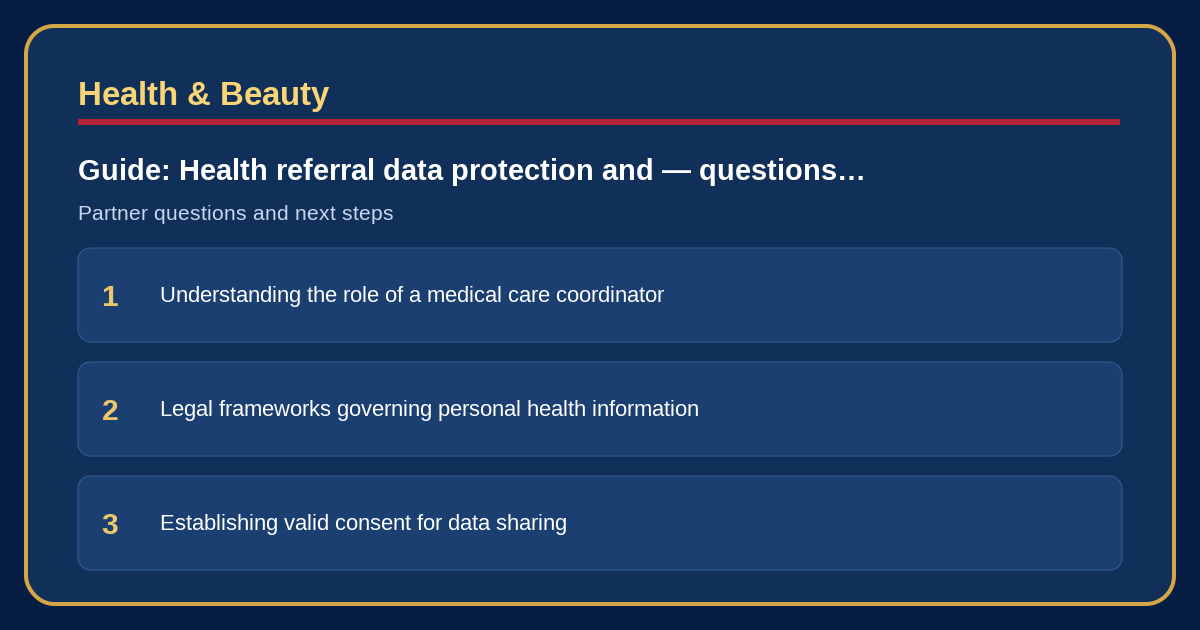
Navigating a medical pathway often involves sharing sensitive records when you seek expert guidance. Health & Beauty coordinates administrative and travel services only; medical decisions are made by licensed clinicians. Health & Beauty does not operate clinics. When working with a medical care coordinator while seeking an independent second opinion: Health referral data protection and partner responsibilities. Specific question: questions about personal information and consent. Understanding how your medical information is processed safeguards your privacy. UK regulations set clear standards for handling personal data safely and transparently.
Understanding the role of a medical care coordinator
A dedicated coordinator assists with organising logistics, scheduling consultations, and managing your administrative records smoothly. They act as a helpful bridge between you and various healthcare providers. However, they do not provide medical advice or perform clinical procedures. Their responsibility is strictly logistical support, ensuring that your appointments and paperwork are handled efficiently. Clarifying this distinction helps you understand who is accountable for your personal data versus who makes clinical decisions regarding your ongoing health journey.
Legal frameworks governing personal health information
Data protection legislation places strict legal obligations on organisations that handle sensitive personal details. Personal information relating to health must be stored securely, processed lawfully, and handled with utmost confidentiality. Coordinators and administrative partners must comply with these statutory requirements to maintain your trust. This legal backing ensures that your records are not shared inappropriately or used for purposes beyond what you explicitly authorised. Familiarising yourself with these regulatory expectations empowers you to ask informed questions about your data privacy.
Establishing valid consent for data sharing
Consent forms the cornerstone of lawful information processing within any medical pathway. You must be fully informed about who will view your records, why they need access, and how long the data will be stored. Valid consent is never assumed or bundled into vague terms and conditions; it requires an active, clear choice on your part. If you feel uncertain about any document requesting your permission, ask the administrator to explain each clause clearly before you sign or proceed further.
Managing your records during a second opinion
Seeking an independent evaluation often requires transferring your existing medical history to a new clinical team. This transfer process demands careful coordination to ensure your records arrive securely and completely. You have the right to request copies of your diagnostic reports and imaging files to facilitate this transition. Administrative coordinators can assist with the secure transmission of these documents, provided you have given explicit written authorisation for them to act on your behalf in transferring your personal file.
Rights regarding access and data rectification
Data protection laws grant individuals specific rights regarding their personal records. You can submit a formal request to view the information an organisation holds about you. If you discover factual inaccuracies within your administrative file, you have the legal right to request corrections. While clinical opinions documented by doctors cannot simply be altered, administrative errors regarding your contact details or dates can be updated. Understanding these rights ensures your personal dossier remains accurate throughout your administrative journey.
Addressing security measures for digital transmissions
Sending sensitive medical documentation digitally requires robust security protocols to prevent unauthorised access. Reputable coordinators use encrypted channels, secure portals, or password-protected files to transmit your personal information safely. Avoid sending confidential health records through standard, unencrypted email accounts, as these can be vulnerable to interception. Asking about the specific technical safeguards employed by your administrative provider gives you peace of mind regarding the digital safety of your private medical history.
To discuss your administrative arrangements and logistical support needs in a low-pressure environment, please reach out to Health & Beauty directly today.
Frequently Asked Questions
H3: What should I ask about my personal information and consent?
You should ask who specifically will have access to your records, how long the data will be retained, and what specific purposes the information serves. Request clear clarification on whether any third-party partners will handle your paperwork and ensure you understand how to withdraw your consent at any stage if your circumstances change.
H3: Can a coordinator share my health data without asking me?
Generally, personal health data cannot be shared without your explicit permission, except in very specific legal or emergency circumstances defined by law. Administrative staff must always obtain your informed consent before transferring your medical file to another clinician, specialist, or external service provider involved in your care pathway.
H3: What happens if I want to withdraw my data consent?
You retain the right to withdraw your consent to data processing at any time. To do this, contact your coordinator with a clear request. While this stops future sharing, note that it does not automatically erase records that are legally required to be retained for clinical governance or regulatory compliance purposes.
Sources and references
https://ico.org.uk/for-organisations/uk-gdpr-guidance-and-resources/
Partner with Health & Beauty
Discuss a potential collaboration and practical requirements directly with our team.