Guide: Professional referral consent and — how to plan a safe care handover and continuity — consent review — referring clinicians
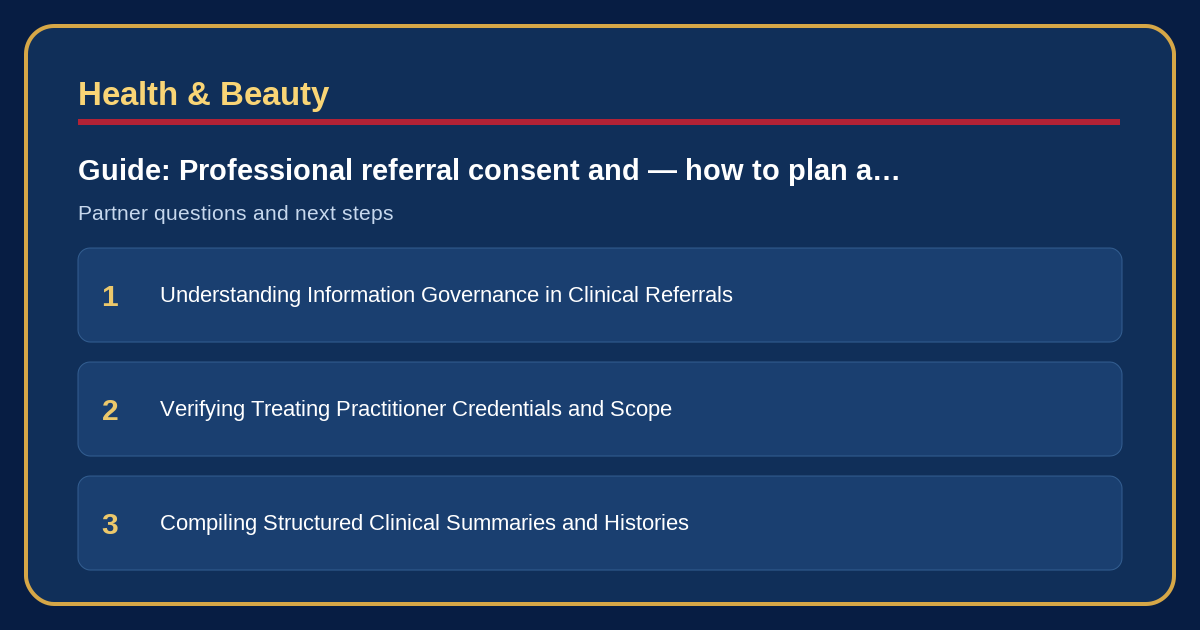
When a referring clinical specialist prepares to review and sign Professional referral consent and confidential handover, understanding how to plan a safe care handover and continuity is essential for patient safety. Health & Beauty coordinates administrative and travel services only; medical decisions are made by licensed clinicians. Health & Beauty does not operate clinics. During this preparatory phase, referring clinicians must evaluate information governance standards, verify treating practitioner credentials, review structured clinical summaries, establish secure communication channels, clarify shared responsibility boundaries, address patient consent protocols, and map out emergency escalation pathways to ensure seamless clinical transitions across regional or international borders.
Understanding Information Governance in Clinical Referrals
Adhering to strict information governance principles ensures that patient data remains protected when moving between primary practitioners and receiving specialists. Clinical teams must verify that all shared records comply with relevant data protection legislation before releasing sensitive health information. Health & Beauty facilitates the secure administrative transmission of these documents without accessing underlying clinical data. Referring clinicians need to confirm that receiving facilities maintain equivalent confidentiality standards. Transparent data handling minimises breach risks, maintains professional trust, and protects individual privacy rights throughout the entire administrative handover process.
Verifying Treating Practitioner Credentials and Scope
Before signing off on any care transition, the referring specialist must independently verify the professional registration, active licensing, and specific clinical scope of the receiving practitioner. Administrative coordinators can assist by compiling publicly available credential certificates, but clinical validation remains the sole responsibility of the referring doctor. Reviewing professional standing ensures that the receiving clinician is properly qualified to manage the intended procedures. If credential documentation appears ambiguous, clinicians should request direct verification from relevant medical councils or regulatory bodies prior to authorising any formal transition.
Compiling Structured Clinical Summaries and Histories
A comprehensive clinical history forms the cornerstone of safe patient handovers. Referring specialists should compile structured summaries that detail previous diagnoses, current medications, known allergies, previous surgical outcomes, and ongoing management plans. This documentation allows the receiving team to understand the patient's baseline health status thoroughly. While Health & Beauty manages the logistics of delivering these files safely, the clinical content must be authored and reviewed by qualified medical professionals. Accurate histories prevent critical information gaps and support informed decision-making by the secondary treating team.
Establishing Secure Communication Channels
Clear, direct communication between referring clinicians and receiving medical teams is vital for continuity of care. Relying solely on patient-relayed messages introduces significant risk of clinical misinterpretation. Healthcare providers should establish encrypted email pathways, secure messaging portals, or direct telephone contacts for professional consultations. Administrative support teams can help arrange these communication links, but clinical discussions regarding treatment specifics must occur clinician-to-clinician. Setting up reliable channels ensures that any urgent clinical queries receive prompt attention from appropriately qualified medical personnel.
Clarifying Shared Responsibility and Care Boundaries
Care handovers often involve a transitional period where responsibility is shared or shifted between primary and secondary providers. Referring clinicians must explicitly document where primary oversight ends and where specialist care begins. This clarity prevents dangerous assumptions regarding who manages ongoing prescriptions, routine monitoring, or postoperative complications. Since Health & Beauty coordinates administrative and travel services only, operational logistics must never be confused with clinical oversight. Clear boundaries ensure that patients receive continuous, accountable medical attention without falling through gaps between different healthcare providers.
Addressing Patient Consent and Information Sharing
Informed consent for a referral involves more than simply agreeing to travel for treatment; it requires the patient to understand how their clinical data will be shared internationally or cross-regionally. Referring clinicians must discuss the specific implications of transferring records with their patients, ensuring they comprehend which entities will view their medical history. Patients should sign explicit consent forms permitting this data transmission. Documenting this discussion thoroughly protects patient autonomy and ensures compliance with legal frameworks governing personal data processing and medical confidentiality.
Preparing Emergency Escalation Pathways and Contact
Unforeseen complications can arise at any stage of a medical journey, making pre-planned emergency pathways indispensable. Referring clinicians should work with patients to establish clear instructions on what to do if urgent symptoms develop while away from their primary care setting. This includes identifying local emergency facilities and knowing how to contact the treating clinical team directly. For administrative support regarding travel adjustments during unexpected medical delays, you are welcome to reach out to Health & Beauty for low-pressure assistance. Urgent clinical symptoms always require immediate medical assessment, never a generic sales contact.
Frequently Asked Questions
H3: What role does Health & Beauty play in the referral process?
Health & Beauty coordinates administrative and travel services only. All medical decisions, clinical evaluations, and treatment plans are made exclusively by licensed clinicians. The organisation does not operate clinics or provide medical advice.
H3: How should clinicians verify data protection compliance during handovers?
Clinicians should review receiving facilities against established data protection regulations, ensuring that all shared electronic records use encrypted transmission channels and comply with applicable legal frameworks governing confidential health information handling.
H3: What should happen if urgent symptoms occur during travel?
Patients experiencing urgent medical symptoms must seek immediate assessment at the nearest local emergency facility. Administrative coordinators cannot provide medical triage, and urgent health concerns require prompt professional clinical evaluation.
Sources and references
https://ico.org.uk/for-organisations/uk-gdpr-guidance-and-resources/
Partner with Health & Beauty
Discuss a potential collaboration and practical requirements directly with our team.