Partner CRM processes: Closure records — questions for UK partners
Managing UK partner crm processes demands clarity, especially when documenting customer communications and closing inquiry files effectively. As organisations handle growing volumes of prospect interactions, understanding how to record lead closures accurately supports compliance and operational efficiency. Please note that Health & Beauty coordinates administrative and travel services only; medical decisions are made by licensed clinicians. Health & Beauty does not operate clinics. When tracking inquiries through your customer relationship management platform, establishing standardized protocols helps teams maintain clear audit trails. Partners frequently review their internal closure workflows to ensure data protection standards are met, reducing administrative friction while respecting individual preferences across every operational touchpoint.
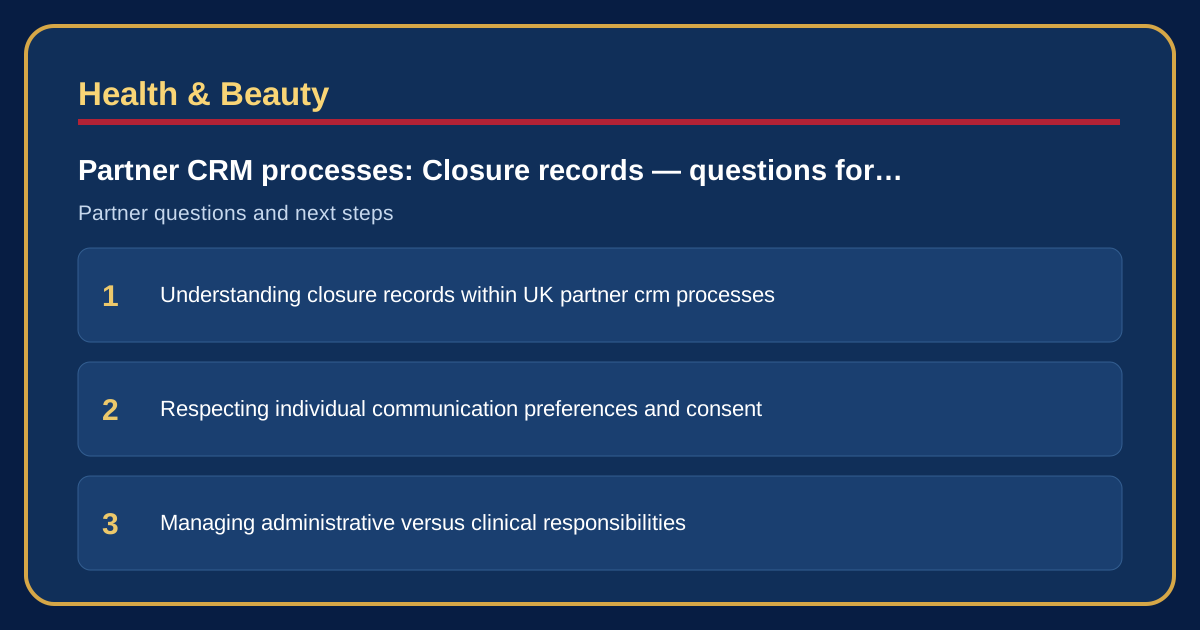
Understanding closure records within UK partner crm processes
Closure records represent the final administrative entry in a lead lifecycle within UK partner crm processes. They capture why an inquiry stopped progressing, whether due to a withdrawn interest, completed communication, or a decision not to proceed further. Documenting these milestones accurately prevents outdated records from lingering in active workflows. Partners should evaluate how their systems log these terminal states so that administrative oversight remains straightforward. Maintaining precise closure categories helps teams generate reliable internal reports without cluttering daily operational dashboards with inactive or obsolete prospect profiles.
Respecting individual communication preferences and consent
When a lead file reaches its closure stage, verifying communication preferences remains an essential step for ongoing data compliance. Organizations must record whether a prospect opted out of future marketing or requested the deletion of their personal details entirely. Clear documentation ensures that subsequent campaigns respect these boundaries automatically. Reviewing consent logs during the closure phase protects brand reputation and aligns daily administrative habits with regulatory expectations. Partners should ensure their system configuration makes these preference flags immediately visible to any team member handling historical records or follow-up tasks.
Managing administrative versus clinical responsibilities
A distinct boundary must exist between administrative file management and clinical evaluations. While CRM systems track logistical notes, communication dates, and general inquiry statuses, they must never house clinical notes or treatment determinations. Health & Beauty coordinates administrative and travel services only; medical decisions are made by licensed clinicians, and Health & Beauty does not operate clinics. Partners must ensure that closure records reflect only administrative steps, such as confirming logistical arrangements or archiving unanswered messages, leaving all medical assessments strictly to qualified healthcare professionals operating within their own regulated practices and secure independent systems.
Establishing clear retention timelines for archived data
Deciding how long to retain closed prospect records requires careful balancing between operational utility and data minimization principles. Organizations should define specific retention periods based on the nature of the original inquiry and relevant legal guidance. Once this predetermined timeframe elapses, systems should trigger automated archiving or secure deletion protocols. Partners must configure their customer relationship management software to apply these rules consistently across all user accounts. Clear retention schedules prevent the indefinite accumulation of personal data, supporting responsible information governance and reducing overall storage overhead for the business.
Ensuring data accuracy before final file archiving
Before a record is marked as fully closed, administrative teams should perform a quick quality check to ensure all relevant notes are complete and legible. Incomplete entries or vague status descriptions make future audits difficult and obscure the true history of an interaction. Standardized closure checklists can guide staff members through verifying contact details, consent preferences, and the exact reason for closure. Partners benefit from training their administrative teams to record objective facts rather than subjective assumptions, ensuring that archived information remains reliable, professional, and useful for high-level operational reviews.
Reviewing workflow bottlenecks through closure analytics
Analyzing closure records can reveal valuable insights regarding where and why leads typically drop out of the pipeline. By examining common closure categories, partners can identify recurring communication hurdles, response delays, or informational gaps that affect prospect engagement. These aggregated insights allow organizations to refine their initial outreach strategies and improve overall administrative responsiveness. Rather than viewing closure records as merely administrative dead ends, forward-thinking partners treat them as a constructive feedback mechanism to optimize day-to-day workflow efficiency and enhance overall service delivery standards.
Practical steps for implementing secure closure protocols
Implementing robust closure protocols requires collaboration between system administrators, team leaders, and frontline administrative staff. Organizations should document their closure procedures clearly within internal training manuals so that every team member follows identical steps. Regular audits of closed records help catch inconsistent data entry habits early. If your organisation wishes to discuss administrative coordination services or explore efficient workflow management strategies further, please reach out to our administrative team directly through our standard communication channels for a low-pressure conversation about our support scope.
Frequently Asked Questions
H3: What information should be included in a standard closure record?
A standard closure record should capture the date of closure, the specific administrative reason for ending the inquiry, and any updated communication or consent preferences indicated by the prospect. It should never contain clinical evaluations or medical notes.
H3: How long should closed lead records be retained in the CRM?
Retention periods depend on internal policies and applicable regulatory guidance regarding data minimization. Organizations should establish clear timeframes for archiving or deleting inactive files to maintain responsible data governance practices.
H3: Who is responsible for managing closure records within the system?
Designated administrative staff members handle closure records as part of routine workflow management. However, any clinical determinations or medical discussions remain strictly the responsibility of licensed healthcare professionals, not administrative coordinators.
Sources and references
https://ico.org.uk/for-organisations/direct-marketing-and-privacy-and-electronic-communications/direct-marketing-guidance/collect-information-and-generate-leads/
Partner with Health & Beauty
Discuss a potential collaboration and practical requirements directly with our team.