Guide: Health referral data protection and — how to distinguish official guidance from unverified — remote coordination — international patients
When planning medical travel, understanding health referral data protection and partner responsibilities is essential for safeguarding your privacy. Health & Beauty coordinates administrative and travel services only; medical decisions are made by licensed clinicians. Health & Beauty does not operate clinics. For international patients, distinguishing between official regulatory guidance and unverified promotional claims ensures that sensitive personal information remains secure while navigating the complexities of remote care coordination and cross-border administrative logistics.
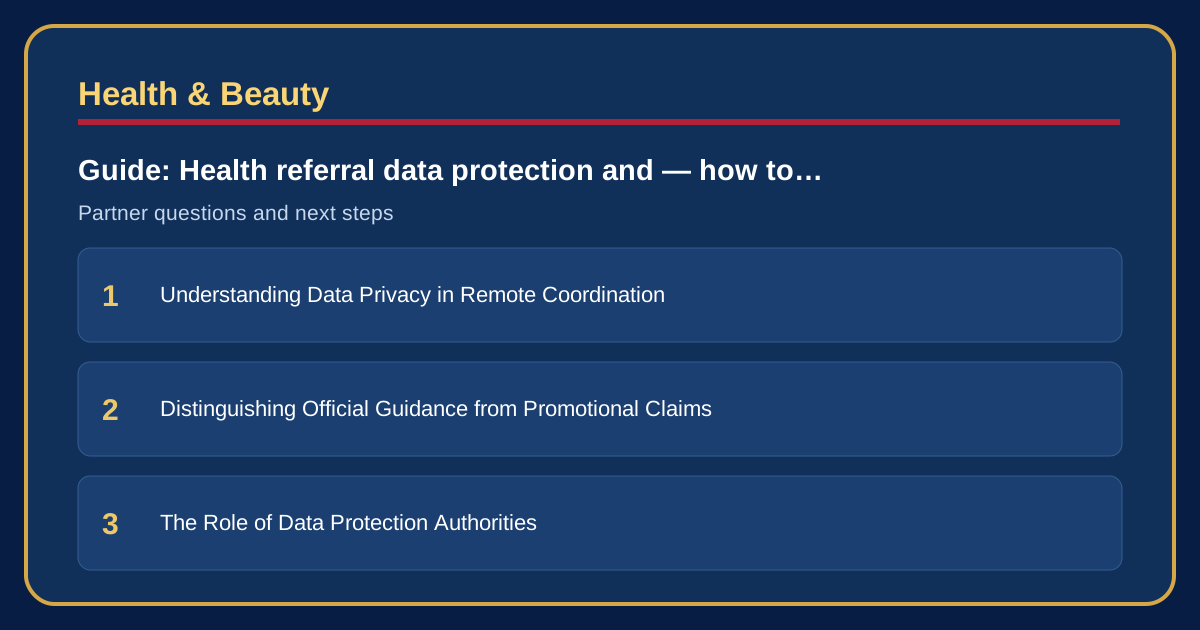
Understanding Data Privacy in Remote Coordination
When managing care from a distance, your personal and medical information travels through various digital channels. Health & Beauty emphasises that data protection is a fundamental right. Official guidance from regulatory bodies focuses on how organisations collect, store, and process your sensitive details. You should look for clear privacy notices that explain exactly who has access to your records. Unverified claims often gloss over these technicalities, focusing instead on convenience, whereas legitimate administrative partners prioritise strict adherence to established data protection frameworks and legal standards.
Distinguishing Official Guidance from Promotional Claims
It is vital to differentiate between factual regulatory information and marketing-led assertions. Official guidance is typically neutral, technical, and provided by government or data protection authorities. It outlines your rights and the obligations of service providers. Conversely, unverified promotional claims often use emotive language, making grand promises about seamless data transfers or absolute privacy without explaining the underlying mechanisms. When evaluating information, ask whether the source provides specific details on compliance or merely uses vague superlatives to build unearned trust during the coordination process.
The Role of Data Protection Authorities
Regulatory bodies, such as the Information Commissioner's Office in the UK, provide the gold standard for understanding how information should be handled. These organisations issue guidance that applies to any entity processing personal data. When coordinating international care, you should verify if the administrative partners you interact with acknowledge these standards. Official guidance is designed to protect the individual, whereas promotional content is designed to attract the individual. Always prioritise information that cites specific legal frameworks or regulatory compliance over anecdotal success stories or marketing slogans.
Managing Sensitive Information During Transfers
Transferring medical documentation across borders introduces specific risks regarding health referral data protection and partner responsibilities. You must ensure that any administrative entity handling your files follows rigorous encryption and security protocols. Official standards require that data transfers are lawful, fair, and transparent. If a coordinator cannot explain their method for securing your files during transit, this is a significant red flag. Legitimate administrative support focuses on the mechanics of secure transmission, while unverified sources may downplay the complexities of international data sovereignty.
Verifying Administrative Compliance Standards
Before sharing any personal details, investigate the compliance posture of the coordination service. A professional administrative partner will be able to provide documentation regarding their data processing activities. This includes knowing which specific regulations they follow when handling international transfers. You should look for transparency regarding third-party access; if a service claims to be "completely private" but cannot explain how they share data with clinicians, the claim is likely unverified. Always seek clarity on how your data is minimised and how long it is retained.
Preparing Questions for Your Care Coordinator
To ensure your privacy is respected, prepare a list of specific questions for any administrative service. Ask how they verify the security of the clinics they coordinate with and what protocols are in place if a data breach occurs. Inquire about their data retention policy and whether you can request the deletion of your records after your travel is complete. If you require assistance navigating these administrative complexities, Health & Beauty is available to discuss how we manage coordination logistics. Please reach out to our team to learn more about our administrative processes.
Navigating International Data Sovereignty
Different countries have varying levels of data protection laws, which can complicate remote coordination. When seeking treatment abroad, the legal protections afforded to your data may change once it leaves your home jurisdiction. Official guidance suggests being aware of these shifts and asking coordinators how they bridge the gap between different legal requirements. Unverified claims might suggest that "global standards" apply everywhere, but this is often an oversimplification. Understanding the specific legal landscape of your destination is a key part of responsible international patient coordination.
Frequently Asked Questions
**How can I tell if a website's privacy policy is legitimate?**
A legitimate policy will be detailed, easy to find, and clearly outline how your data is used, stored, and shared. It should name the legal basis for processing and provide contact details for a data protection officer. Avoid sites with vague or missing policies.
**What should I do if I suspect my data has been mishandled?**
If you believe your information has been compromised, you should contact the organisation involved immediately to seek clarification. If the response is unsatisfactory, you may wish to consult official regulatory bodies, such as the ICO, to understand your rights and formal complaint procedures.
**Does remote coordination mean my data is less secure?**
Remote coordination does not inherently mean data is less secure, provided the administrative partners follow strict encryption and regulatory protocols. Security depends on the specific tools and legal frameworks used by the coordinators, rather than the distance between the patient and the clinic.
Sources and references
https://ico.org.uk/for-organisations/uk-gdpr-guidance-and-resources/
Partner with Health & Beauty
Discuss a potential collaboration and practical requirements directly with our team.