Guide: Professional referral consent and — how to document the reasons for a treatment and provider decision — follow-up review — referring clinicians
Professional referral consent and confidential handover are essential components of modern clinical practice. When a referring clinician facilitates a patient transition, they must ensure that all data processing aligns with strict privacy standards. Health & Beauty coordinates administrative and travel services only; medical decisions are made by licensed clinicians. Health & Beauty does not operate clinics. By maintaining clear records, practitioners protect patient autonomy and ensure that every step of the care pathway remains transparent, secure, and fully compliant with current regulatory frameworks regarding sensitive health information.
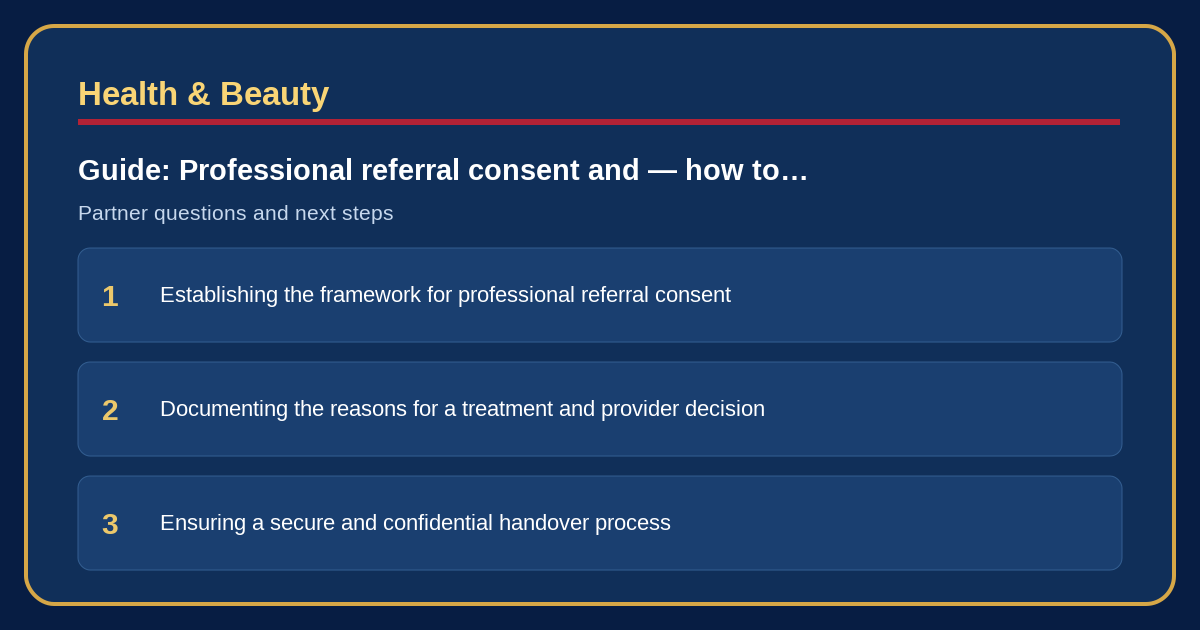
Establishing the framework for professional referral consent
Obtaining valid consent is the cornerstone of any clinical referral. When a practitioner initiates a transfer, they must ensure the patient understands exactly what information is being shared and why. This process involves explaining the role of third-party administrative support, such as the services provided by Health & Beauty. Patients should be informed that while administrative coordination is managed externally, their clinical care remains the sole responsibility of their chosen medical team. Clear communication at this stage prevents misunderstandings and builds the necessary trust for a successful handover.
Documenting the reasons for a treatment and provider decision
When documenting the reasons for a treatment and provider decision, clinicians must focus on clinical necessity and patient-specific requirements. This documentation should clearly outline the rationale behind selecting a particular specialist or facility, ensuring that the choice is based on the patient’s unique health profile rather than external factors. By recording these justifications in the patient’s medical file, the referring clinician provides a transparent audit trail. This practice is vital for maintaining professional accountability and ensuring that all subsequent care remains focused on the patient’s long-term health outcomes.
Ensuring a secure and confidential handover process
A confidential handover requires rigorous attention to data protection principles. When transferring patient records, clinicians must use secure, encrypted channels to prevent unauthorised access. The handover should only include the minimum necessary information required for the receiving team to provide safe care. By adhering to strict data minimisation practices, the referring clinician ensures that the patient’s privacy is protected throughout the transition. If questions arise regarding the security of these transfers, clinicians should consult their internal data protection officers to ensure full alignment with established regulatory guidelines.
Managing the follow-up review with the clinical team
The follow-up review is a critical juncture for assessing the efficacy of the referral. During this stage, the referring clinician should engage with the clinical team to discuss the patient’s progress and any adjustments needed to the care plan. This collaborative approach ensures that the patient receives consistent support throughout their recovery. If the patient experiences any unexpected symptoms or concerns, these must be addressed directly by the treating medical professionals. Maintaining open lines of communication between all parties involved is essential for high-quality, patient-centred care.
Aligning administrative coordination with clinical oversight
It is vital to distinguish between administrative logistics and medical decision-making. Health & Beauty provides the necessary coordination for travel and scheduling, but they do not influence the clinical path. The referring clinician remains the primary point of contact for all medical queries and treatment-related decisions. By clearly separating these roles, the patient benefits from a streamlined experience where administrative burdens are managed efficiently, while their health remains the exclusive priority of their licensed medical team. This clarity is essential for maintaining professional standards and patient safety.
Maintaining compliance during the referral lifecycle
Compliance is not a one-time task but an ongoing commitment throughout the referral lifecycle. Clinicians must regularly review their processes to ensure they meet current data protection standards. This involves keeping accurate records of consent and ensuring that any third-party involvement, such as the administrative support from Health & Beauty, remains within the scope of the patient’s original agreement. If you have questions about how to manage these administrative aspects or require assistance with travel coordination, please contact the Health & Beauty team for further information.
Addressing patient queries regarding the referral process
Patients often have questions about why certain providers are recommended or how their data is handled during a referral. It is the responsibility of the referring clinician to provide clear, honest answers to these concerns. By being transparent about the referral process and the involvement of administrative partners, clinicians can alleviate patient anxiety. If a patient requires specific medical advice or has concerns about their treatment plan, they should always be directed to their treating clinician, as administrative teams cannot provide medical guidance or clinical assessments.
Frequently Asked Questions
What should be included in the documentation for a provider decision?
Documentation should include the clinical rationale for the referral, the patient’s specific health needs, and the criteria used to select the provider. It must be objective, evidence-based, and stored securely to ensure that the decision-making process remains transparent and accountable.
How can clinicians ensure patient data remains confidential during a handover?
Clinicians must use secure, encrypted communication methods and adhere to the principle of data minimisation. Only share the information strictly necessary for the receiving team to provide safe care, ensuring that all transfers comply with relevant data protection regulations and internal privacy policies.
What is the role of Health & Beauty in the referral process?
Health & Beauty coordinates administrative and travel services to support the patient’s journey. They do not perform medical procedures, provide clinical advice, or make treatment decisions. All medical matters must be discussed directly with the patient’s licensed clinician or treating medical team.
Sources and references
https://ico.org.uk/for-organisations/uk-gdpr-guidance-and-resources/
Partner with Health & Beauty
Discuss a potential collaboration and practical requirements directly with our team.