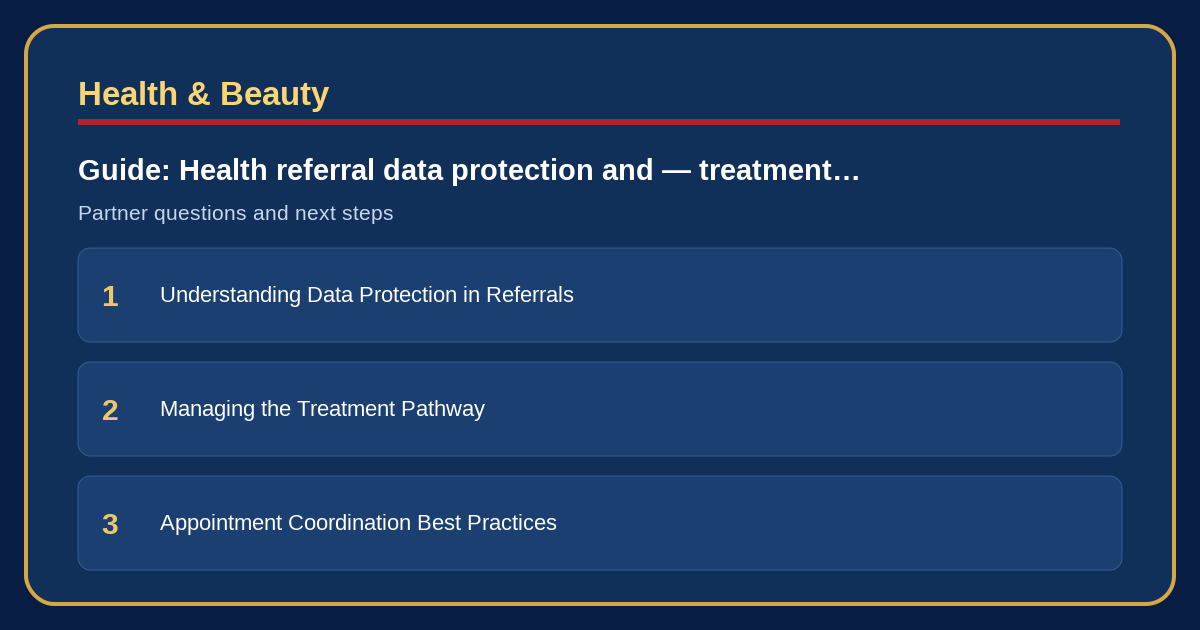
Guide: Health referral data protection and — treatment pathway and appointment coordination — record handover — care coordinators
Managing the transition of patient information requires strict adherence to privacy standards. Health & Beauty coordinates administrative and travel services only; medical decisions are made by licensed clinicians. Health & Beauty does not operate clinics. For a medical care coordinator when handing over relevant medical records, understanding health referral data protection and partner responsibilities is essential to ensure continuity of care. This guide explores how to manage the treatment pathway and appointment coordination while maintaining legal compliance during the critical record handover process.
Understanding Data Protection in Referrals
When a care coordinator initiates a referral, they handle sensitive personal data that requires high-level security. Under UK data protection frameworks, any organisation processing health information must ensure that data is handled lawfully, transparently, and securely. This involves implementing technical and organisational measures to prevent unauthorised access or accidental loss. Care coordinators must ensure that only the necessary information is shared with the receiving partner to facilitate the treatment pathway. Protecting this information is not just a legal requirement but a fundamental component of patient trust and safety.
Managing the Treatment Pathway
A seamless treatment pathway relies on the accurate transfer of clinical context between different healthcare providers. The care coordinator acts as a bridge, ensuring that the receiving clinician understands the patient's current status and the urgency of the required intervention. This process involves more than just sending files; it requires verifying that the recipient is authorised to handle such data. By streamlining the administrative flow, coordinators help reduce delays in appointment coordination, allowing the clinical team to focus on delivering the appropriate level of medical care.
Appointment Coordination Best Practices
Effective appointment coordination requires synchronising the schedules of multiple parties while keeping the patient informed. Coordinators must manage time slots, travel logistics, and clinician availability without compromising the privacy of the patient's schedule. It is vital to confirm that all parties have received the necessary documentation before the appointment date to avoid wasted clinical time. Clear communication channels should be established to handle any last-minute changes in the treatment pathway, ensuring that the patient's journey remains organised and that all administrative requirements are met promptly.
Secure Record Handover Protocols
The record handover is perhaps the most sensitive stage of the referral process. To maintain health referral data protection and partner responsibilities, coordinators should use encrypted methods for transmitting electronic health records. Physical documents should be handled via secure, tracked courier services if digital transfer is not possible. It is essential to verify the identity of the recipient before any data is released. Maintaining a detailed log of what was sent, when it was sent, and who received it provides a necessary audit trail for compliance purposes.
Partner Responsibilities and Compliance
Every partner involved in the referral chain has specific responsibilities regarding data stewardship. When Health & Beauty facilitates administrative support, it is crucial that all external partners adhere to the same rigorous standards of data protection. Partners must be aware of their obligations under the UK GDPR, particularly concerning the processing of special category data. This includes ensuring that data is only kept for as long as necessary and that it is disposed of securely once the appointment coordination or treatment pathway is complete.
Mitigating Risks During Information Transfer
Risks during information transfer can include data breaches, misdirected emails, or incomplete medical files. To mitigate these, coordinators should implement double-verification steps for all outgoing sensitive communications. Checking that the recipient's email address or physical location is correct can prevent significant privacy errors. Furthermore, ensuring that the information being transferred is accurate and up-to-date is vital for the clinical safety of the patient. If there is any uncertainty regarding the security of a specific transfer method, coordinators should consult their data protection officer.
If you require assistance with administrative logistics or travel arrangements related to your care journey, please feel free to contact Health & Beauty for support.
Frequently Asked Questions
**How can I ensure a secure record handover?**
To ensure security, always use encrypted platforms for digital transfers and verify the recipient's credentials. Maintain a clear audit trail of all shared documents. If you are unsure about a specific protocol, consult the data protection guidelines provided by the Information Commissioner's Office.
**What is the role of a care coordinator in data protection?**
A care coordinator manages the administrative flow of information, ensuring that data is shared only with authorised partners. They are responsible for following established security protocols to protect patient privacy during the appointment coordination and referral stages of the treatment pathway.
**Who is responsible for medical decisions during a referral?**
Medical decisions are always made by licensed clinicians. The role of administrative coordinators and services like Health & Beauty is to manage the logistics, such as appointment coordination and record handover, to support the clinical process without influencing medical outcomes.
Sources and references
https://ico.org.uk/for-organisations/uk-gdpr-guidance-and-resources/
Partner with Health & Beauty
Discuss a potential collaboration and practical requirements directly with our team.