Guide: Healthcare referral information privacy — how a nominated caregiver can receive agreed care instructions — cross-border care — records staff
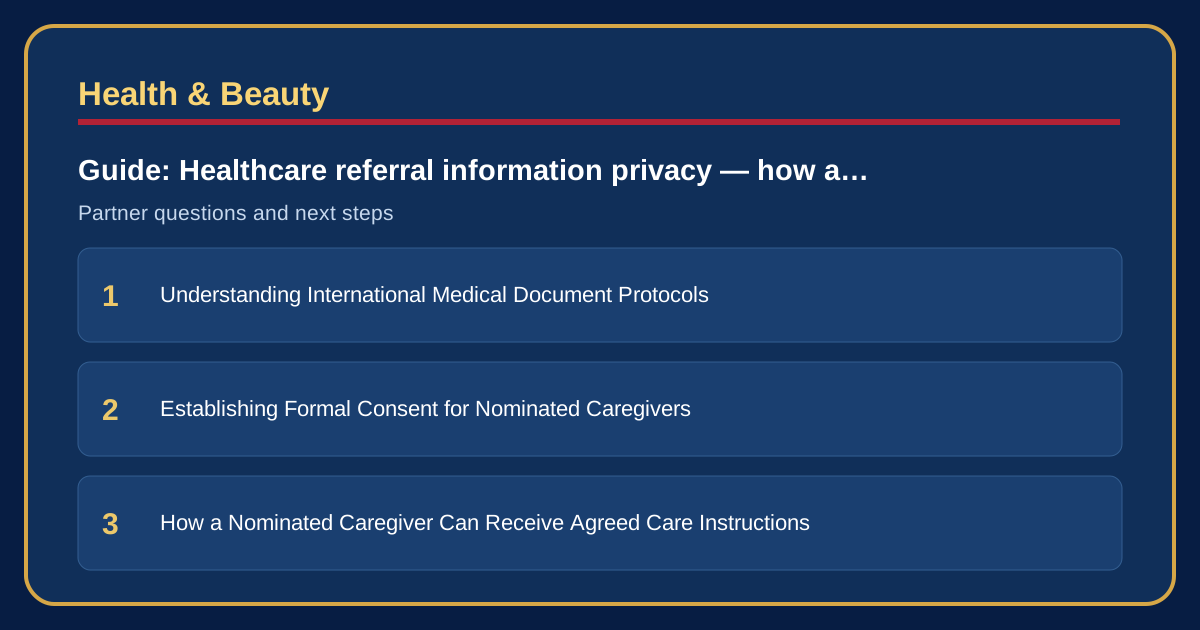
Navigating international health systems requires strict handling of medical documents, especially when sharing details across international borders. Health & Beauty coordinates administrative and travel services only; medical decisions are made by licensed clinicians. Health & Beauty does not operate clinics. When managing records staff tasks, understanding Healthcare referral information privacy and permissions ensures that sensitive patient data remains protected. Families often need clarity on legal frameworks, consent procedures, and the specific channels required for authorized individuals to access medical guidance without breaching confidentiality rules or administrative protocols.
Understanding International Medical Document Protocols
Managing cross-border clinical records involves strict adherence to privacy rules and administrative procedures. When a patient moves between different healthcare jurisdictions, records staff must verify that all documentation complies with applicable regional standards. This process prevents unauthorized disclosures while ensuring that treating professionals have access to necessary diagnostic reports. Administrative coordinators facilitate smooth document transmission, but they must always operate within established legal boundaries. Patients should request explicit guidelines from their destination facility regarding which specific forms are required to initiate official international record transfers securely.
Establishing Formal Consent for Nominated Caregivers
Designating a support person to help manage medical communications requires formal authorization and verified identity checks
. Patients must explicitly state who is permitted to speak on their behalf by completing the appropriate administrative paperwork provided by their healthcare facility. This permission limits data sharing exclusively to the agreed individuals and specified topics. Without proper documentation, medical institutions cannot legally release status updates or care guidelines to family members. Clinicians review these consent forms carefully to verify that the patient’s preferences are fully respected throughout every stage of the treatment journey and subsequent recovery phases.
How a Nominated Caregiver Can Receive Agreed Care Instructions
When seeking guidance on how a nominated caregiver can receive agreed care instructions, families must follow established institutional communication channels. Treating teams typically provide written discharge notes, medication schedules, and therapy guidelines directly to the authorized support person once proper consent is on file. It is essential that nominated individuals coordinate closely with administrative staff to schedule briefings and confirm the preferred format for receiving updates. Because healthcare providers prioritize direct patient communication whenever possible, designated caregivers should always clarify their specific administrative role with the attending clinical team early in the process.
Navigating Cross-Border Administrative Communication Channels
Bridging communication gaps between international medical providers requires structured administrative workflows and reliable translation services when necessary. Records staff play a central role in transmitting referral letters, diagnostic imagery, and treatment histories securely between institutions. Patients and their families should avoid relying on informal messaging apps for sensitive health data. Instead, they must utilize encrypted hospital portals or official courier services managed by experienced coordination agencies. Establishing these secure channels early prevents frustrating delays and ensures that clinical instructions arrive accurately and confidentially at their intended destination.
Verifying Legal Privacy Standards and Compliance Rules
Compliance frameworks govern how health information is stored, accessed, and shared across different legal jurisdictions. Federal and international regulations establish baseline protections that healthcare providers must follow to safeguard individual privacy rights. Administrative personnel receive ongoing training to recognize valid authorization documents and prevent accidental breaches of confidentiality. Patients should familiarize themselves with these institutional policies before initiating cross-border arrangements. Asking privacy officers specific questions about data retention and secure transmission methods helps ensure complete peace of mind while receiving specialized medical care abroad.
Collaborating with Records Staff for Smooth Transfers
Administrative staff members handle the intricate paperwork required to move patient files between international facilities safely. Effective collaboration with these professionals involves submitting complete intake forms, accurate identification documents, and signed release authorizations well in advance of any travel. Records personnel can explain specific institutional timelines and format requirements, reducing the risk of administrative rejection. Families should maintain organized digital or physical copies of every submitted document to reference during discussions with coordinators, ensuring that all parties remain fully aligned throughout the entire referral process.
Connecting with Support Services for Your Journey
Planning an international medical journey involves many logistical details, and having reliable administrative support makes a significant difference. If you have questions about our coordination services, documentation requirements, or travel logistics, we invite you to reach out to our team. Health & Beauty provides dedicated administrative assistance to help you navigate each step smoothly. Please contact us directly to discuss your specific planning needs in a low-pressure environment, allowing you to focus entirely on your health and well-being.
Frequently Asked Questions
H3: What documents are required to authorize a nominated caregiver?
Hospitals typically require a signed HIPAA-compliant authorization form or a formal medical power of attorney. These documents must explicitly name the caregiver, state the scope of permitted information, and include the patient's signature and date.
H3: Can care instructions be sent via secure email to a family member?
Yes, provided the healthcare facility utilizes encrypted email systems and has a verified consent form on file that permits digital communication with the specific nominated individual regarding agreed care topics.
H3: What should I do if my international records are delayed?
Contact the sending institution's records department immediately to verify that all release forms have been completed correctly, and ask your administrative coordinator to trace the secure transmission status.
Sources and references
https://www.hhs.gov/hipaa/for-professionals/privacy/index.html
Partner with Health & Beauty
Discuss a potential collaboration and practical requirements directly with our team.