Guide: Professional referral consent and — which medical records to discuss before treatment — first enquiry — records staff
Managing patient data requires strict adherence to privacy standards when handling professional referral consent and — which medical records to discuss before treatment — first enquiry — records staff. Health & Beauty coordinates administrative and travel services only; medical decisions are made by licensed clinicians. Health & Beauty does not operate clinics. Ensuring that sensitive information is shared securely is essential for maintaining trust and compliance. Staff must understand the legal boundaries of data processing to protect patient confidentiality during the initial stages of any medical journey.
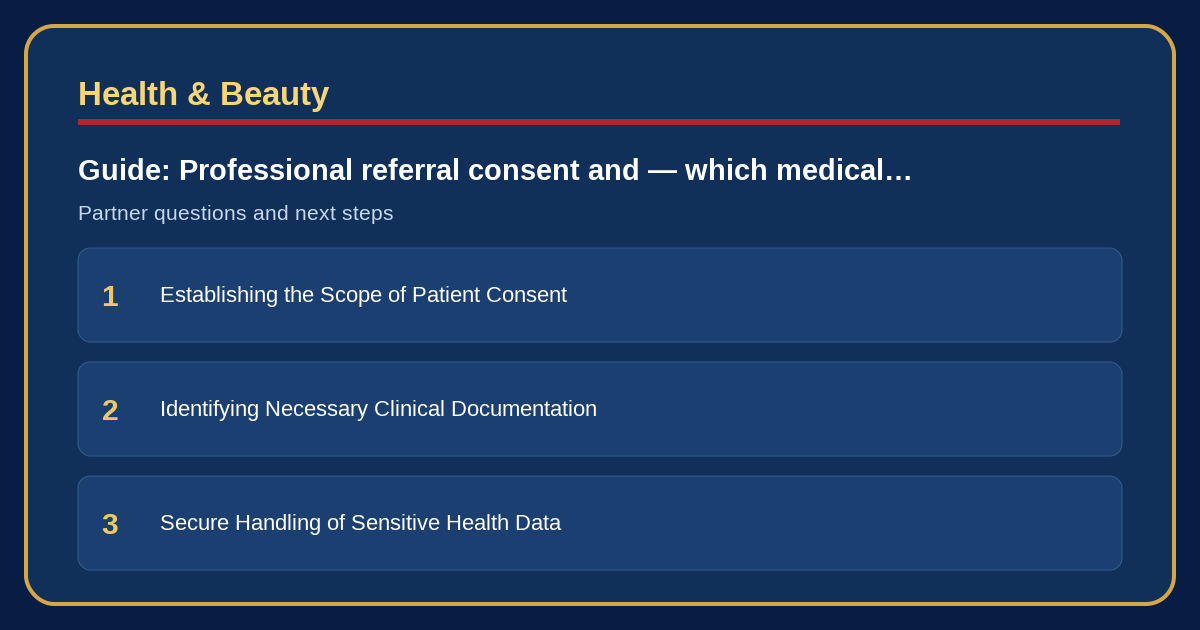
Establishing the Scope of Patient Consent
Before any information is exchanged, staff must obtain explicit, informed consent from the patient. This process involves clearly explaining why specific records are required and who will have access to them. Consent must be freely given, specific, and capable of being withdrawn at any time. For administrative teams, the focus should remain on gathering only the necessary documentation required to facilitate a consultation. Avoid requesting excessive personal details that do not directly contribute to the coordination of the patient’s initial medical assessment or travel arrangements.
Identifying Necessary Clinical Documentation
When determining which medical records to discuss before treatment, staff should prioritise documents that provide a clear history of the patient’s relevant health status. This typically includes previous surgical summaries, current medication lists, and reports from primary care physicians. However, staff must never attempt to interpret these records or make medical judgments based on their contents. Instead, the goal is to ensure that the treating clinician receives a complete and accurate file. Always verify that the patient has authorised the transfer of these specific documents.
Secure Handling of Sensitive Health Data
Data protection is a cornerstone of professional practice. When handling records, staff must ensure that all digital files are encrypted and physical documents are stored in locked, secure environments. Access should be restricted to authorised personnel only, following the principle of least privilege. If a patient sends records via email, staff must ensure the communication channel is secure. If there is any doubt regarding the security of a transmission method, it is safer to pause the process and consult with the designated data protection officer.
Communicating with Clinical Teams
Effective communication between administrative staff and clinical teams is vital for patient safety. When a patient makes their first enquiry, staff should act as a bridge, ensuring that the clinician is fully informed about the patient’s expectations and history. It is important to maintain a professional tone and avoid making promises regarding treatment outcomes or timelines. If a clinician requests additional information, staff should facilitate this request by contacting the patient directly, ensuring that the patient understands why further documentation is needed for their safety.
Managing Professional Referral Consent
Professional referral consent and — which medical records to discuss before treatment — first enquiry — records staff — requires a structured approach to data sharing. When a patient is referred by another professional, staff must confirm that the referring party has the patient’s permission to share their details. This prevents unauthorised data processing and ensures that the patient remains in control of their health information. Always document the date and method by which consent was obtained, as this provides a clear audit trail for future reference and compliance.
Responding to Data Subject Access Requests
Patients have the right to request access to the information held about them. Staff must be prepared to handle these requests efficiently and transparently. This includes providing a copy of the personal data held, explaining the purpose of the processing, and identifying any third parties with whom the data has been shared. If a patient asks to correct inaccurate information, staff should facilitate this update promptly. Maintaining an organised filing system makes it significantly easier to respond to these requests while upholding the patient’s fundamental privacy rights.
Maintaining Administrative Boundaries
Health & Beauty operates strictly as a coordinator of administrative and travel services. It is crucial for staff to recognise the limits of their role. If a patient asks for medical advice, prognosis, or specific treatment recommendations, staff must politely redirect these enquiries to the licensed clinician. By maintaining these boundaries, staff protect both the patient and the organisation. If you have questions regarding the coordination of your upcoming enquiry or need assistance with administrative documentation, please contact the Health & Beauty team for guidance.
Frequently Asked Questions
**What should I do if a patient refuses to share their medical history?**
If a patient declines to provide necessary medical records, you must respect their decision. However, you should explain that the treating clinician requires this information to ensure safety and suitability for treatment. Without these records, the clinician may be unable to proceed with a consultation.
**How long should we retain patient records after the first enquiry?**
Data retention should be limited to the duration necessary for the purpose for which it was collected. Once the administrative coordination is complete or the patient decides not to proceed, records should be securely deleted or archived in accordance with your organisation’s data retention policy.
**Are staff allowed to discuss patient records with family members?**
No, staff must not discuss any aspect of a patient’s medical records or enquiry with family members unless the patient has provided explicit, written consent. Confidentiality is paramount, and protecting the patient’s privacy is a legal and ethical requirement at every stage of the process.
Sources and references
https://ico.org.uk/for-organisations/uk-gdpr-guidance-and-resources/
Partner with Health & Beauty
Discuss a potential collaboration and practical requirements directly with our team.