Guide: Healthcare referral information privacy — understanding the limits of the available clinical information — decision records — referring
When a referring clinical specialist manages patient data, understanding healthcare referral information privacy and permissions is essential for maintaining compliance and trust. Protecting sensitive health records requires strict adherence to established regulatory frameworks. Health & Beauty coordinates administrative and travel services only; medical decisions are made by licensed clinicians. Health & Beauty does not operate clinics. By prioritizing secure communication channels and verifying patient consent, specialists ensure that clinical information remains protected throughout the referral process, ultimately supporting better patient outcomes and professional integrity.
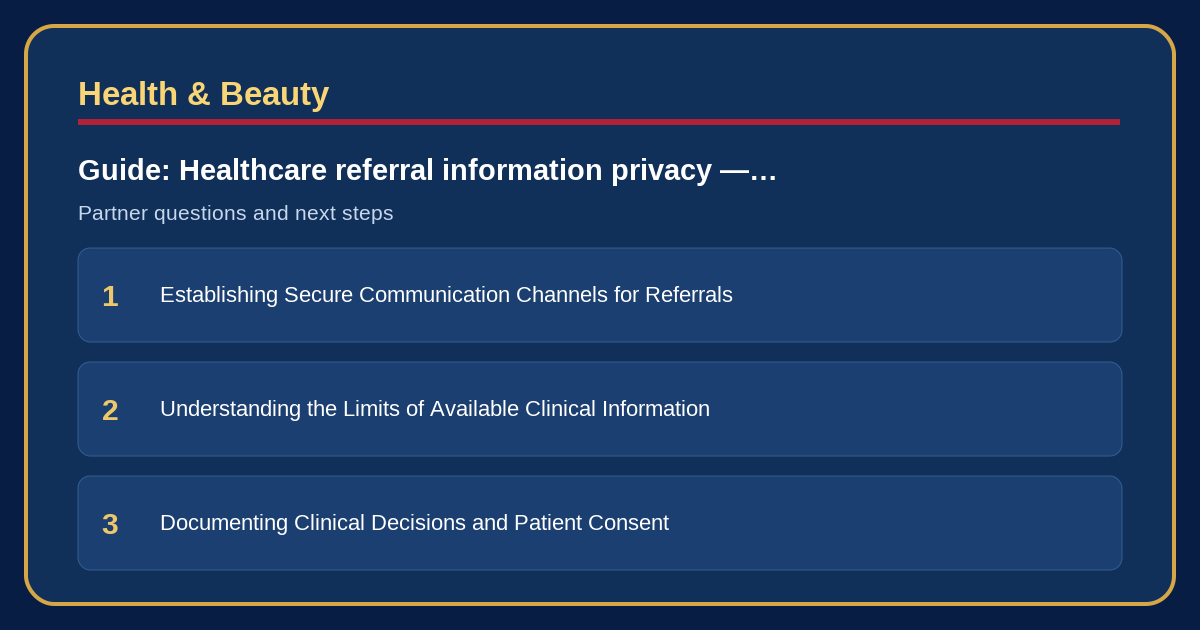
Establishing Secure Communication Channels for Referrals
Effective communication between referring clinicians and receiving specialists relies on secure, encrypted channels. When sharing patient information, specialists must ensure that data transmission complies with federal privacy standards. This involves using protected email systems, secure portals, or encrypted messaging services that prevent unauthorized access. By establishing these protocols, clinicians protect the integrity of the patient’s health record. It is vital to verify that all administrative staff involved in the referral process are trained in privacy protocols to prevent accidental disclosures of protected health information during routine coordination.
Understanding the Limits of Available Clinical Information
A critical aspect of healthcare referral information privacy and permissions involves recognizing the boundaries of shared data. Referring clinicians must only transmit the minimum necessary information required for the receiving specialist to provide an informed consultation. Over-sharing can increase privacy risks without providing additional clinical value. Specialists should carefully review the scope of the referral request, ensuring that the documentation provided is relevant to the specific medical concern. If a specialist requires additional history, they should request it through formal, secure channels rather than assuming access to broader records.
Documenting Clinical Decisions and Patient Consent
Documentation serves as the backbone of a transparent referral process. When a clinician makes a treatment decision, they must record the rationale and confirm that the patient has provided informed consent for the transfer of their medical records. This documentation should clearly outline what information is being shared, why it is necessary, and who will receive it. Maintaining accurate records of these permissions protects both the clinician and the patient. If a patient revokes consent at any point, the clinician must immediately update their records and cease further data sharing.
Navigating Regulatory Compliance in Data Transfers
Compliance with federal privacy regulations is not optional for healthcare providers. The regulatory framework establishes clear rules regarding how protected health information is used, disclosed, and stored. Referring clinicians must stay informed about these requirements to avoid potential breaches. This includes understanding the specific rights patients have regarding their own medical records and how those rights impact the referral process. By maintaining a robust compliance program, clinicians can confidently navigate the complexities of data transfers while ensuring that every action taken aligns with the legal standards governing patient privacy.
Managing Administrative Coordination and Privacy Risks
Administrative support plays a significant role in the referral workflow, yet it introduces unique privacy risks. Staff members often handle sensitive documents, making them a focal point for security training. It is important to implement strict access controls, ensuring that only authorized personnel can view or process referral information. Health & Beauty provides administrative coordination to streamline these logistics, allowing clinicians to focus on patient care. By delegating administrative tasks to professional coordinators, clinics can reduce the burden on their internal teams while maintaining high standards for data security and patient confidentiality.
Verifying Information Accuracy Before Referral
Before any clinical information is transmitted, it must be verified for accuracy and completeness. Inaccurate data can lead to misinformed treatment decisions and potential safety risks for the patient. Clinicians should perform a final review of the referral package to ensure that the information is current and relevant to the specialist’s needs. If there is uncertainty regarding the necessity of specific documents, the referring clinician should consult with the receiving specialist. This collaborative approach ensures that the referral process remains efficient, accurate, and fully compliant with all privacy expectations.
Coordinating Care Through Professional Administrative Support
When managing complex referrals, the administrative burden can often distract from direct patient interaction. Health & Beauty assists by organizing the logistical aspects of the referral, such as scheduling and document transmission, while ensuring that all privacy protocols are strictly followed. If you have questions about how our administrative services can support your practice, please reach out to our team for a consultation. We are available to discuss how we can help streamline your referral workflow while upholding the highest standards of healthcare privacy and professional communication.
Frequently Asked Questions
What should a clinician do if they are unsure about sharing specific patient data?
If you are uncertain about the privacy implications of sharing specific information, consult your internal compliance officer or legal counsel. Never share data if you cannot verify that the recipient is authorized to receive it under current privacy regulations and patient consent agreements.
How does Health & Beauty ensure privacy during the coordination process?
Health & Beauty maintains strict administrative protocols designed to protect patient information. We coordinate logistics and travel services without accessing or storing clinical medical records, ensuring that sensitive health data remains exclusively between the referring clinician and the receiving medical specialist at all times.
What is the primary responsibility of the referring clinician regarding privacy?
The referring clinician is responsible for ensuring that all shared information is necessary, accurate, and supported by valid patient consent. They must also verify that the receiving party maintains appropriate security measures to protect the transferred data from unauthorized access or disclosure.
Sources and references
https://www.hhs.gov/hipaa/for-professionals/privacy/index.html
Partner with Health & Beauty
Discuss a potential collaboration and practical requirements directly with our team.