Guide: Patient record access in a provider — which follow-up milestones to confirm before treatment — follow-up review — referring clinicians
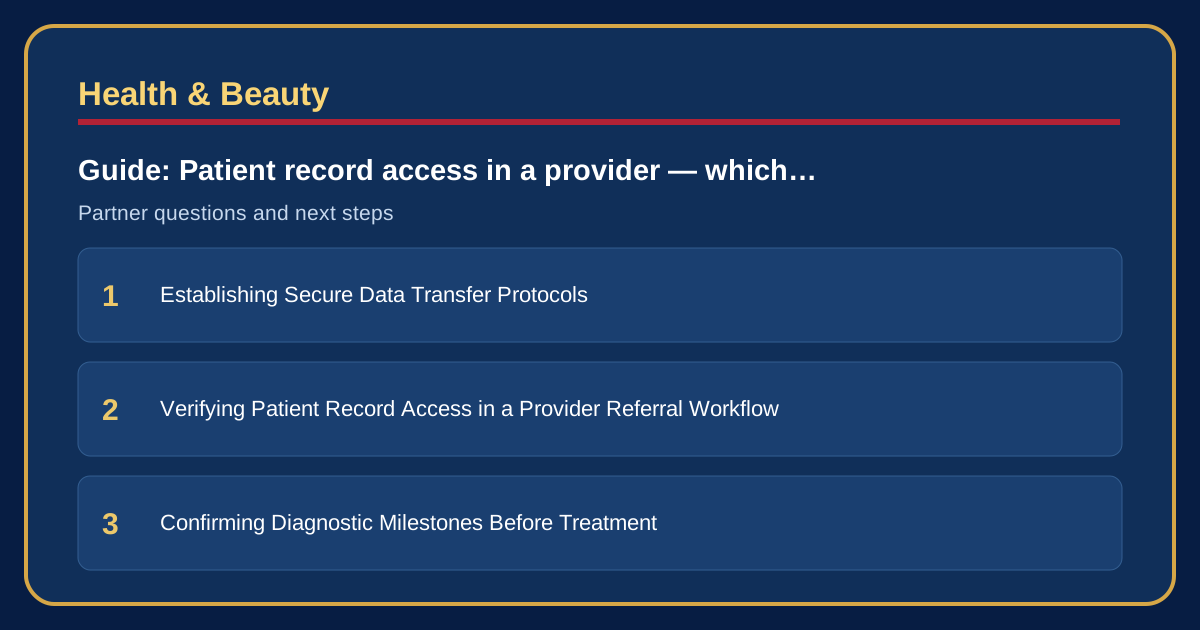
Navigating patient record access in a provider referral workflow is essential for maintaining continuity of care and ensuring that all clinical data is accurately transferred between specialists. Health & Beauty coordinates administrative and travel services only; medical decisions are made by licensed clinicians. Health & Beauty does not operate clinics. During a follow-up review, referring clinicians must verify that all necessary documentation is accessible to the receiving team. This process ensures that treatment plans are based on comprehensive, up-to-date information, ultimately supporting safer and more effective patient outcomes.
Establishing Secure Data Transfer Protocols
When a referring clinician initiates a transfer, the primary objective is to establish a secure, compliant channel for sharing sensitive health information. Under federal regulations, providers must ensure that the exchange of protected health information adheres to strict privacy standards. Before any treatment begins, confirm that the receiving facility has acknowledged receipt of the patient’s history, imaging, and lab results. Establishing these protocols early prevents delays and ensures that the clinical team has the necessary context to make informed decisions regarding the patient’s specific health needs.
Verifying Patient Record Access in a Provider Referral Workflow
Effective patient record access in a provider referral workflow requires proactive communication between the referring office and the receiving clinical team. Clinicians should verify that the electronic health record systems are compatible or that a secure portal is available for document retrieval. Confirming access permissions before the patient arrives ensures that the treating physician can review the full history without technical friction. If access issues arise, the referring clinician should immediately contact the receiving facility’s administrative lead to resolve discrepancies before the scheduled treatment date occurs.
Confirming Diagnostic Milestones Before Treatment
Before a patient undergoes a procedure, the referring clinician must confirm that all diagnostic milestones have been met and documented. This includes verifying that recent blood work, imaging studies, and pathology reports are not only present but also current according to the receiving clinic’s requirements. If a milestone is missing or outdated, the clinician must determine if a repeat test is necessary. Clear communication regarding these milestones prevents the cancellation of procedures and ensures that the clinical team is fully prepared for the patient’s arrival.
Coordinating Clinical Notes and Treatment Summaries
A comprehensive follow-up review is incomplete without a detailed summary of previous interventions and ongoing treatment plans. Referring clinicians should ensure that their notes clearly outline the rationale for the referral and any specific concerns that the receiving specialist should monitor. This documentation serves as a roadmap for the new clinical team, helping them understand the patient's trajectory. By providing a concise yet thorough summary, the referring clinician facilitates a smoother transition, allowing the receiving team to focus on the immediate clinical requirements of the patient.
Managing Patient Consent and Privacy Documentation
Privacy compliance is a cornerstone of the medical referral process. Before transferring records, clinicians must ensure that the patient has provided the necessary authorizations for the disclosure of their health information. This involves verifying that all consent forms are signed, dated, and stored in the patient’s file. Referring clinicians should also confirm that the receiving facility has a clear understanding of the patient’s privacy preferences. Adhering to these administrative requirements protects the patient’s rights and ensures that the referral process remains fully compliant with established federal health privacy regulations.
Addressing Discrepancies in Clinical Documentation
Discrepancies in medical records can lead to significant confusion during a follow-up review. If a referring clinician notices that the information held by the receiving team does not match their own records, they must act quickly to reconcile the data. This might involve verifying the accuracy of medication lists, allergy information, or previous surgical history. By addressing these discrepancies before treatment begins, the clinical team can avoid potential errors and ensure that the care provided is consistent with the patient’s actual medical history and current health status.
Facilitating Communication Between Clinical Teams
The final step in the referral process involves ensuring that both the referring and receiving clinicians are aligned on the patient’s care plan. Health & Beauty provides administrative support to help organize these communications, ensuring that all parties have the information they need to proceed. If you have questions regarding the administrative coordination of your referral, please reach out to the Health & Beauty team for assistance with scheduling or documentation logistics. We are here to help manage the process so that you can focus on clinical care.
Frequently Asked Questions
What should a clinician do if patient records are not accessible by the receiving team?
If records are inaccessible, the referring clinician should immediately contact the receiving facility’s IT or administrative department to troubleshoot the connection. Ensure that all necessary privacy authorizations are on file, as missing consent forms are a common cause of restricted record access.
How can clinicians ensure that diagnostic milestones are current for a referral?
Clinicians should maintain a checklist of required tests and their expiration dates based on the receiving clinic’s specific protocols. If a test is nearing its expiration, it is best to order a repeat assessment well in advance of the scheduled treatment date.
What is the role of Health & Beauty in the referral process?
Health & Beauty coordinates administrative and travel services to support the referral workflow. We do not provide medical advice, perform clinical assessments, or make treatment decisions. All medical questions must be directed to the licensed clinicians responsible for the patient’s care.
Sources and references
https://www.hhs.gov/hipaa/for-professionals/privacy/index.html
Partner with Health & Beauty
Discuss a potential collaboration and practical requirements directly with our team.