Guide: Patient record access in a provider — which contact channels to clarify for follow-up questions — consultation — referring clinicians
Navigating patient record access in a provider referral workflow requires clear communication between specialists and primary care teams. When a referring clinical specialist prepares for an initial consultation, understanding which contact channels to clarify for follow-up questions is essential for maintaining continuity of care. Health & Beauty coordinates administrative and travel services only; medical decisions are made by licensed clinicians. Health & Beauty does not operate clinics. By establishing secure, reliable lines of communication early, providers ensure that sensitive health information remains protected while supporting the patient’s journey.
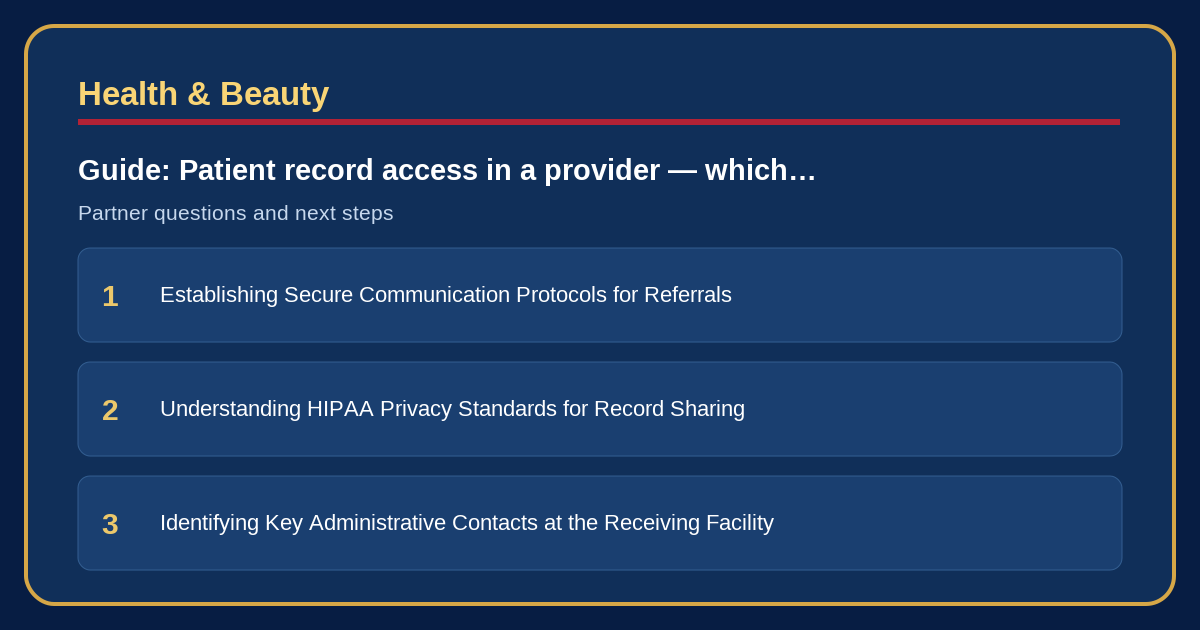
Establishing Secure Communication Protocols for Referrals
Before a patient arrives for their initial consultation, the referring clinician must establish how information will flow between offices. Secure messaging systems, encrypted email portals, and dedicated administrative lines are standard tools for this purpose. It is vital to verify which specific contact channels the receiving facility prefers for urgent updates versus routine record requests. Relying on outdated methods like unencrypted faxing can lead to delays or security vulnerabilities. Always confirm the preferred point of contact for the clinical team to ensure that records arrive before the appointment.
Understanding HIPAA Privacy Standards for Record Sharing
The Health Insurance Portability and Accountability Act provides a framework for how protected health information is shared among healthcare providers. When managing patient record access in a provider referral workflow, clinicians must ensure that the disclosure of information is limited to what is necessary for treatment. Understanding these federal standards helps referring specialists navigate the legal requirements for sharing diagnostic reports, imaging, and clinical notes. By adhering to these privacy rules, providers build trust with patients and maintain the integrity of the medical record throughout the referral process.
Identifying Key Administrative Contacts at the Receiving Facility
Every medical office has a unique structure for handling incoming referrals. Identifying the specific administrative staff member responsible for intake can significantly streamline the process. When reaching out, ask for the direct contact information of the referral coordinator or the clinical liaison. Knowing exactly who manages the incoming documentation prevents records from being lost in general office queues. If the receiving office uses a specific digital portal for document uploads, ensure your staff has the necessary credentials and training to use that system effectively before the consultation.
Documenting the Scope of Information for Clinical Review
When a referring clinician sends records, the scope of the information must be clearly defined to assist the specialist. Providing a comprehensive summary of the patient’s history, recent lab results, and current treatment goals allows the specialist to prepare thoroughly. However, avoid sending excessive or irrelevant data that could clutter the clinical review. Clarify with the receiving office whether they prefer a digital summary or a full medical history. This targeted approach ensures that the specialist has exactly what is needed to make informed clinical decisions during the visit.
Managing Follow-Up Inquiries After the Initial Consultation
Post-consultation communication is just as critical as the initial referral. Once the specialist has seen the patient, there may be questions regarding the recommended treatment plan or the need for further diagnostic testing. Establish a clear protocol for these follow-up inquiries early in the relationship. Determine whether the specialist prefers to communicate through a secure electronic health record system or a direct phone line to the clinical team. Having these channels pre-defined prevents unnecessary administrative bottlenecks and ensures the patient receives timely updates regarding their ongoing care.
Addressing Discrepancies in Patient Documentation
Occasionally, records received by a specialist may be incomplete or contain conflicting information. When this occurs, the referring clinician must have a reliable channel to resolve these discrepancies quickly. Do not rely on patient-reported information alone to fill in gaps; instead, use the established clinical contact channel to request clarification from the originating office. If a specific test result is missing or a medication list appears outdated, a direct line to the clinical coordinator is the most efficient way to ensure the specialist has accurate data for the consultation.
Coordinating Administrative Support Through Health & Beauty
Health & Beauty provides administrative and travel coordination services to support the logistics of your patient’s care journey. While we manage the scheduling and travel arrangements, we do not participate in the exchange of medical records or clinical decision-making. If you have questions regarding the administrative status of a referral or need assistance with travel logistics for a patient, please reach out to our team through our standard inquiry form on our website. We are here to help streamline the non-clinical aspects of your patient’s experience.
Frequently Asked Questions
What is the best way to verify that a specialist has received the necessary patient records?
The most reliable method is to contact the specialist’s referral coordinator directly using the verified office phone line or secure portal. Confirming receipt of specific documents, such as imaging or lab reports, ensures that the specialist is prepared for the consultation.
How should clinicians handle urgent questions regarding a patient’s record after hours?
Urgent clinical questions should always be directed to the on-call provider or the designated emergency contact channel provided by the specialist’s office. Administrative channels are typically not monitored outside of standard business hours and should not be used for urgent medical concerns.
Are there specific federal guidelines for how patient records must be transmitted between providers?
Yes, the Department of Health and Human Services provides comprehensive guidance on the Privacy Rule, which dictates how protected health information is shared. Providers must ensure that all transmissions are secure and that the information shared is the minimum necessary to accomplish the intended clinical purpose.
Sources and references
https://www.hhs.gov/hipaa/for-professionals/privacy/index.html
Partner with Health & Beauty
Discuss a potential collaboration and practical requirements directly with our team.