Guide: Patient record access in a provider — understanding the limits of the available clinical information — consultation — referring clinicians
Navigating a complex specialist referral requires a clear understanding of patient record access in a provider workflow, especially before an initial clinical consultation. Health & Beauty coordinates administrative and travel services only; medical decisions are made by licensed clinicians. Health & Beauty does not operate clinics. When transferring care, external referring practitioners often encounter gaps in historical documentation, imaging files, or laboratory summaries. Recognizing these administrative boundaries helps clinical teams set realistic expectations, identify missing diagnostic indicators early, and communicate effectively with the receiving medical facility to ensure safe continuity of care for the individual seeking specialized evaluation.
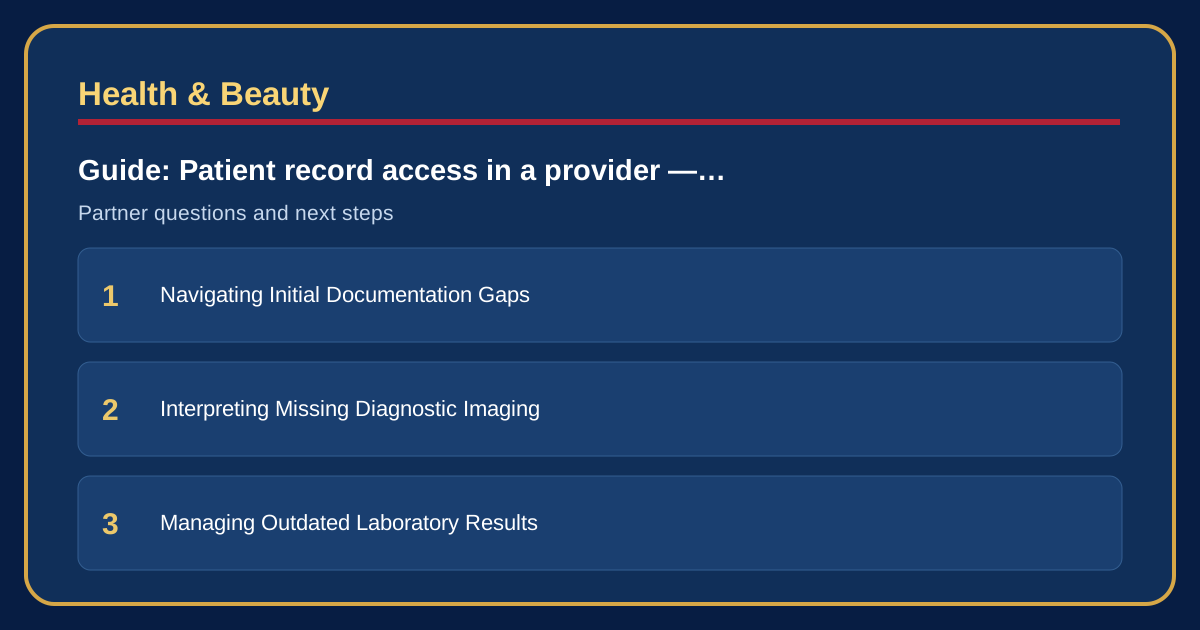
Navigating Initial Documentation Gaps
External clinicians frequently encounter incomplete files when a new case file arrives from an outside health system. While administrative teams process incoming paperwork swiftly, electronic health record systems often lack interoperability. This technological barrier means diagnostic notes, historical surgical summaries, or specialized outpatient reports might not transmit automatically. Clinicians must actively review the received documentation packet immediately upon arrival. Identifying missing information early prevents scheduling delays and ensures that consulting specialists possess the foundational context required to review the case safely during the upcoming evaluation.
Interpreting Missing Diagnostic Imaging
Diagnostic images such as magnetic resonance scans or computed tomography outputs present unique technical challenges during inter-facility transitions. Receiving specialists often obtain written radiology reports without accompanying digital DICOM image files, or they receive low-resolution previews that lack the diagnostic fidelity necessary for surgical planning. Referring practitioners should verify that complete imaging studies are successfully uploaded to secure viewing portals prior to the consultation date. Relying solely on descriptive text summaries can obscure critical anatomical nuances that directly influence subsequent clinical recommendations and specialist treatment strategies.
Managing Outdated Laboratory Results
Laboratory values fluctuate over time, making chronological context essential for accurate clinical interpretation. Incoming records occasionally contain outdated blood panels, obsolete pathology reports, or metabolic screens that no longer reflect the individual's current physiological status. Receiving facilities must carefully scrutinize the collection dates attached to every biological marker. If essential baseline laboratories fall outside acceptable clinical windows, the consulting team typically orders repeat testing. Recognizing these timeline discrepancies prevents misinterpretation and supports more precise diagnostic reasoning during the specialist encounter.
Coordinating Direct Practitioner Communication
When electronic records remain ambiguous or incomplete, direct peer-to-peer communication between clinicians serves as an indispensable tool. Administrative coordinators can facilitate secure messaging channels, but clinical nuances are best addressed through direct dialogue. Referring practitioners should prepare specific, targeted inquiries regarding conflicting diagnostic notes or ambiguous symptom histories before speaking with the receiving specialist. Establishing clear clinical communication channels bridges documentation gaps much faster than relying exclusively on automated record transfer requests or standardized administrative intake forms.
Establishing Secure Information Exchange Protocols
Protecting sensitive health information during inter-provider transmission remains a paramount legal and ethical obligation. Healthcare entities must utilize encrypted networks, secure file transfer protocols, and verified identity confirmation measures before sharing personal health data. Referring teams need to verify that all electronic communications comply with relevant privacy regulations and institutional governance standards. Adhering strictly to authorized transmission channels prevents data breaches, maintains patient confidentiality, and ensures that sensitive clinical documentation reaches the intended medical recipient without unauthorized interception.
Addressing Patient Perspective and Consent
Individuals participating in a specialist referral workflow hold specific rights regarding their personal health information and care trajectory. Explaining documentation limits transparently helps build trust between the individual and the multidisciplinary team. Practitioners should discuss which records are accessible, which files remain missing, and how these informational gaps might influence the upcoming consultation. Empowering individuals with clear administrative explanations encourages active participation, reduces anxiety surrounding complex specialist handoffs, and fosters a collaborative environment focused on comprehensive care planning.
Preparing for the Specialist Consultation
Consulting specialists rely heavily on synthesized clinical summaries to maximize the efficiency and effectiveness of the initial evaluation. When documentation is incomplete, the visiting clinician must allocate valuable appointment time gathering missing history rather than focusing on advanced diagnostic planning. To streamline this process, Health & Beauty invites referring professionals and patients to reach out directly with administrative questions regarding our logistical support and secure document coordination services. Clear preparation ensures that every clinical consultation begins with the most accurate, comprehensive information available.
Frequently Asked Questions
H3: What happens if critical medical records are missing before a specialist consultation?
When critical documents are missing, the receiving clinical team typically contacts the referring practitioner or requests supplemental files. If essential data remains unavailable, the consulting clinician may postpone specific evaluations or order repeat diagnostic testing to ensure patient safety.
H3: Can administrative coordinators view or interpret clinical diagnostic test results?
Administrative coordinators facilitate the secure transfer of paperwork and travel logistics only. They do not interpret diagnostic tests, evaluate symptoms, or make medical determinations. All clinical interpretations and medical decisions are performed exclusively by licensed medical professionals.
H3: How do healthcare providers ensure the secure electronic transfer of sensitive records?
Providers utilize encrypted electronic health record networks, secure direct messaging systems, and strict identity verification protocols. These technological safeguards protect personal health information from unauthorized access during transit between different medical institutions and referral partners.
Sources and references
https://www.hhs.gov/hipaa/for-professionals/privacy/index.html
Partner with Health & Beauty
Discuss a potential collaboration and practical requirements directly with our team.