Guide: Healthcare referral information privacy — a decision checklist for patients and referring professionals — cross-border care — care coordinators
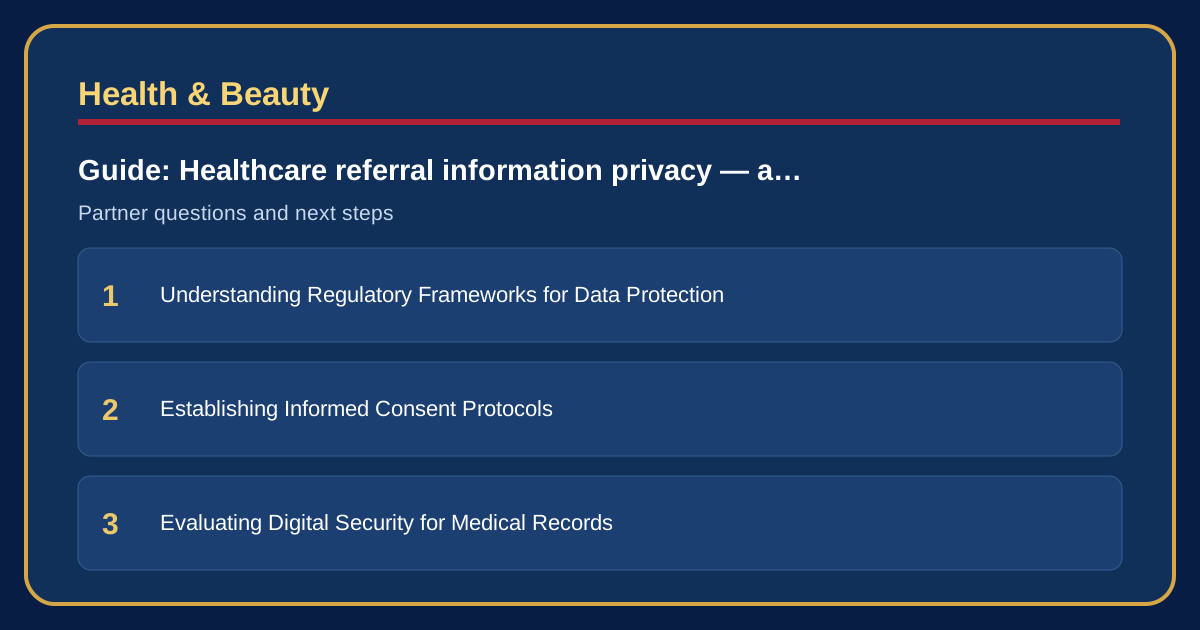
Navigating healthcare referral information privacy requires a structured approach to ensure patient data remains protected during international transitions. When coordinating care across borders, stakeholders must prioritize compliance with established regulatory frameworks. Health & Beauty coordinates administrative and travel services only; medical decisions are made by licensed clinicians. Health & Beauty does not operate clinics. By utilizing a clear decision checklist, patients and referring professionals can better manage the secure exchange of sensitive records, ensuring that privacy standards are maintained throughout the entire medical journey.
Understanding Regulatory Frameworks for Data Protection
When moving medical records across international borders, the primary challenge involves reconciling different privacy standards. In the United States, the Health Insurance Portability and Accountability Act (HIPAA) sets the national standard for the protection of certain health information. Referring professionals must verify whether the receiving entity adheres to comparable privacy protections. If a destination country lacks equivalent legal safeguards, patients should ask their clinicians how their data will be stored, accessed, and secured. Understanding these regulatory boundaries is the first step in maintaining patient confidentiality during cross-border care.
Establishing Informed Consent Protocols
Informed consent is the cornerstone of healthcare referral information privacy. Before any medical records are transmitted to an international provider, patients must provide explicit, written authorization. This document should clearly outline what specific information is being shared, the purpose of the disclosure, and the identity of the receiving party. Referring professionals should ensure that patients understand the risks associated with international data transfers. If a patient feels uncertain about how their health history will be utilized, they should request a detailed explanation from their treating clinician before signing any release forms.
Evaluating Digital Security for Medical Records
The digital transmission of health data requires robust security measures to prevent unauthorized access. When sharing records electronically, professionals must utilize encrypted channels that meet industry standards. Patients should inquire whether the care coordinator or the receiving clinic uses secure, password-protected portals for document exchange. Avoid sending sensitive medical history via standard, unencrypted email, as this increases the risk of interception. If a clinic cannot confirm the security of their digital infrastructure, patients should discuss alternative, more secure methods for transferring their essential health documentation.
Managing Third-Party Data Access
Care coordinators often act as intermediaries between patients and international medical facilities. While these coordinators facilitate logistics, they must also respect the privacy of the individuals they serve. Patients should verify that any third-party service provider has a clear policy regarding the handling of personal health information. It is essential to ask whether the coordinator shares data with external marketing partners or secondary entities. Transparency regarding who has access to your medical file is vital. Always prioritize working with organizations that demonstrate a commitment to strict data minimization practices.
Verifying Clinic Privacy Policies and Standards
Before finalizing a referral, it is necessary to review the specific privacy policies of the destination clinic. Not all international facilities operate under the same transparency requirements as those in the United States. Patients should request a copy of the clinic’s privacy notice, which should detail how they collect, use, and disclose patient information. If the clinic does not provide a clear policy, this should be treated as a significant concern. Always consult with your primary physician to determine if the receiving facility meets the necessary standards for your specific medical needs.
Implementing a Patient-Led Data Checklist
A proactive approach involves creating a personal checklist to track the movement of your health information. This list should include the names of all professionals who have received your records, the dates of transmission, and the specific documents shared. By maintaining this log, patients can better monitor their data footprint. If you notice any discrepancies or unauthorized disclosures, contact your healthcare provider immediately to address the issue. Keeping a personal record empowers patients to take an active role in their privacy management throughout the entire referral process.
Coordinating Administrative Logistics and Privacy
Health & Beauty provides administrative support to ensure your travel and scheduling needs are met with efficiency and care. We focus on the logistical aspects of your journey, allowing you to concentrate on your health outcomes. If you have questions regarding the administrative steps of your referral or need assistance organizing your documentation for your upcoming consultation, please reach out to our team. We are here to help you navigate the process smoothly. Please contact Health & Beauty through our official website to discuss your administrative coordination needs today.
Frequently Asked Questions
What should I do if I am unsure about the privacy standards of an international clinic?
If you are uncertain, ask the clinic directly for their written privacy policy and how they comply with international data protection standards. You should also consult your primary physician or a legal professional to evaluate the risks. Never proceed with a referral until you are fully satisfied with the security measures in place for your sensitive health records.
How can I ensure my medical records are only shared with authorized personnel?
You should maintain a strict record of every individual and organization that receives your medical information. Always provide written, specific authorization for each disclosure. If you suspect that your information has been shared beyond the scope of your consent, contact the clinic’s privacy officer immediately to request an audit of your file access and to clarify the chain of custody for your data.
Does HIPAA apply to medical care received outside of the United States?
Generally, HIPAA regulations apply to covered entities within the United States. Once you seek care internationally, the protections provided by HIPAA may not extend to the foreign facility. It is crucial to understand that different countries have their own privacy laws. Always ask your treating clinician how they protect your information and what rights you have under the local laws of the country where you are receiving your medical treatment.
Sources and references
https://www.hhs.gov/hipaa/for-professionals/privacy/index.html
Partner with Health & Beauty
Discuss a potential collaboration and practical requirements directly with our team.