Guide: Health referral data protection and — which medical records to discuss before treatment — follow-up review — records staff
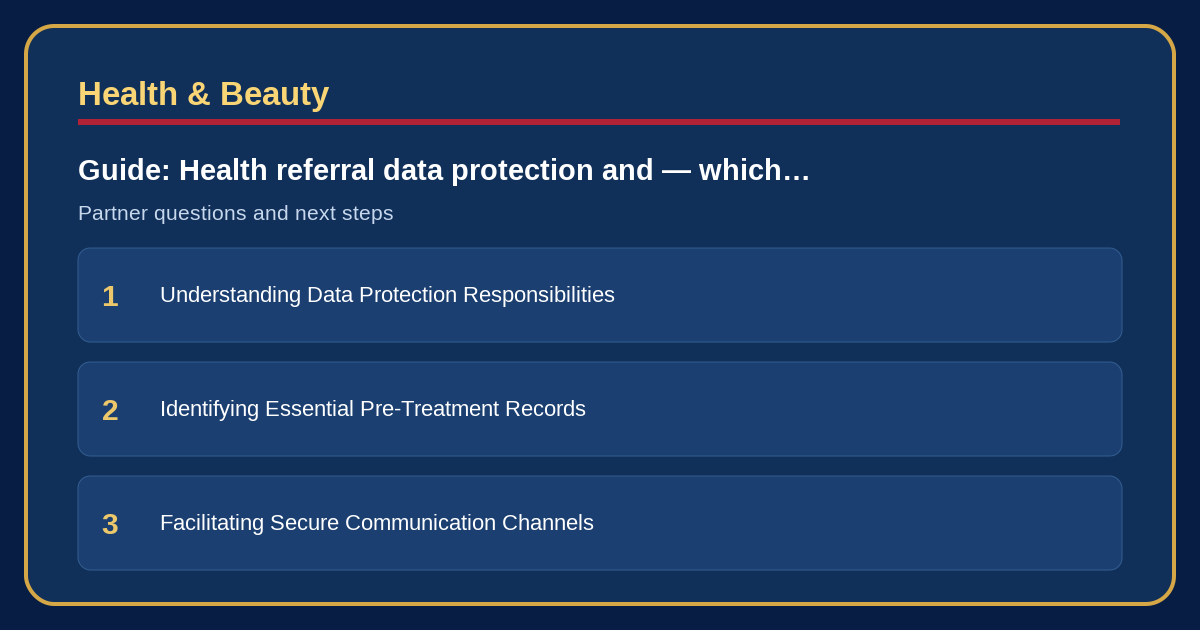
Managing patient information requires strict adherence to privacy standards when handling health referral data protection and partner responsibilities. For staff coordinating care, understanding which medical records to discuss before treatment is essential for maintaining compliance and patient safety. Health & Beauty coordinates administrative and travel services only; medical decisions are made by licensed clinicians. Health & Beauty does not operate clinics. By prioritising data integrity and clear communication channels, administrative teams ensure that clinical staff receive accurate, protected information necessary for safe, informed patient care pathways.
Understanding Data Protection Responsibilities
When handling sensitive health information, administrative staff must recognise their role as data processors. Health referral data protection and partner responsibilities dictate that all personal information must be processed lawfully, fairly, and transparently. You must ensure that patient consent is obtained before any data is shared with clinical partners. It is vital to limit access to records strictly to those who require the information to perform their specific duties. Regularly reviewing internal data handling procedures helps maintain compliance with current regulatory frameworks and protects patient confidentiality throughout the referral process.
Identifying Essential Pre-Treatment Records
Before a patient undergoes any procedure, clinicians require specific documentation to assess suitability and safety. You should focus on gathering comprehensive medical histories, including previous surgeries, known allergies, and current health conditions. Discussing these records with the clinical team ensures that any potential risks are identified early. Avoid collecting excessive or irrelevant personal data that does not directly impact the clinical decision-making process. Always verify that the information provided by the patient is current, as outdated records can lead to significant misunderstandings regarding a patient’s actual health status.
Facilitating Secure Communication Channels
The transmission of medical records must occur through secure, encrypted channels to prevent unauthorised access. Avoid using standard email or messaging services for sharing sensitive documents, as these often lack the necessary security protocols. Instead, implement dedicated portals or encrypted file-sharing systems that allow for controlled access. Ensure that all staff members are trained in identifying potential security breaches and understand the importance of immediate reporting. Maintaining a clear audit trail of who accessed specific records and when is a fundamental requirement for demonstrating accountability in data management.
Managing Patient Consent and Transparency
Transparency is the cornerstone of effective data management. Patients must be fully informed about how their data will be used, who will have access to it, and how long it will be retained. During the referral process, provide clear documentation that explains these practices in plain language. If a patient requests access to their records or wishes to withdraw consent, you must have a clear, documented procedure to handle these requests promptly. Respecting patient autonomy regarding their personal data builds trust and ensures compliance with legal requirements.
Coordinating with Clinical Teams for Reviews
During a follow-up review, the focus shifts to evaluating the patient’s progress and addressing any ongoing concerns. Administrative staff play a crucial role in ensuring that the clinical team has access to the most recent post-treatment reports and patient feedback. Facilitate regular briefings where the clinical team can review the patient’s journey and identify any necessary adjustments to the care plan. Remember that medical decisions remain the sole responsibility of the treating clinicians; your role is to provide the administrative support and documentation required for these informed discussions.
Handling Sensitive Information During Follow-ups
When managing records during follow-up stages, maintain the same level of rigour as during the initial referral. Ensure that any new information, such as recovery notes or follow-up observations, is accurately recorded and securely stored. If you have questions regarding the necessity of specific data points, consult with the clinical team to determine what is essential for ongoing care. If you require assistance with the administrative coordination of your upcoming clinical review or have questions about our service processes, please contact the Health & Beauty team directly for support.
Maintaining Compliance and Staff Training
Continuous training is vital for staff involved in managing patient records. Regulations regarding data protection evolve, and it is the responsibility of the organisation to ensure that all team members are updated on current best practices. Conduct regular internal audits to identify potential gaps in your data handling processes and address them immediately. By fostering a culture of compliance and vigilance, you protect both the patient and the organisation. Always refer to official regulatory guidance to ensure that your internal policies align with the latest legal standards for data management.
Frequently Asked Questions
What should I do if I suspect a data breach involving patient records?
If you suspect a breach, you must follow your organisation’s internal incident response plan immediately. This typically involves isolating the affected systems, notifying your data protection officer, and documenting all known details. Do not attempt to resolve complex security issues without professional guidance, as prompt, formal reporting is essential for regulatory compliance.
Which specific medical records are most critical for a clinical review?
Clinicians generally require the most recent surgical notes, current medication lists, and any records of post-operative complications or recovery milestones. However, the exact requirements vary by procedure. Always ask the treating clinician to specify which documents they need to review to ensure you are providing relevant, accurate information for the patient's specific health needs.
How long should patient records be retained by the administrative team?
Retention periods are governed by specific legal requirements and the purpose for which the data was collected. You should not keep personal data longer than is necessary. Consult your internal data retention policy, which should be aligned with national guidelines, to determine the appropriate timeframe for securely deleting or archiving patient information once the referral process is complete.
Sources and references
https://ico.org.uk/for-organisations/uk-gdpr-guidance-and-resources/
Partner with Health & Beauty
Discuss a potential collaboration and practical requirements directly with our team.