Guide: Health referral data protection and — questions about informed consent and informed decisions — clinician handover — care coordinators
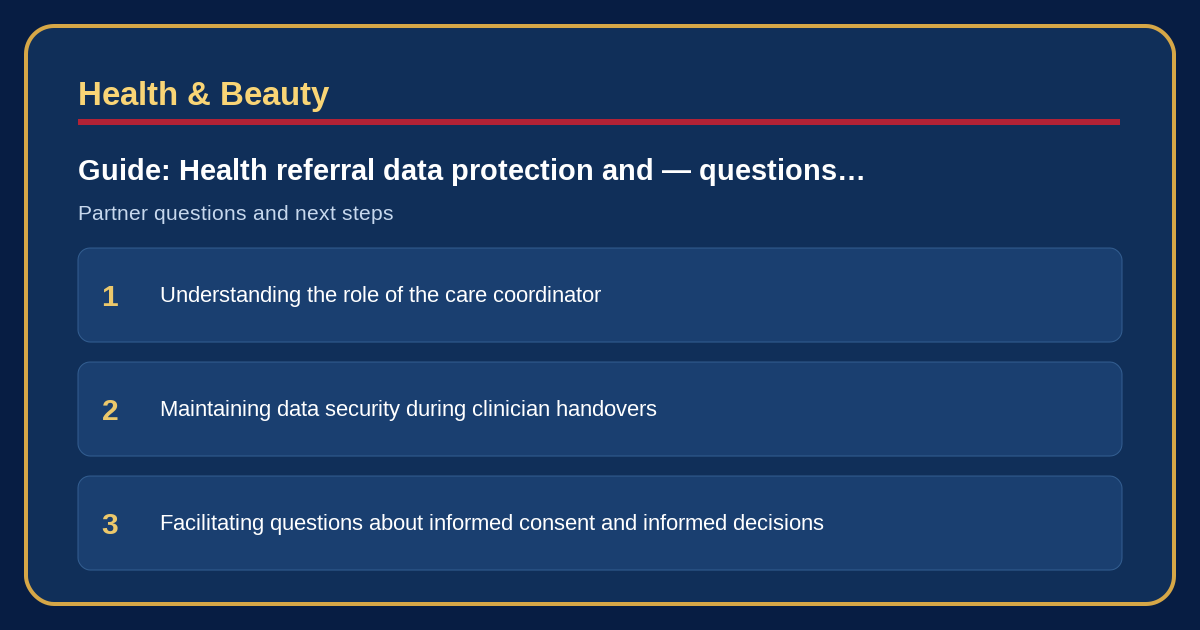
Navigating the complexities of medical transitions requires a clear understanding of how information flows between parties. When a patient moves between providers, Health & Beauty coordinates administrative and travel services only; medical decisions are made by licensed clinicians. Health & Beauty does not operate clinics. Ensuring that Health referral data protection and partner responsibilities are managed correctly is essential for maintaining patient privacy. This guide outlines how care coordinators facilitate these transitions while ensuring that questions about informed consent and informed decisions remain the priority of the treating medical team.
Understanding the role of the care coordinator
A care coordinator acts as a bridge between the patient and the clinical environment, focusing on logistical support rather than clinical oversight. In this capacity, Health & Beauty ensures that administrative processes are streamlined, allowing patients to focus on their health journey. It is vital to recognise that coordinators do not provide medical advice or influence clinical outcomes. Instead, they manage the secure transfer of necessary documentation, ensuring that the relevant clinical teams have the information they need to provide safe, effective, and personalised care throughout the transition.
Maintaining data security during clinician handovers
When a patient transitions to a new clinician, the secure transfer of personal data is a legal and ethical necessity. Data protection regulations require that information is shared only with authorised parties and for specific, legitimate purposes. Health & Beauty prioritises the integrity of this process by adhering to strict internal protocols that align with UK data protection standards. By ensuring that only essential information is transmitted, coordinators help maintain the confidentiality of the patient’s medical history while facilitating a seamless handover between the outgoing and incoming clinical teams.
Facilitating questions about informed consent and informed decisions
The process of obtaining informed consent is a fundamental aspect of medical ethics that must occur directly between the patient and their treating clinician. While a care coordinator can assist in scheduling consultations or gathering necessary paperwork, they cannot substitute for the professional dialogue required for informed decisions. Patients should be encouraged to prepare a list of specific questions regarding their treatment plan, potential risks, and expected recovery paths. This direct communication ensures that the patient fully understands their options before proceeding with any medical intervention or procedure.
Ensuring transparency in the referral process
Transparency is the cornerstone of a successful medical referral. Patients must understand exactly how their information is being handled and who will have access to their records during the transition. Health & Beauty maintains clear communication channels to ensure that patients are informed about the administrative steps involved in their care journey. By providing clarity on the roles of all parties involved, coordinators help build trust. If a patient feels uncertain about how their data is being used, they should always request a detailed explanation from their primary clinical contact.
Managing expectations during clinical transitions
Transitions between clinicians can sometimes feel overwhelming, which is why managing expectations is a key part of the coordination process. It is important to remember that every clinical environment operates under its own specific protocols and timelines. Health & Beauty assists by providing clear information regarding the administrative requirements for these transitions, but the clinical timeline remains entirely at the discretion of the medical professionals. Patients should maintain open communication with their new clinical team to ensure that their specific needs and concerns are addressed promptly and effectively.
Adhering to regulatory standards for data protection
Compliance with data protection legislation is not optional; it is a fundamental requirement for any organisation handling sensitive health information. Health & Beauty operates with a commitment to these standards, ensuring that all administrative activities are conducted in a manner that respects patient privacy. By following established guidance on data processing, coordinators help mitigate risks associated with information handling. Patients should feel confident that their data is managed with the highest level of care, and they are encouraged to review the official guidance provided by regulatory bodies.
Professional support for your medical journey
If you have questions regarding the administrative aspects of your care or need assistance with the logistics of your medical transition, our team is here to help. Health & Beauty provides dedicated support to ensure that your administrative needs are met with professionalism and care. Please reach out to our team via the contact details provided on our official website at hb34partners.com to discuss how we can assist with your coordination requirements. We are committed to providing a supportive, low-pressure environment as you navigate your personal health and wellness journey.
Frequently Asked Questions
What is the primary responsibility of a care coordinator?
A care coordinator manages the administrative and logistical aspects of your medical journey, such as travel arrangements and documentation transfer. They do not provide medical advice, perform clinical procedures, or make decisions regarding your treatment plan, as these remain the sole responsibility of your licensed clinicians.
How can I ensure my data is protected during a referral?
You should always ask your care coordinator about the specific measures they take to secure your personal information. Organisations must comply with strict data protection laws, ensuring that your health records are shared only with relevant clinical teams and handled with the necessary confidentiality and security protocols.
Who should I ask if I have concerns about my treatment?
Any questions regarding your medical treatment, informed consent, or potential risks must be directed to your treating clinician. While a care coordinator can help you schedule an appointment or facilitate communication, they are not qualified to provide medical guidance or address clinical concerns about your specific health situation.
Sources and references
https://ico.org.uk/for-organisations/uk-gdpr-guidance-and-resources/
Partner with Health & Beauty
Discuss a potential collaboration and practical requirements directly with our team.