Guide: Healthcare referral information privacy — questions a referring professional can clarify with the care team — aftercare planning —
Navigating healthcare referral information privacy is essential for professionals managing patient documentation and aftercare logistics. Ensuring that sensitive data remains protected while facilitating seamless transitions between providers requires a clear understanding of regulatory frameworks. Health & Beauty coordinates administrative and travel services only; medical decisions are made by licensed clinicians. Health & Beauty does not operate clinics. By prioritizing secure communication channels and verifying patient consent, referring professionals can help maintain the integrity of medical records throughout the entire care journey for every individual involved.
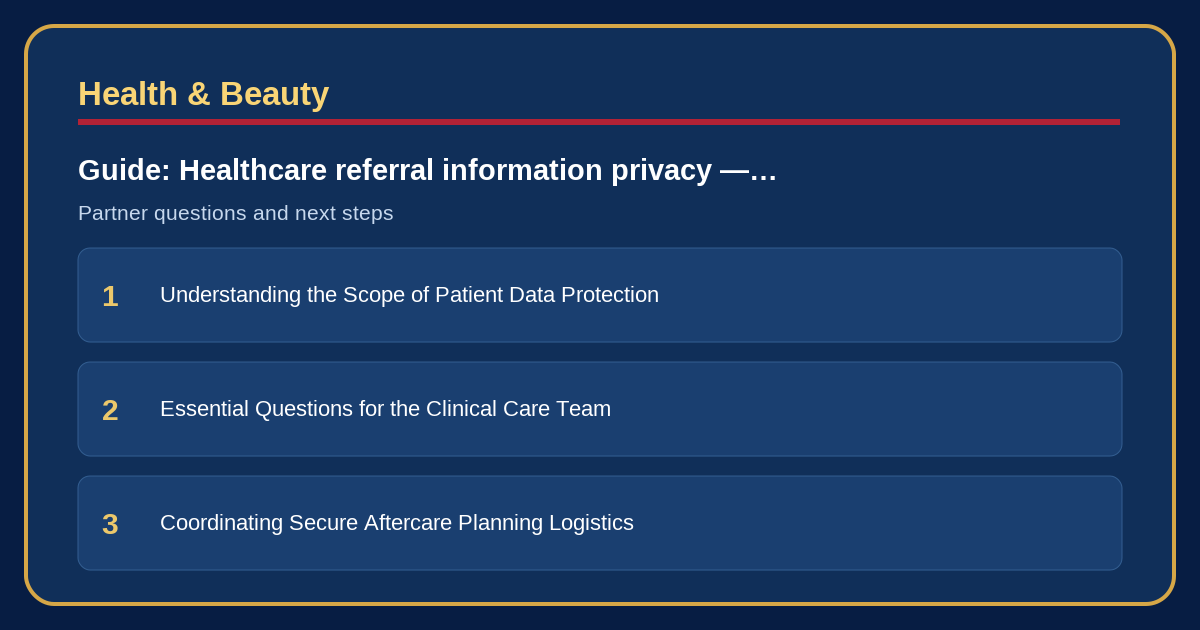
Understanding the Scope of Patient Data Protection
When managing patient documentation, the primary responsibility lies in ensuring that all shared information adheres to established privacy standards. Referring professionals must recognize that healthcare referral information privacy is not merely a procedural formality but a legal necessity. Before transferring any records, confirm that the receiving facility has the necessary authorization to process such data. Always verify that the patient has provided explicit, informed consent for the disclosure of their health information. If uncertainty exists regarding the scope of permitted data sharing, consult with the facility’s compliance officer immediately.
Essential Questions for the Clinical Care Team
Effective communication between the referring professional and the clinical team is vital for patient safety. When initiating a referral, ask the care team specific questions regarding their internal data handling protocols. Inquire about how they store electronic health records and who has access to sensitive files. Ask if they utilize encrypted platforms for transmitting patient updates. Understanding these workflows helps you explain the process to the patient, fostering trust. If the clinical team cannot provide clear answers regarding their security measures, request a meeting with their designated privacy official.
Coordinating Secure Aftercare Planning Logistics
Aftercare planning requires a delicate balance between logistical coordination and data security. When arranging post-procedure support, ensure that only the minimum necessary information is shared with third-party service providers. For instance, a transportation service may only need the patient’s name and pickup time, rather than detailed medical history or diagnosis codes. By compartmentalizing the data shared with non-clinical partners, you significantly reduce the risk of unauthorized exposure. Always document what information was shared and with whom to maintain a clear audit trail for the patient’s records.
Managing Records Staff and Administrative Access
The records staff at any facility plays a critical role in maintaining the confidentiality of patient information. As a referring professional, you should verify that the administrative team follows strict protocols for handling incoming referrals. Ask how they verify the identity of individuals requesting access to patient files. Ensure that they have a system in place to log every instance of record access or modification. If you notice any inconsistencies in how your referrals are processed, address these concerns directly with the facility’s management to ensure compliance with privacy regulations.
Navigating Consent and Disclosure Requirements
Patient consent is the cornerstone of healthcare referral information privacy. Before any data is transmitted, ensure that the patient has signed a comprehensive release form that clearly outlines which entities will receive their information and for what purpose. Be prepared to explain these documents to the patient in plain language, ensuring they understand their rights. If a patient expresses hesitation or asks for limitations on what can be shared, honor those requests and coordinate with the clinical team to implement the necessary restrictions within their electronic record system.
Addressing Potential Data Security Vulnerabilities
Even with robust systems, vulnerabilities can arise during the transfer of patient information. Regularly review your own communication practices to ensure you are not inadvertently exposing sensitive data. Avoid sending patient identifiers through unsecured email or messaging platforms. If you must transmit sensitive documents, use secure, password-protected portals provided by the clinical facility. If you are unsure whether a specific digital tool meets the required security standards, refrain from using it until you have received written confirmation from the facility’s IT or compliance department regarding its safety.
Professional Support and Administrative Coordination
Health & Beauty provides administrative and travel coordination to assist in the logistics of your patient’s care journey. We focus on the organizational aspects of the referral process, ensuring that schedules and travel arrangements are handled efficiently. If you have questions about how we manage administrative data or need assistance coordinating with a specific facility, please reach out to our team. We are available to discuss our coordination services and help you streamline the logistical side of your professional responsibilities. Contact Health & Beauty through our official website to learn more.
Frequently Asked Questions
What should I do if I suspect a breach of patient privacy?
If you suspect that patient information has been accessed or disclosed improperly, you must report it immediately to the facility’s privacy officer. Do not attempt to investigate the matter yourself. Follow the established reporting protocols of the clinical institution to ensure that the incident is documented and addressed according to legal requirements.
How can I verify that a facility is compliant with privacy regulations?
You can verify a facility’s commitment to privacy by reviewing their Notice of Privacy Practices, which they are required to provide to patients. Additionally, you may ask the facility’s administration for documentation regarding their staff training programs and their adherence to national privacy standards. If they are unable to provide this information, consider it a significant red flag.
Is it acceptable to share patient information via mobile messaging apps?
Generally, standard mobile messaging apps are not secure enough for transmitting sensitive healthcare information. Unless the facility has explicitly approved a specific, encrypted application that meets regulatory security standards, you should avoid using mobile messaging for patient data. Always prioritize secure, facility-approved portals to protect the privacy of the individuals you are referring for care.
Sources and references
https://www.hhs.gov/hipaa/for-professionals/privacy/index.html
Partner with Health & Beauty
Discuss a potential collaboration and practical requirements directly with our team.