International language coordination: Translation review — practical questions for UK partners
Effective UK international language coordination requires a meticulous translation review process to ensure clarity and accuracy across borders. When managing cross-border health services, precision in documentation is vital for patient safety and operational transparency. Health & Beauty coordinates administrative and travel services only; medical decisions are made by licensed clinicians. Health & Beauty does not operate clinics. By focusing on rigorous linguistic standards and clear communication channels, partners can bridge the gap between diverse healthcare systems while maintaining professional integrity and adhering to strict data protection standards.
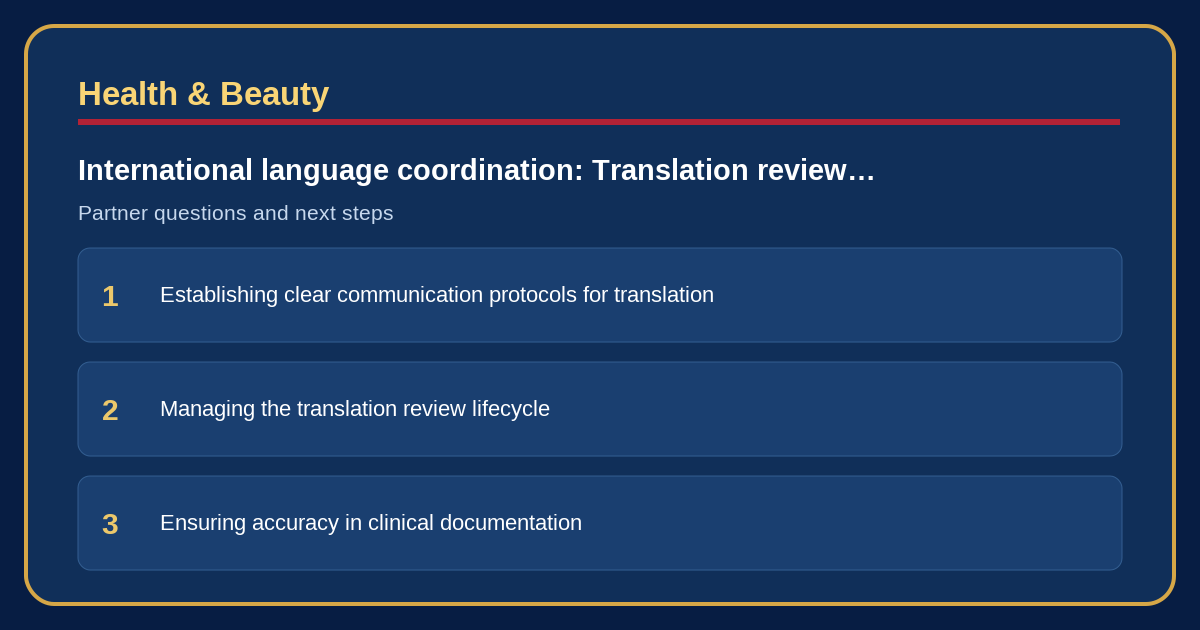
Establishing clear communication protocols for translation
The foundation of successful international coordination lies in establishing robust communication protocols before any documentation is exchanged. Partners should define the scope of translation requirements early, ensuring that all parties understand the distinction between administrative information and clinical data. It is essential to verify that translators possess the necessary subject-matter expertise to handle medical terminology accurately. By setting clear expectations regarding turnaround times and document formatting, organisations can prevent misunderstandings that might otherwise lead to delays or errors in the patient journey.
Managing the translation review lifecycle
A structured review lifecycle is critical for maintaining the integrity of translated materials. This process should involve multiple stages, including initial translation, independent proofreading, and final verification by a subject-matter expert. For UK partners, this means ensuring that translated documents remain consistent with the original intent while being culturally appropriate for the target audience. Regular audits of the translation workflow help identify potential bottlenecks or recurring issues, allowing for continuous improvement in how information is presented and understood by international stakeholders and patients alike.
Ensuring accuracy in clinical documentation
When dealing with clinical information, the stakes for translation accuracy are significantly higher. UK international language coordination — translation review processes must prioritise the precise rendering of medical instructions and patient histories. It is imperative that translators do not interpret or alter clinical data, as this could lead to incorrect medical decisions. Instead, they must provide a faithful representation of the source text. Any ambiguity found during the translation process should be referred back to the originating clinician for clarification rather than being left to linguistic interpretation.
Navigating data protection and privacy standards
Handling sensitive patient information across international borders necessitates strict adherence to data protection regulations. Partners must ensure that all translation services comply with relevant legal frameworks, such as the UK GDPR. This involves implementing secure file transfer protocols and ensuring that translation providers have appropriate data processing agreements in place. Protecting patient confidentiality is a non-negotiable aspect of the coordination process. Organisations should regularly review their data handling practices to ensure that personal information remains secure throughout the entire translation and review lifecycle.
Addressing cultural nuances in health communications
Language is more than just vocabulary; it encompasses cultural nuances that can significantly impact how health information is perceived. A professional translation review must account for these differences to ensure that the tone and intent of the original message are preserved. For instance, certain medical terms or concepts may carry different connotations in various regions. By working with linguists who understand both the source and target cultures, partners can ensure that their communications are respectful, clear, and effective, thereby fostering trust and improving the overall experience.
Coordinating with international clinical teams
Effective coordination requires seamless interaction between administrative teams and clinical professionals. When translation is involved, the administrative team must act as a bridge, ensuring that clinicians receive accurate information in a timely manner. This involves creating clear channels for clinicians to verify translated documents before they are used in any decision-making capacity. By maintaining a collaborative approach, partners can ensure that the translation review process supports, rather than hinders, the delivery of high-quality care, always deferring to the clinical expertise of the treating medical team.
Professional standards and partner engagement
Maintaining high professional standards is essential for any organisation involved in international health coordination. This includes selecting reputable translation partners and conducting regular reviews of the quality of work provided. If you are a partner seeking guidance on administrative coordination or require assistance with logistical arrangements, please reach out to our team for a discussion on how we can support your operational needs. We focus on providing clear, reliable administrative support, ensuring that your focus remains on the essential task of delivering excellent care to your patients.
Frequently Asked Questions
What is the primary role of the administrative coordinator in translation?
The coordinator manages the logistical flow of documents between parties, ensuring that translations are completed, reviewed, and delivered securely. They do not perform medical translations themselves and must ensure that all clinical content is verified by licensed professionals before use.
How should partners handle discrepancies found in translated medical records?
Any discrepancy or ambiguity identified during the translation review must be escalated immediately to the originating clinician. It is never appropriate for administrative staff or translators to guess the meaning of clinical data; medical decisions must always be based on verified, accurate information.
What steps ensure compliance when sharing data for translation?
Compliance is maintained by using secure, encrypted channels for document transfer and ensuring that all translation partners operate under strict data processing agreements. Organisations must ensure that their processes align with the UK GDPR requirements regarding the handling of sensitive personal data.
Source: https://ico.org.uk/for-organisations/uk-gdpr-guidance-and-resources/
Sources and references
https://ico.org.uk/for-organisations/uk-gdpr-guidance-and-resources/
Partner with Health & Beauty
Discuss a potential collaboration and practical requirements directly with our team.