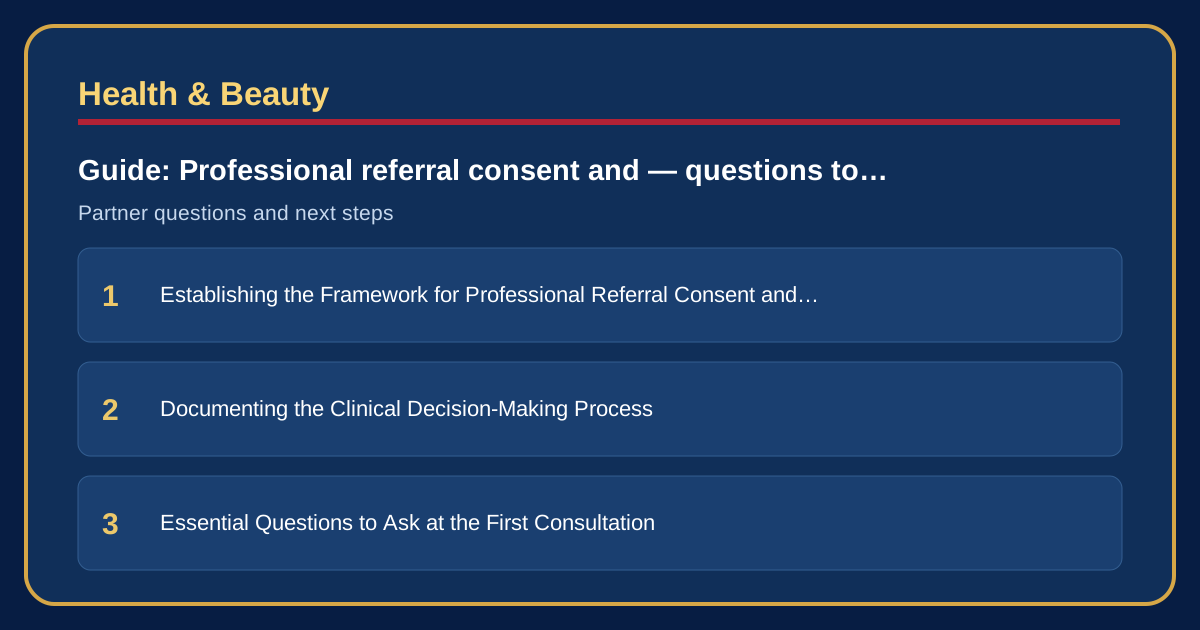
Guide: Professional referral consent and — questions to ask at the first consultation — decision records — referring clinicians
When a referring clinical specialist manages patient transitions, professional referral consent and confidential handover are essential components of the process. Maintaining clear documentation ensures that patient data remains protected while facilitating seamless care. Health & Beauty coordinates administrative and travel services only; medical decisions are made by licensed clinicians. Health & Beauty does not operate clinics. By prioritising transparency and data security, practitioners can ensure that every step of the referral journey aligns with established regulatory standards, keeping the patient’s wellbeing and privacy at the forefront of every interaction.
Establishing the Framework for Professional Referral Consent and Confidential Handover
Effective communication between clinicians relies on a robust framework for professional referral consent and confidential handover. When transferring patient information, the referring specialist must ensure that the patient has provided explicit, informed consent for their data to be shared with the receiving party. This process is not merely a formality but a critical safeguard for data integrity. By clearly outlining what information is being shared and why, clinicians build trust. Health & Beauty supports this administrative flow by ensuring that documentation processes remain organised, secure, and compliant with current data protection expectations.
Documenting the Clinical Decision-Making Process
Comprehensive record-keeping is the backbone of safe clinical practice. When a specialist makes a decision regarding a patient’s treatment path, every factor considered should be documented clearly. This includes the rationale for the referral, the patient’s clinical history, and any specific requirements for the handover. Detailed records serve as a vital reference point for the receiving clinician, ensuring continuity of care. If questions arise later regarding the treatment trajectory, these records provide the necessary context. Clinicians should always maintain these files in accordance with their professional obligations and data protection policies.
Essential Questions to Ask at the First Consultation
The first consultation is a pivotal moment for establishing expectations and gathering information. Patients should feel empowered to ask questions that clarify their treatment journey. Useful inquiries include asking about the specific qualifications of the treating team, the nature of the proposed procedure, and how the clinical handover will be managed. Patients might also ask how their personal information will be handled during the referral process. By encouraging these questions, clinicians foster an environment of transparency, ensuring that the patient feels fully informed and comfortable with the proposed clinical pathway.
Maintaining Data Security During Patient Transitions
Data security is paramount when moving patient records between different clinical settings. The transition period is often where information is most vulnerable, making it essential to use secure, encrypted channels for all communications. Referring clinicians must verify that the receiving party has appropriate measures in place to protect sensitive information. This involves adhering to strict protocols regarding who can access the data and how it is stored. By maintaining a high standard of digital hygiene, practitioners ensure that the patient’s right to privacy is respected throughout the entire referral and treatment cycle.
The Role of Administrative Coordination in Clinical Pathways
While clinical decisions remain strictly the responsibility of licensed medical professionals, administrative coordination plays a significant role in the overall patient experience. Health & Beauty assists by managing the logistical aspects of the referral, such as scheduling and travel arrangements, which allows the medical team to focus entirely on patient care. This separation of duties ensures that administrative tasks do not interfere with clinical judgement. By streamlining the non-medical elements of the journey, Health & Beauty helps create a more efficient and less stressful environment for both the patient and the referring clinician.
Ensuring Regulatory Compliance in Patient Referrals
Regulatory compliance is not optional; it is a fundamental requirement for any clinical practice. Referring specialists must stay informed about the latest guidance regarding data protection and patient rights. This involves regularly reviewing internal policies to ensure they align with national standards. When handling patient referrals, clinicians should consider whether their current processes meet the necessary legal thresholds for data processing. If there is uncertainty regarding how to handle specific data sets, consulting official regulatory resources is the most reliable way to ensure that all actions remain within the law.
Facilitating Communication and Patient Support
Clear communication is the bridge between the referring clinician and the patient. Providing patients with a clear summary of their referral, including what to expect at the next stage, can significantly reduce anxiety. If you require assistance with the administrative coordination of your referral process, please feel free to reach out to the team at Health & Beauty. We are here to help manage the logistics of your journey, ensuring that your transition between clinical settings is as smooth and well-organised as possible, allowing you to focus on your health.
Frequently Asked Questions
What is the primary responsibility of the referring clinician during a handover?
The referring clinician is responsible for ensuring that the patient has provided informed consent for their data to be shared. They must also ensure that all relevant clinical information is accurate, complete, and transmitted securely to the receiving specialist to maintain continuity of care.
How can a patient verify that their data is being handled securely?
Patients should ask their clinician about the security measures in place for data transmission. Clinicians are expected to follow strict data protection protocols. If you have concerns, you may request information regarding the clinic’s privacy policy and how they manage sensitive patient records during referrals.
What should be included in the clinical decision record?
A clinical decision record should include the patient’s medical history, the specific rationale for the referral, any diagnostic findings, and the agreed-upon treatment goals. This documentation provides the receiving clinician with the necessary context to continue the patient’s care safely and effectively.
Sources and references
https://ico.org.uk/for-organisations/uk-gdpr-guidance-and-resources/
Partner with Health & Beauty
Discuss a potential collaboration and practical requirements directly with our team.