Guide: Healthcare referral information privacy — distinguishing the responsibilities of clinicians and care — provider choice — international patients
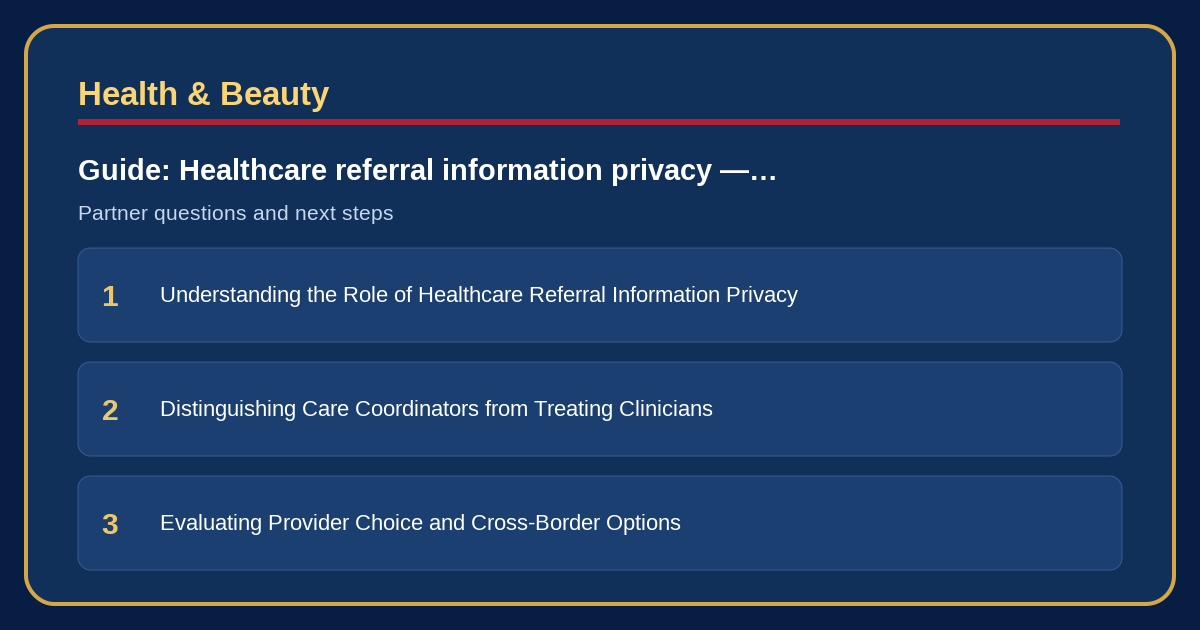
Navigating medical care abroad requires a clear understanding of healthcare referral information privacy and permissions, especially when individuals are evaluating qualified international providers. Health & Beauty coordinates administrative and travel services only; medical decisions are made by licensed clinicians. Health & Beauty does not operate clinics. This operational structure helps international patients understand who handles their logistical paperwork compared to who actually governs their clinical evaluations, confidential records, and treatment plans during a cross-border medical journey.
Understanding the Role of Healthcare Referral Information Privacy
Ensuring the security of personal health records is vital when exploring medical options across international borders. Healthcare referral information privacy regulations dictate how administrative teams, medical facilitators, and destination hospitals handle sensitive medical documentation. Patients often assume that administrative coordinators have the same legal obligations as direct healthcare providers, but distinct boundaries exist. Reviewing applicable privacy frameworks helps individuals identify which entities are permitted to view diagnostic reports, imaging files, and personal contact details during the initial provider comparison phase.
Distinguishing Care Coordinators from Treating Clinicians
A common point of confusion for international patients involves separating administrative assistance from direct medical practice. Health & Beauty coordinates administrative and travel services only; medical decisions are made by licensed clinicians. Health & Beauty does not operate clinics. Coordinators manage logistics such as itinerary planning, facility introductions, and appointment scheduling, but they never diagnose conditions, interpret medical scans, or determine surgical suitability. All clinical evaluations and therapeutic determinations remain exclusively within the purview of the licensed medical professionals at the chosen treating facility.
Evaluating Provider Choice and Cross-Border Options
Selecting an international healthcare provider involves weighing facility credentials, clinical specializations, and geographic convenience. While administrative facilitators can supply publicly available directories and general facility profiles, patients must independently vet individual doctors and hospital accreditations. Healthcare referral information privacy standards apply differently depending on whether data is transmitted to an administrative coordinator or a licensed physician. Patients should explicitly ask prospective providers about their internal data protection policies and ensure they understand how medical histories are transmitted securely.
Managing Sensitive Medical Records Across Borders
Transferring medical records between countries demands rigorous attention to data security and patient consent. Administrative coordinators facilitate the secure transfer of files by utilizing encrypted communication channels and obtaining explicit written authorization from the patient. However, once records arrive at a foreign clinic, the receiving institution's domestic privacy laws and institutional protocols govern data retention and access. Patients should request written confirmation regarding who within the foreign facility will review their diagnostic images and laboratory results before dispatching sensitive health files.
Navigating Legal Frameworks and Institutional Compliance
International health travelers frequently encounter varying regulatory environments that differ significantly from their home countries. Privacy standards such as the Health Insurance Portability and Accountability Act establish rigorous baselines for domestic entities, but international partners operate under distinct local statutes. Understanding these jurisdictional differences ensures that patients retain control over their personal health information. When evaluating options, individuals should consult with both their administrative support team and the treating facility's compliance department to clarify how patient data is stored, shared, and protected.
Communication Channels and Secure Data Transmission
Maintaining confidentiality during cross-border medical inquiries requires dependable communication pathways. Administrative facilitators implement secure portals and encrypted messaging tools to prevent unauthorized interception of personal health data. Patients should avoid sending sensitive diagnostic details through standard, unencrypted email or messaging applications. By utilizing dedicated communication platforms provided by trusted coordinators, individuals help safeguard their personal information while exploring potential treatment facilities and discussing logistical requirements with support staff.
Planning Your Journey with Confidence and Support
Careful preparation empowers patients to make informed decisions when considering medical procedures abroad. By separating logistical coordination from clinical care, individuals can better navigate the complexities of international healthcare markets. If you have questions about how administrative arrangements work or wish to discuss logistical support for your upcoming medical travel, you can reach out to our team directly. Health & Beauty welcomes your inquiries and is ready to assist with your travel planning needs.
Frequently Asked Questions
H3: What does Health & Beauty do for international patients?
Health & Beauty coordinates administrative and travel services only; medical decisions are made by licensed clinicians. Health & Beauty does not operate clinics. The team assists with scheduling, travel logistics, and facility introductions, leaving all medical assessments to qualified doctors.
H3: How is my medical information protected during a referral?
Administrative teams utilize secure communication channels and obtain explicit patient authorization before transmitting files. However, data privacy standards vary by jurisdiction, and patients should verify both coordinator policies and the receiving clinic's data security protocols.
H3: Who makes the actual medical decisions regarding my treatment?
All medical decisions, diagnoses, and treatment plans are determined exclusively by licensed clinicians at the treating facility. Administrative coordinators do not evaluate clinical suitability or provide medical advice.
Sources and references
https://www.hhs.gov/hipaa/for-professionals/privacy/index.html
Partner with Health & Beauty
Discuss a potential collaboration and practical requirements directly with our team.