Guide: Health referral data protection and — how to clarify language and translation needs for medical records — first enquiry — care coordinators
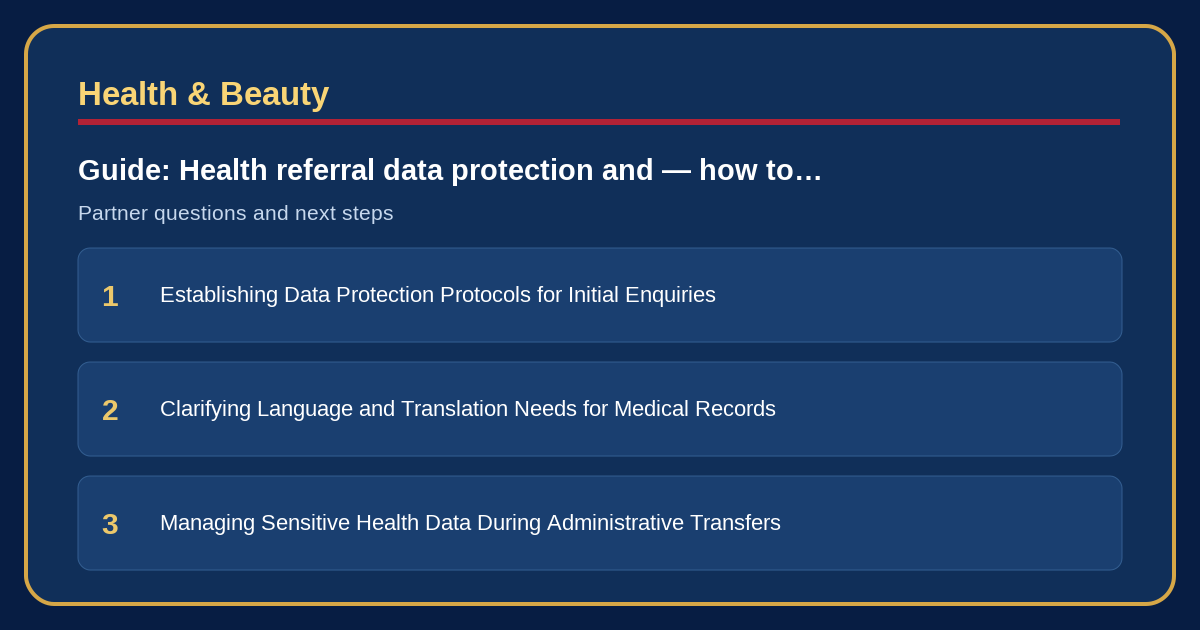
Navigating the complexities of Health referral data protection and partner responsibilities is essential for any professional managing international patient pathways. As a care coordinator, your primary duty involves facilitating seamless communication while ensuring strict adherence to privacy regulations. Health & Beauty coordinates administrative and travel services only; medical decisions are made by licensed clinicians. Health & Beauty does not operate clinics. By prioritising secure data handling from the initial enquiry, you build trust with patients and ensure that sensitive medical records remain protected throughout the entire journey.
Establishing Data Protection Protocols for Initial Enquiries
When a patient makes their first enquiry, the immediate priority is establishing a secure channel for communication. Health referral data protection and partner responsibilities dictate that you must inform the patient exactly how their personal information will be processed. Before collecting any health-related details, ensure that your systems are compliant with current data protection standards. You should provide clear, concise privacy notices that explain who will have access to the data and for what specific administrative purposes. Transparency at this stage is the foundation of professional medical coordination.
Clarifying Language and Translation Needs for Medical Records
Accurate translation of medical records is vital for clinical safety. When a patient presents documents in a foreign language, you must clarify whether the receiving clinic requires certified translations or if they have internal staff to handle specific languages. Never assume that a patient’s self-translated summary is sufficient for a clinical assessment. Ask the patient to provide original documents and confirm the clinic’s specific requirements regarding terminology. By formalising this process early, you prevent delays and ensure that clinicians have the precise information needed for their evaluations.
Managing Sensitive Health Data During Administrative Transfers
Transferring patient records between parties requires robust security measures to prevent unauthorised access. Whether you are moving files between a patient and a clinical partner, you must use encrypted platforms or secure portals rather than standard, unencrypted email. Ensure that all parties involved in the administrative chain understand their obligations under data protection laws. If you are unsure about the security of a specific transfer method, pause the process and consult with your data protection officer. Protecting patient confidentiality is a non-negotiable aspect of your professional role.
Verifying Partner Responsibilities in the Referral Chain
Every partner in the referral chain holds a specific responsibility for the data they handle. As a coordinator, you must ensure that each entity understands their role as either a data controller or a data processor. This distinction is critical for legal compliance and accountability. Regularly review your agreements with partners to confirm that they maintain high standards of data security. If a partner fails to demonstrate adequate protection measures, you must address this immediately to mitigate risks. Clear documentation of these responsibilities helps maintain a secure environment for all.
Communicating Data Rights to International Patients
Patients have specific rights regarding their personal data, including the right to access, rectify, or erase their information. When working with international patients, these rights may be governed by different legal frameworks. You must be prepared to explain these rights clearly and provide a straightforward process for patients to exercise them. If a patient requests a copy of their records or asks for information to be updated, handle the request promptly and professionally. Providing this level of service reinforces the commitment to patient-centred care and regulatory compliance.
Handling Inquiries Regarding Medical History and Translation
When a patient asks about the translation of complex medical history, guide them toward professional services that specialise in medical terminology. Do not attempt to interpret or summarise medical records yourself, as this could lead to dangerous misunderstandings. Instead, facilitate the connection between the patient and the clinic’s requirements. If the clinic demands specific formatting for translated records, communicate this clearly to the patient. Always defer to the clinician’s expertise when questions arise regarding the necessity or depth of translation required for a safe medical assessment.
Professional Coordination and Support Services
Health & Beauty is dedicated to supporting care coordinators by providing clear administrative frameworks that prioritise patient privacy and operational efficiency. We understand the challenges of managing cross-border referrals and are here to help you navigate the necessary administrative steps. If you require further guidance on our coordination services or wish to discuss how we can assist with your administrative workflows, please feel free to reach out to our team. We are available to answer your questions and help you streamline your coordination processes effectively.
Frequently Asked Questions
What should I do if a patient sends sensitive medical records via unencrypted email?
You should immediately advise the patient to stop sending sensitive information through insecure channels. Explain that for their own protection, you require the use of a secure, encrypted portal. Delete the insecure email according to your data protection policy and guide the patient on how to use the approved, secure method for future submissions.
How do I determine if a translation is sufficient for a medical clinic?
You must ask the receiving clinic for their specific documentation requirements. Some clinics require certified medical translators to ensure accuracy, while others may have internal teams. Never guess or accept informal translations, as clinical decisions rely on precise information. Always confirm the clinic’s policy before advising the patient on their next steps.
What is the primary role of a care coordinator regarding data?
Your role is to act as a secure bridge between the patient and the clinical team. You must ensure that data is handled, stored, and transferred in compliance with data protection regulations. You do not make medical decisions or interpret clinical data; your focus is purely on the administrative security and the accurate, safe transfer of information.
Sources and references
https://ico.org.uk/for-organisations/uk-gdpr-guidance-and-resources/
Partner with Health & Beauty
Discuss a potential collaboration and practical requirements directly with our team.