Guide: Health referral data protection and — a decision checklist for patients and referring professionals — remote coordination — records staff
Navigating remote medical care coordination requires rigorous adherence to confidentiality principles, especially regarding health referral data protection and partner responsibilities. To help you structure this process safely, Health & Beauty coordinates administrative and travel services only; medical decisions are made by licensed clinicians. Health & Beauty does not operate clinics. When managing records across borders, safeguarding sensitive information is paramount. This guide provides a structured framework to evaluate data handling practices, ensuring that administrative handovers maintain the highest standards of security, privacy, and regulatory alignment for everyone involved in the care journey.
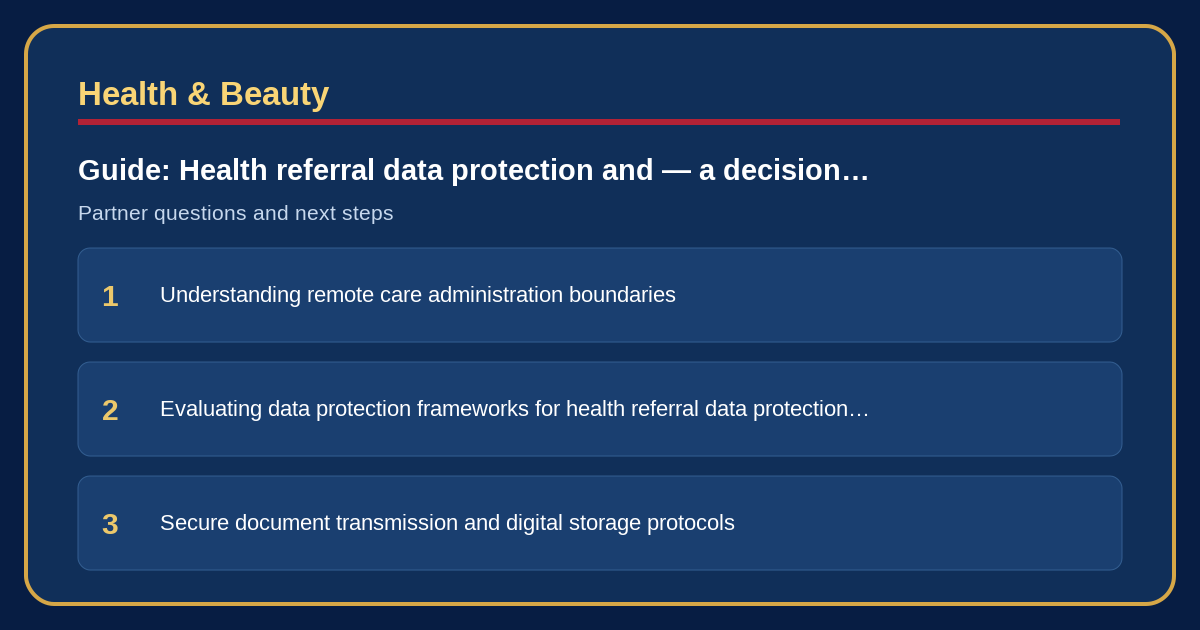
Understanding remote care administration boundaries
When patients seek specialized treatment abroad, administrative teams handle vast amounts of sensitive paperwork. It is vital to separate operational logistics from clinical judgment. Non-clinical staff manage appointments, travel bookings, and document transmission, but they never dictate treatment plans or diagnostic protocols. Establishing clear operational boundaries prevents confusion between administrative assistance and clinical oversight. Patients should always verify that their personal information is handled by trained personnel who understand the strict legal frameworks governing cross-border health data transfers, safeguarding confidentiality at every stage of the remote coordination journey.
Evaluating data protection frameworks for health referral data protection and partner responsibilities
Establishing robust protocols for health referral data protection and partner responsibilities ensures that every entity involved in your care journey respects your fundamental privacy rights. Referring professionals and administrative coordinators must mutually agree on secure channels for transmitting medical histories, imaging files, and personal identifiers. Official data protection regulators mandate strict accountability measures for any organization processing sensitive health information. Reviewing these compliance frameworks helps identify potential security vulnerabilities before records are shared internationally, protecting individuals from unauthorized access, accidental loss, or improper disclosure during remote care planning.
Secure document transmission and digital storage protocols
Modern remote care coordination relies heavily on digital communication tools, making secure file transfer systems an absolute necessity. Standard consumer email accounts are rarely secure enough for transferring confidential medical records and diagnostic imagery. Administrative teams must utilize encrypted portals, secure cloud storage solutions, and multi-factor authentication to protect incoming and outgoing data. Referring professionals should inspect these digital architectures carefully. Ensuring that data remains encrypted both in transit and at rest minimizes interception risks, giving patients peace of mind that their sensitive clinical history is stored safely throughout the administrative coordination lifecycle.
Consent management and transparent information sharing
Informed consent forms the bedrock of ethical data processing in modern healthcare administration. Patients must explicitly authorize the sharing of their medical records between referring professionals, administrative coordinators, and overseas medical facilities. This consent must be freely given, specific, and fully informed regarding who will access the files and why. Administrative teams should provide transparent privacy notices outlining retention periods, third-party access policies, and the exact purposes of data collection. If consent is vague or outdated, coordinators must pause processing until the patient provides clear, written re-authorization.
Establishing accountability across international administrative partners
Collaborating with international partners introduces complex regulatory challenges regarding jurisdiction and data enforcement. Administrative networks must establish binding agreements that dictate how third parties handle, store, and eventually dispose of patient records. If a partner organization fails to meet recognized data protection standards, patient confidentiality is immediately compromised. Referring professionals should request clear documentation regarding international data transfer safeguards, such as standard contractual clauses or adequacy decisions, ensuring that administrative partners are held legally accountable for maintaining rigorous information security practices.
Patient rights and access to personal health records
Every individual retains the legal right to access, review, and request rectifications to their personal health records held by administrative coordinators. Navigating these requests remotely requires streamlined verification procedures to prevent unauthorized third-party access while remaining accessible to the rightful data subject. Coordinators must respond to access requests within statutory timeframes and provide clear explanations of how information has been utilized. Patients should proactively ask administrative staff how they can inspect their file, request corrections for inaccurate data, or exercise their right to erasure once coordination concludes.
Practical steps for professionals and a low-pressure invitation
Referring professionals can streamline data security by adopting standardized intake forms, verifying encryption standards with administrative staff, and conducting regular audits of partner data handling practices. Patients benefit from maintaining personal copies of all transmitted records and asking detailed questions about data storage longevity. To discuss administrative coordination logistics without any obligation, you are welcome to reach out to Health & Beauty today. Our team is ready to answer your operational questions respectfully and transparently, ensuring your administrative journey remains seamless, secure, and entirely focused on your personal peace of mind.
Frequently Asked Questions
H3: What happens to my medical records after remote coordination concludes?
Administrative coordinators retain records only as long as necessary to fulfill operational obligations and comply with applicable statutory retention laws. Once this period expires, files are securely deleted or archived in strict alignment with recognized data protection regulations and regulatory guidance.
H3: Can administrative staff make decisions regarding my medical treatment?
No, administrative staff never make medical decisions. Health & Beauty coordinates administrative and travel services only; medical decisions are made by licensed clinicians. Health & Beauty does not operate clinics. All clinical choices remain strictly between you and your treating medical professionals.
H3: How do I know if an overseas partner complies with data protection laws?
You should request comprehensive documentation outlining their security measures, encryption protocols, and adherence to international data transfer frameworks. If uncertainties arise regarding specific legal jurisdictions, consult qualified legal counsel or official regulatory guidance for clarification.
Sources and references
https://ico.org.uk/for-organisations/uk-gdpr-guidance-and-resources/
Partner with Health & Beauty
Discuss a potential collaboration and practical requirements directly with our team.